
The Resilience of Founder-Led Businesses in Turbulent Markets: Lessons from Chung Ju-Yung's Hyundai
 Aime Summary
In an era where macroeconomic volatility and geopolitical uncertainty dominate headlines, investors are increasingly turning to qualitative mental models to navigate the chaos. While quantitative forecasts offer a snapshot of the present, they often fail to capture the intangible qualities that define resilient businesses—qualities like relentless execution, frugality, and trust. These principles, exemplified by Hyundai's founder Chung Ju-Yung, provide a roadmap for identifying undervalued founder-led companies that can weather storms while others crumble.
Relentless Execution: Speed Over Perfection
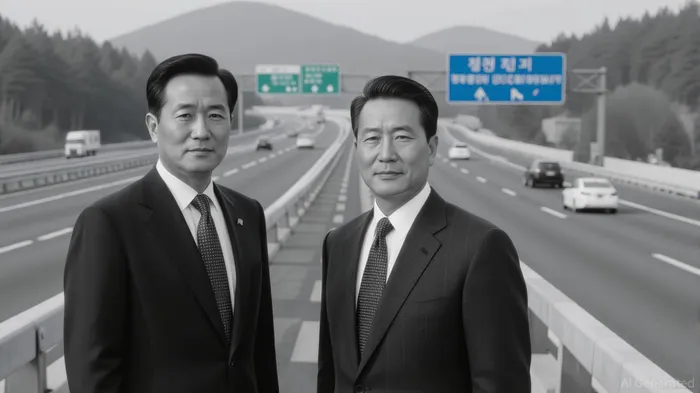
Chung Ju-Yung's mantra—“shorten the time”—was not just a slogan but a strategic imperative. During the 1960s, he completed the 260-mile Gyeongbu Expressway ahead of schedule and at a symbolic cost of one won, leveraging advanced machinery and optimized workflows. This focus on speed and efficiency allowed Hyundai to outpace competitors and secure government contracts that cemented its role in South Korea's industrialization.
For investors, the lesson is clear: Look for companies that prioritize execution over perfection. Founder-led businesses with a culture of agility—those that can pivot quickly in response to market shifts—are better positioned to capitalize on opportunities. Consider TeslaTSLA-- (TSLA), which has consistently delivered electric vehicles and energy solutions ahead of schedule, or AppleAAPL-- (AAPL), whose iterative product launches reflect a relentless focus on execution.
Frugality: Maximizing Value, Not Just Cutting Costs
Chung's frugality was not about austerity but about maximizing value from every resource. He famously required employees to use both sides of paper and reinvested savings into high-impact projects, such as the 1965 acquisition of 2,000 heavy construction machines. This disciplined capital allocation allowed Hyundai to execute large-scale projects efficiently, even during economic downturns.
Modern investors should seek companies with frugal yet innovative mindsets. A high R&D-to-revenue ratio (like Hyundai's historical 15%) is a red flag for wasteful spending, but a balanced approach—where frugality fuels innovation—is a green light. Look at companies like CaterpillarCAT-- (CAT) or MicrosoftMSFT-- (MSFT), which reinvest profits into cutting-edge technologies while maintaining lean operations.
Trust: The Competitive Moat
Chung's emphasis on trust—through profit-sharing, transparent governance, and employee welfare—created a culture of loyalty that proved invaluable during crises. During the 1997 Asian Financial Crisis, Hyundai retained its workforce while competitors laid off employees, preserving institutional knowledge and accelerating recovery. This trust-driven culture became a competitive moat, enabling the company to maintain operational excellence even in turbulent times.
Investors should prioritize companies with high employee retention rates and transparent leadership. Delta Airlines (DAL), for instance, maintained an 85% retention rate by fostering trust through open communication and profit-sharing. Similarly, founder-led businesses like SalesforceCRM-- (CRM) or AmazonAMZN-- (AMZN) have built long-term value by prioritizing employee and customer trust.
The Founder's Edge in Uncertain Times
Founder-led businesses often outperform in volatile markets because their leaders are deeply embedded in the company's culture and long-term vision. Chung Ju-Yung's ability to align Hyundai's operations with South Korea's national goals—whether through shipbuilding, infrastructure, or automotive innovation—demonstrates the power of a founder's unyielding commitment.
Today's investors should seek out founder-led companies with strong operational cultures. Look for firms where the founder's principles are still evident in day-to-day operations, such as SpaceX (SPCE) under Elon Musk or ShopifySHOP-- (SHOP) under Tobi Lutke. These companies often exhibit the same traits of execution, frugality, and trust that made Hyundai a global powerhouse.
Conclusion: Building a Resilient Portfolio
In a world where macroeconomic forecasts are as unreliable as a broken compass, qualitative mental models rooted in founder-led principles offer a steadier guide. By focusing on companies that prioritize speed, frugality, and trust, investors can hedge against volatility and position themselves for long-term compounding. The lessons from Chung Ju-Yung's Hyundai are timeless: Resilience isn't built in spreadsheets—it's forged in the culture of a company and the vision of its leader.
So, as you sift through the noise of quarterly earnings reports and GDP forecasts, ask yourself: Are you investing in companies that execute relentlessly, allocate capital frugally, and build trust with every stakeholder? If the answer is yes, you're not just buying stock—you're buying into a legacy of resilience.

Delivering real-time insights and analysis on emerging financial trends and market movements.
Latest Articles
Stay ahead of the market.
Get curated U.S. market news, insights and key dates delivered to your inbox.
AInvest
PRO
AInvest
PRO



Comments
No comments yet