
The Resilience Factor in Value Investing: Lessons from Chung Ju-Yung and Hyundai's Unconventional Growth


 Aime Summary
In the annals of industrial history, few figures embody the power of adversity-forged leadership as profoundly as Chung Ju-Yung. Born in 1915 to a poor Korean farmer, Chung built Hyundai into a global industrial titan by embracing a philosophy of relentless execution, frugality, and trust-driven culture. His mantra—“Do it until nothing more can be done”—was not just a motivational slogan but a strategic framework that transformed post-war rubble into infrastructure empires. Today, as macroeconomic headwinds test the mettle of industrials and construction firms, Chung's legacy offers a blueprint for identifying undervalued companies with the operational discipline and visionary grit to thrive.
The Chung Ju-Yung Playbook: Adversity as a Catalyst
Chung's rise from a self-taught laborer to a corporate titan was marked by calculated risks and a refusal to accept conventional limits. In the 1960s, he gambled $8 million (a staggering sum for a nascent South Korea) on 2,000 heavy machines, betting on infrastructure's role in national recovery. His approach was unorthodox: he prioritized human capital over perks, demanded 100% Korean-made parts for the Hyundai Pony, and expanded globally by dispatching executives to Southeast Asia despite early losses. These principles—bold execution, cost discipline, and long-term vision—are now rare in an era where short-termism often overshadows resilience.
Modern-Day "Bulldozers": Undervalued Industrial Giants
The industrials and construction sectors are littered with companies that mirror Chung's ethos but are overlooked by a market obsessed with tech darlings. Consider the following:
1. AECOM (ACM): The Infrastructure Architect
AECOM's 17.1% adjusted operating margin in Q3 2025 reflects its mastery of cost discipline, a hallmark of Chung's philosophy. With a net leverage ratio of 0.6x and $2.3 billion in buybacks since 2020, the firm balances frugality with reinvestment. Its P/E of 26.71—64% below its 10-year average—suggests undervaluation, especially as global infrastructure spending accelerates.
2. Delta Air Lines (DAL): Crisis as a Catalyst
Delta's 9.01 P/E and 9.11 EV/EBITDA highlight its undervaluation, but its true strength lies in its AI-driven fare pricing and $1.64 billion in free cash flow. Like Chung, DeltaDAL-- has turned adversity (the 2020 pandemic) into opportunity, modernizing its fleet and digital infrastructure while maintaining a conservative balance sheet.
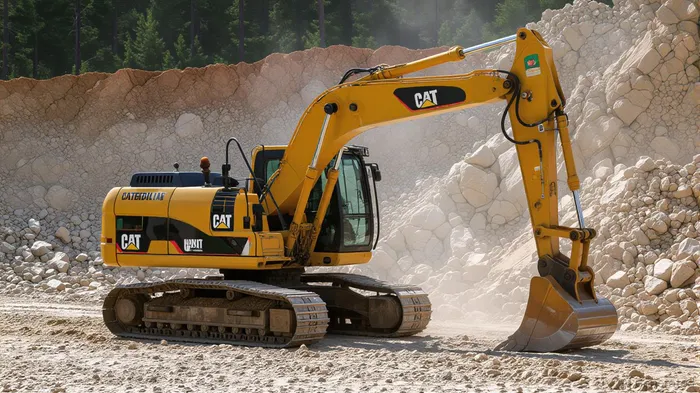
3. Caterpillar (CAT): Frugal Innovation in Action
Caterpillar's pivot to hybrid and hydrogen-powered machinery mirrors Chung's 1960s gamble. Despite a 1% revenue dip in Q2 2025, its 17.3% operating margin and $3.1 billion in operating cash flow underscore its operational rigor. At a forward P/E of 22.35, the stock trades below its historical average, offering a margin of safety.
4. Waste Management (WM): Sustainability as a Strategic Edge
Waste Management's 28.9% EBITDA margin and $4.4 billion in EBIT highlight its profitability, but its acquisition of Stericycle and RNG expansion align with Chung's global vision. While its debt-to-equity ratio is high (247.2%), its 5.6x interest coverage ratio ensures stability.
The Investment Thesis: Why Resilience Matters
Chung's story teaches that long-term value creation is born from adversity, not ease. The companies above share three traits:
1. High EBITDA Margins: AECOMACM-- (17.1%), CaterpillarCAT-- (17.3%), and Waste ManagementWM-- (28.9%) demonstrate disciplined cost management.
2. Low Leverage: AECOM's 0.6x leverage and Delta's 9.11 EV/EBITDA reflect conservative balance sheets.
3. Shareholder Returns with Reinvestment: AECOM's buybacks and Delta's free cash flow growth balance capital returns with growth.
These firms also align with megatrends like sustainability and AI, ensuring relevance in a shifting economy.
Conclusion: The Unconventional Path to Value
The market often underappreciates industrials and construction firms, dismissing them as “boring” compared to tech or consumer stocks. Yet, as Chung Ju-Yung's legacy shows, the most enduring value is created by leaders who thrive in adversity. AECOM, Delta, Caterpillar, and others offer a compelling case for investors seeking high-conviction opportunities. By prioritizing operational discipline, crisis resilience, and visionary leadership—principles forged in the fires of hardship—investors can uncover undervalued firms poised to redefine their industries in 2025 and beyond.

Delivering real-time insights and analysis on emerging financial trends and market movements.
Latest Articles
Stay ahead of the market.
Get curated U.S. market news, insights and key dates delivered to your inbox.
AInvest
PRO
AInvest
PRO



Comments
No comments yet