
The Resilience Factor: How Contrarian Leaders Navigate Economic Downturns and Build Enduring Value


 Aime Summary
In an era marked by geopolitical tensions, inflationary pressures, and rapid technological shifts, the ability of companies to endure—and even thrive—during economic downturns has become a critical factor for long-term investment success. Two titans of industry, Jamie Dimon of JPMorgan ChaseJPM-- and Chung Ju-Yung of Hyundai, exemplify how contrarian leadership and values-driven strategies can transform adversity into opportunity. Their stories offer a blueprint for investors seeking to identify resilient, future-proof companies in volatile markets.
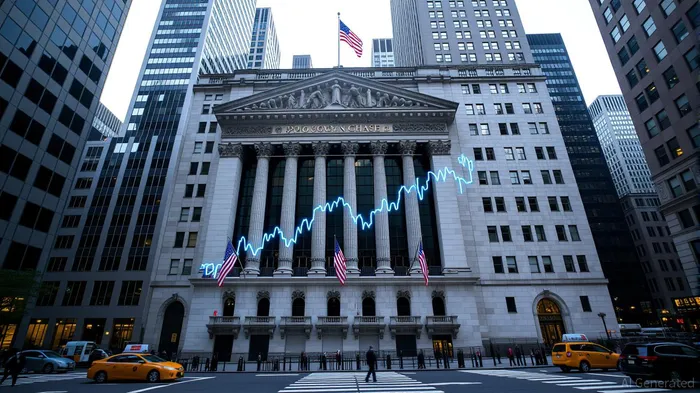
Jamie Dimon: The Art of Strategic Contrarianism
When the 2008 financial crisis struck, most banks scrambled to cut costs and retreat from risk. Jamie Dimon, however, took a diametrically opposed approach. JPMorganJPM-- Chase's acquisition of Bear Stearns and Washington Mutual under emergency Fed assistance wasn't just about growth—it was about preserving systemic stability. Dimon's bold moves preserved jobs, financial infrastructure, and customer trust, positioning the bank as a pillar of the post-crisis economy.
The foundation of JPMorgan's resilience lay in its “fortress balance sheet,” a term that became synonymous with prudent risk management. By diversifying across investment banking, asset management, and private banking, the firm avoided overexposure to any single sector. Dimon's emphasis on maintaining high capital reserves and avoiding excessive leverage allowed JPMorgan to withstand the crisis while peers like Lehman Brothers collapsed.
Dimon's contrarian mindset extended beyond the crisis. In 2015, he warned of an impending downturn, urging the bank to prepare for higher interest rates and the unwinding of quantitative easing. This foresight enabled JPMorgan to pivot proactively, investing in digital transformation and cybersecurity. By 2023, the bank had achieved a record $58.5 billion in annual profits, a testament to its long-term strategic vision.
Chung Ju-Yung: Innovation and People-First Resilience
Hyundai's founder, Chung Ju-Yung, faced a different kind of volatility: the 1997 Asian Financial Crisis and the 2008 global downturn. Yet, where others cut R&D budgets, Chung doubled down. He saw downturns as opportunities to invest in hydrogen and electric vehicle technologies, a decision that positioned Hyundai as a global leader in clean energy by 2025.
Chung's “people-first” philosophy was equally transformative. Profit-sharing schemes, free meals for employees, and open communication fostered loyalty and productivity. During the 2008 crisis, when competitors laid off workers, Hyundai expanded operations, retaining talent and accelerating recovery. This culture of mutual respect became a competitive advantage, ensuring high morale and operational continuity during crises.
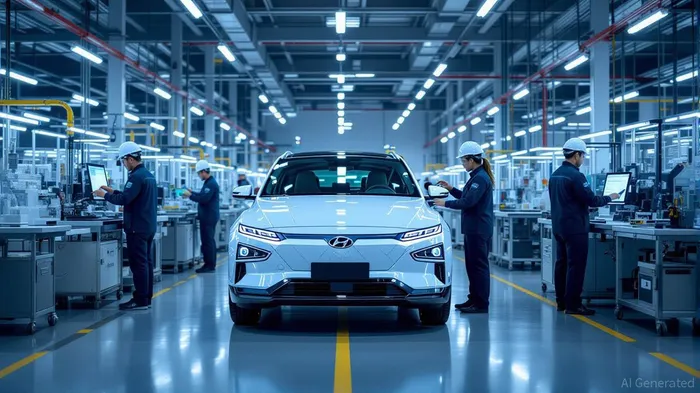
Chung also prioritized ethical governance and diversification. By expanding into shipbuilding, construction, and infrastructure, Hyundai created a buffer against sector-specific risks. His mantra, “shorten the time,” emphasized execution speed and efficiency, enabling the company to deliver projects faster and at lower costs. This approach not only stabilized Hyundai during downturns but also built a reputation for reliability that resonated with global stakeholders.
The Contrarian Playbook: Lessons for Investors
Both leaders rejected short-termism in favor of long-term value creation. Dimon's focus on risk management and Dimon's foresight in anticipating market shifts mirror Chung's commitment to R&D and employee welfare. Their strategies share common threads:
1. Diversification: Avoiding overreliance on a single business line.
2. Proactive Risk Management: Preparing for downturns even during periods of growth.
3. Values-Driven Culture: Prioritizing people, ethics, and innovation.
For investors, these principles translate into a clear framework: seek companies with strong balance sheets, diversified revenue streams, and leadership that prioritizes long-term resilience over quarterly earnings. JPMorgan and Hyundai's post-crisis success—JPMorgan's record profits and Hyundai's clean energy leadership—demonstrate the power of this approach.
Investment Advice: Building a Resilient Portfolio
In today's uncertain climate, investors should focus on firms with:
- Contrarian Leadership: Leaders who act against market panic, investing in innovation and infrastructure during downturns.
- Strong ESG Metrics: Companies with ethical governance and environmental commitments, like Hyundai's hydrogen initiatives.
- Operational Excellence: Firms that prioritize efficiency, as seen in JPMorgan's risk controls and Hyundai's execution speed.
Consider JPMorgan Chase (JPM) as a case study in financial resilience, and Hyundai Motor (HYMTF) as a model for innovation-driven recovery. Both stocks have outperformed their sectors over the long term, reflecting the enduring value of contrarian strategies.
Conclusion: The Future Belongs to the Resilient
Economic downturns are inevitable, but their impact is not. Leaders like Dimon and Chung Ju-Yung prove that resilience is a choice—one rooted in vision, values, and the courage to act against the grain. For investors, the lesson is clear: align with companies that build enduring value, not just quarterly profits. In a world of volatility, the most successful portfolios will be those that embrace the resilience factor.

Delivering real-time insights and analysis on emerging financial trends and market movements.
Latest Articles
Stay ahead of the market.
Get curated U.S. market news, insights and key dates delivered to your inbox.
AInvest
PRO
AInvest
PRO



Comments
No comments yet