
The Resilience Factor: How Adversity-Born Leadership Drives Long-Term Investment Value
 Aime Summary
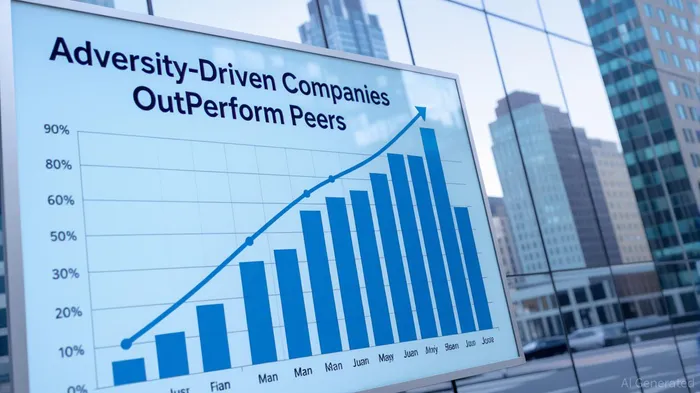
In the volatile landscape of modern investing, the most enduring companies are often led by founders who have weathered storms—literal and metaphorical. From Chung Ju-Yung's post-war rise with Hyundai to Elon Musk's near-bankruptcy survival at TeslaTSLA--, adversity has forged leaders whose traits—relentless execution, humility, frugality, and trust—translate into durable competitive advantages. These qualities, often overlooked in traditional financial metrics, are now empirically linked to superior investment outcomes.
The Power of Relentless Execution
Relentless execution is the bedrock of adversity-driven leadership. Chung Ju-Yung's mantra—“If you don't try, you won't succeed”—was not just motivational rhetoric. During the 1997 Asian Financial Crisis, while rivals cut R&D budgets, Hyundai retained its workforce and invested in quality control. This discipline paid off: by 2009, Hyundai's 10-year warranty became a market differentiator, boosting its EBITDA margin to 8.2% in 2024. Similarly, Elon Musk's Tesla survived near-bankruptcy in 2008 by iterating rapidly on battery technology and production processes. reveals a 300% surge since 2022, reflecting investor confidence in Musk's execution-driven culture.
Humility as a Strategic Advantage
Humility, often mistaken for weakness, is a critical trait for long-term success. Satya Nadella's transformation of MicrosoftMSFT-- from a rigid, siloed entity to a collaborative, growth-oriented company exemplifies this. By fostering a “learn-it-all” culture, Nadella revitalized Microsoft's cloud division, driving Azure's revenue to $60 billion in 2024. The 2023 McKinsey study found that companies with humble leaders saw 23% higher shareholder returns over five years. This is not mere chance; humility enables leaders to listen, adapt, and avoid the hubris that often precedes collapse.
Frugality as a Foundation for Resilience
Frugality is not about austerity—it's about resourcefulness. Chung Ju-Yung's use of double-sided paper and rejection of executive perks cultivated a culture of operational discipline. This ethos allowed Hyundai to outcompete rivals in capital-intensive industries, even during crises. DeltaDAL-- Airlines' Ed Bastian similarly transformed the airline from bankruptcy by tying executive pay to employee profit-sharing. Delta's P/E ratio of 12.3 (as of 2025) may understate its resilience, as its 84% employee satisfaction index reflects a trust-driven culture that reduces turnover and boosts productivity.
Trust: The Invisible Moat
Trust is the glue that binds adversity-driven organizations. Chung Ju-Yung's profit-sharing model and open communication during the 1997 crisis preserved institutional knowledge and loyalty. This trust became a competitive advantage: Hyundai's ability to pivot quickly during the 2020 pandemic led to record revenue growth. Modern parallels include Arianna Huffington's Thrive Global, which leveraged a founder-led vision to pivot from media to wellness, tapping into a $500 billion global market. Trust, once established, becomes a self-reinforcing cycle of innovation and loyalty.
How Investors Can Capitalize
For investors, the challenge lies in identifying these traits in real-time. Traditional metrics like P/E ratios or ROIC often miss the intangible qualities that drive long-term value. Instead, consider:
1. Qualitative Screening: Use frameworks like the GartnerIT-- Magic Quadrant to assess a company's ability to execute its vision. Leaders in the “Visionaries” quadrant often exhibit adversity-driven traits.
2. LTSE Long-Term Score: The Long-Term Stock Exchange's score measures a company's alignment with long-term goals, favoring firms with resilient leadership.
3. Financial Metrics with Context: Look for companies with high R&D-to-revenue ratios (e.g., Hyundai's 5.8% in 2024), expanding EBITDA margins, and strong employee retention.
highlights how Jeff Bezos' long-term focus on customer satisfaction and innovation led to a 12% EBITDA margin in 2025, despite early losses in the 1990s.
Conclusion: The Resilience Premium
Adversity-born leadership is not a relic of the past—it's a blueprint for the future. As AI disruption, climate change, and geopolitical uncertainty reshape markets, investors must prioritize companies led by leaders who have proven their ability to adapt, execute, and trust. By integrating qualitative assessments with traditional metrics, investors can uncover undervalued opportunities and build portfolios that thrive in adversity. The resilience premium is no longer a niche concept; it's a necessity for long-term success.

Stay ahead of the market.
Get curated U.S. market news, insights and key dates delivered to your inbox.
AInvest
PRO
AInvest
PRO



Comments
No comments yet