
The Resilience of Equities Amid Stalled Consumer Spending and Lingering Inflation


 Aime Summary
Moderating Inflation, Persistent Pressures
The U.S. September 2025 CPI report revealed a year-over-year inflation rate of 3.0% for the all-items index, slightly below economists' expectations of 3.1%. Core inflation, which excludes volatile food and energy prices, also rose 3.0% YoY. While this marks a deceleration from earlier in the year, it underscores that inflation remains embedded in the economy. Food prices surged 3.1% YoY, and gasoline prices spiked 4.1% MoM, highlighting sector-specific vulnerabilities. These data points suggest that while the Fed's policy tightening is beginning to show effects, inflationary pressures-particularly in discretionary and energy-dependent sectors-remain a drag on consumer spending.
Equities Outperform Amid Macroeconomic Uncertainty
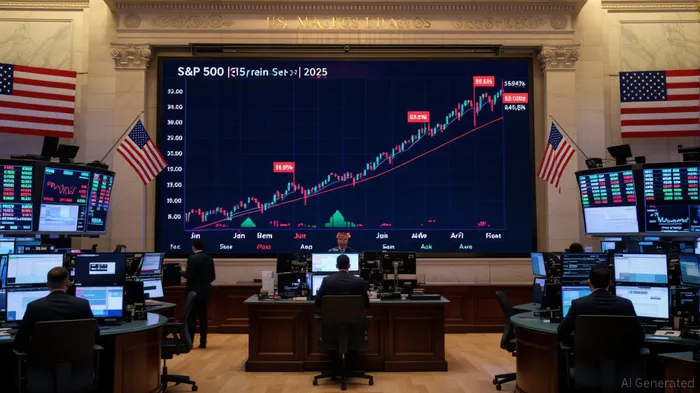 Despite these headwinds, the S&P 500 delivered a robust 3.6% gain in September 2025, reaching eight record highs. Year-to-date, the index returned over 14.83%, driven by resilient corporate earnings and momentum in technology and communication services. Operating margins for S&P 500 companies climbed to 17.9%, as firms continued to outperform Wall Street estimates by significant margins. This divergence between economic data and equity performance reflects a market increasingly decoupled from traditional macro indicators, with investors prioritizing corporate fundamentals over near-term inflation risks.
Investor Sentiment: A Tale of Two Markets
Investor sentiment in late 2025 has been marked by stark contrasts. Retail investors, as measured by the weekly Bull-Bear survey, exhibited optimism, with readings above their five-year average. Conversely, institutional sentiment turned bearish, as evidenced by the AAII Bull-Bear ratio swinging to -15%. This disconnect suggests a potential contrarian signal: institutional pessimism often precedes market rebounds.
In late November 2025, risk appetite improved significantly, with the S&P Global Investment Manager Index (IMI) showing a Risk Appetite Index of +18%. This shift was fueled by accommodative central bank policies and improved perceptions of equity fundamentals post-Q3 earnings. However, consumer sentiment remained subdued, with the University of Michigan's index at 51.0, reflecting eroded confidence due to rising prices, a sluggish housing market, and a K-shaped recovery favoring high-income households and tech-driven sectors.
Strategic Implications: Quality Growth in a Low-Growth World
The current macro backdrop-characterized by low inflation (by historical standards), uneven economic growth, and a narrowing window of Fed rate cuts-demands a recalibration of risk-appetite dynamics. The S&P 500's performance underscores the dominance of quality growth stocks, particularly in technology and communication services, which have consistently outperformed cyclical sectors. These firms benefit from structural tailwinds, including AI-driven productivity gains and global digitalization trends, while their strong balance sheets and recurring revenue models provide resilience against macro volatility.
Moreover, the K-shaped recovery highlights the importance of sectoral selectivity. Defensive sectors like healthcare and consumer staples outperformed in November 2025, as investors sought stability amid AI valuation concerns and geopolitical uncertainties. This trend reinforces the case for quality growth stocks, which combine defensive characteristics with long-term innovation potential.
Conclusion
The resilience of equities in 2025, despite stalled consumer spending and lingering inflation, underscores a market increasingly driven by corporate earnings and structural growth narratives. While macroeconomic risks persist-ranging from valuation concerns to political uncertainty-the data points to a strategic opportunity: quality growth stocks, with their durable cash flows and innovation-driven models, are well-positioned to thrive in a low-growth, low-inflation environment. As central banks navigate the delicate balance between tightening and easing, investors should prioritize fundamentals over short-term volatility, aligning portfolios with the enduring forces shaping the global economy.

Delivering real-time insights and analysis on emerging financial trends and market movements.
Latest Articles
Stay ahead of the market.
Get curated U.S. market news, insights and key dates delivered to your inbox.






Comments
No comments yet