
Resilience in Crisis: Lessons from Chernobyl for Identifying Undervalued Businesses in Geopolitical Turmoil
 Aime Summary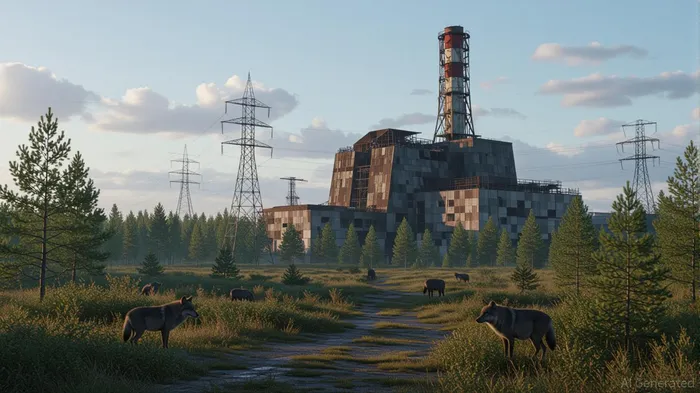
The Chernobyl disaster of 1986 remains one of history's most harrowing case studies in resilience. When Reactor No. 4 at the Chernobyl Nuclear Power Plant exploded, it unleashed radioactive fallout across Europe, displacing hundreds of thousands and rendering vast areas uninhabitable. Yet, decades later, the Chernobyl Exclusion Zone has become a paradoxical testament to nature's ability to adapt. Wolves, wild boars, and even rare bird species now thrive in the absence of human activity, while the surrounding ecosystems have demonstrated a capacity to recover despite persistent contamination. This story of ecological resilience offers a compelling analogy for investors seeking undervalued businesses in today's volatile geopolitical and economic climate.
The Parallels Between Ecological and Business Resilience
Chernobyl's recovery was not a return to the status quo but a reimagining of what was possible. The exclusion zone's ecosystems adapted to extreme conditions by leveraging minimal human interference, robust biological diversity, and long-term environmental monitoring. Similarly, businesses in sectors like energy, infrastructure, and cybersecurity must adopt adaptive strategies to thrive in an era marked by geopolitical instability, climate risks, and digital threats.
- Energy: Building a Post-Crisis Power Grid
The Chernobyl disaster exposed the fragility of centralized energy systems. Today, energy companies that prioritize decentralized, renewable, and resilient infrastructure are akin to the ecosystems that rebounded in the exclusion zone. For example, firms like NextEra Energy (NEE) and Enphase Energy (ENPH) are leading the transition to distributed energy systems, integrating solar, wind, and battery storage to create grids that can withstand disruptions. These companies mirror the adaptive strategies seen in Chernobyl's ecosystems by diversifying energy sources and enhancing grid resilience.
The energy sector's long-term value lies in its ability to balance low-carbon goals with reliability. Companies that invest in grid modernization and microgrid technologies—akin to the Chernobyl Exclusion Zone's self-sustaining ecosystems—are well-positioned to outperform in a world where energy security is paramount.
- Infrastructure: Reinforcing the Foundations of Society
Chernobyl's containment efforts required innovative engineering, such as the New Safe Confinement (NSC) arch, a 350-meter structure designed to shield the damaged reactor for a century. Similarly, infrastructure firms like AECOM (ACM) and Bechtel Group (BLT) are building resilient infrastructure to withstand climate change, cyberattacks, and geopolitical shocks. These companies are investing in smart cities, flood-resistant construction, and AI-driven maintenance systems—strategies that echo the NSC's long-term vision.
Investors should prioritize infrastructure firms with strong ESG (Environmental, Social, Governance) frameworks and a focus on adaptive design. These companies are not just repairing the past but engineering the future, much like the engineers who transformed a disaster site into a controlled, sustainable environment.
- Cybersecurity: Containing Digital Fallout
Just as Chernobyl required containment structures to prevent further contamination, cybersecurity firms today act as digital “containment” experts. Companies like Palo Alto Networks (PANW) and CrowdStrike (CRWD) are developing AI-driven threat detection systems to protect against ransomware, data breaches, and state-sponsored attacks. Their work mirrors the ecological monitoring programs in the exclusion zone, where continuous data collection and adaptive strategies prevent long-term damage.
The cybersecurity sector is experiencing exponential growth as governments and corporations prioritize digital resilience. Firms that integrate zero-trust architectures and predictive analytics—akin to the real-time radiation monitoring systems in Chernobyl—are capturing market share in a high-demand, low-supply space.
Investment Strategy: Identifying the “Chernobyl-Effect” Companies
The key to spotting undervalued businesses in volatile markets lies in identifying companies that exhibit the same traits as Chernobyl's resilient ecosystems: adaptability, long-term vision, and systemic robustness.
- Adaptability: Look for firms that pivot quickly to emerging threats. For example, energy companies diversifying into hydrogen or green hydrogen, or infrastructure firms adopting modular construction techniques.
- Long-Term Vision: Prioritize companies with multi-decade plans, such as NextEra's 2030 decarbonization goals or Bechtel's investments in climate-resilient infrastructure.
- Systemic Robustness: Cybersecurity firms with recurring revenue models and strong customer retention rates (e.g., CrowdStrike's 98% net retention) demonstrate the kind of durability seen in Chernobyl's ecosystems.
Conclusion: Investing in the New Normal
The Chernobyl disaster taught us that even in the face of catastrophic failure, resilience can emerge through innovation, adaptability, and long-term planning. Today's geopolitical and economic landscape demands a similar mindset. By investing in energy, infrastructure, and cybersecurity companies that mirror the adaptive strategies of Chernobyl's ecosystems, investors can position themselves to capitalize on the next phase of global recovery.
As the world grapples with uncertainty, the lesson from Chernobyl is clear: resilience is not about returning to the past but about building a future that thrives in the face of adversity.

Delivering real-time insights and analysis on emerging financial trends and market movements.
Latest Articles
Stay ahead of the market.
Get curated U.S. market news, insights and key dates delivered to your inbox.
AInvest
PRO
AInvest
PRO



Comments
No comments yet