
The Resilience of Consumer Spending Amid Rising Tariffs: How Ecosystem Strategy Can Mitigate Economic Disruptions in Retail and Auto Sectors
 Aime Summary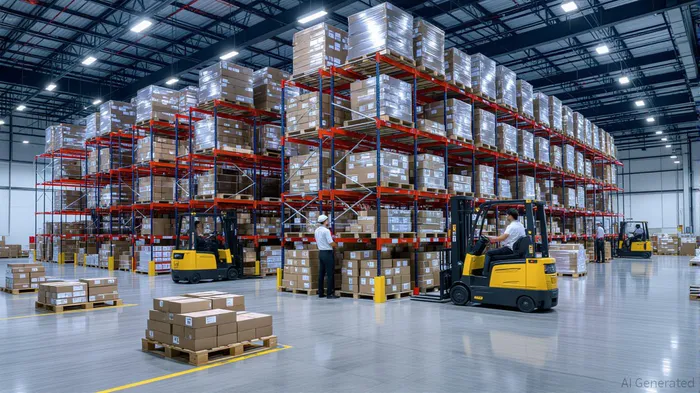
The U.S. retail and automotive sectors have faced a perfect storm in 2025: rising tariffs, inflationary pressures, and a softening labor market. Yet, consumer spending has shown surprising resilience. July 2025 data revealed a 0.5% increase in retail sales, with auto sales surging 1.6% as buyers rushed to purchase electric vehicles before federal tax credits expired. This resilience, however, is not a sign of immunity to economic headwinds but rather a testament to the strategic adaptations companies have made to mitigate disruptions.
Tariffs and the Auto Sector: A Tale of Two Strategies
The automotive industry has been hit hardest by Trump-era tariffs. New car sales plummeted by 300,000 units in June 2025, while FordF--, GMGM--, and ToyotaTM-- faced billions in profit losses. Yet, automakers have responded with a dual-pronged ecosystem strategy: inventory stockpiling and domestic manufacturing reshoring.
Ford, for instance, adopted a “just-in-case” inventory approach, building up domestic stockpiles to avoid sudden price spikes. This contrasts with the traditional “just-in-time” model, which left companies vulnerable to supply chain shocks. Meanwhile, Ford and GM are accelerating production of higher-margin, less fuel-efficient vehicles to offset tariff-driven costs. This shift aligns with Trump's deregulatory policies, which have rolled back environmental standards, creating a paradoxical lifeline for automakers.
The EV sector, however, remains fragile. Tesla's 13.5% global sales decline in July 2025 underscores the fragility of demand when incentives vanish. Yet, long-term investment in EV production persists, suggesting that the sector's fundamentals remain intact. Investors should monitor how companies like RivianRIVN-- and Ford balance short-term tariff costs with long-term electrification goals.
Retail's Adaptive Ecosystem: From Warehousing to Dynamic Pricing
Retailers have also pivoted to counteract tariff-driven inflation. CostcoCOST-- and SonySONY--, for example, have increased inventory purchases to buffer against price volatility. Meanwhile, warehouse automation has become a critical tool. AutoStore's dense storage systems allow retailers to hold 400% more inventory in the same space, enabling agile responses to supply chain disruptions.
In the used car market, dealerships are leveraging dynamic pricing models and digital platforms to navigate uncertainty. By analyzing real-time data on buyer behavior and inventory levels, dealers can adjust pricing to stay competitive. For instance, Cox Automotive reports that used car sales rose 2.3% year-over-year in 2025, as buyers gravitated toward tariff-free options.
The Role of Domestic Manufacturing and Technology
The push for domestic manufacturing is reshaping both sectors. TSMC's $100 billion investment in U.S. chip manufacturing and Intel's CHIPS Act-funded facilities highlight a broader trend of reshoring. These moves reduce reliance on global supply chains and insulate companies from tariff shocks. For investors, this signals a long-term shift toward localized production, with implications for sectors like semiconductors and industrial automation.
Technology is another linchpin. AI-driven pricing tools and data analytics are enabling retailers to forecast demand and adjust strategies in real time. For example, Warby Parker's selective pricing strategy—raising prices on premium lenses while keeping essentials affordable—demonstrates how data can balance profitability and customer retention.
Investment Implications: Where to Focus in a Tariff-Driven World
- Resilient Retailers: Companies with robust inventory management and digital capabilities, such as WalmartWMT-- and TargetTGT--, are well-positioned to absorb cost pressures. Their aggressive promotions and extended sales windows (e.g., Amazon's 96-hour Prime Day) highlight their adaptability.
- Automotive Innovators: Automakers investing in domestic manufacturing and high-margin vehicles (e.g., Ford, GM) may outperform peers. However, EV producers like TeslaTSLA-- face near-term risks unless they secure new incentives or reduce production costs.
- Supply Chain Tech: Firms providing warehouse automation (e.g., AutoStore) and logistics solutions will benefit from the shift to “just-in-case” inventory strategies.
- Used Car Dealerships: As demand for tariff-free vehicles grows, dealerships with strong online platforms and dynamic pricing models could see increased market share.
Conclusion: Ecosystem Strategies as a Shield Against Disruption
The 2025 data underscores a critical lesson: consumer spending will remain resilient only if companies adopt ecosystem strategies that anticipate and absorb economic shocks. From stockpiling inventory to reshoring production and leveraging technology, the most successful firms are those that treat tariffs not as a threat but as a catalyst for innovation. For investors, this means prioritizing sectors and companies that are proactively reengineering their operations to thrive in an unpredictable trade environment.
As the Federal Reserve debates rate cuts and Trump's policies continue to reshape the economic landscape, the ability to adapt will separate winners from losers. The key takeaway? In a world of rising tariffs, resilience is not a passive trait—it's a strategic imperative.

Stay ahead of the market.
Get curated U.S. market news, insights and key dates delivered to your inbox.
AInvest
PRO
AInvest
PRO



Comments
No comments yet