
The Resilience of Business Leadership in Economic Turbulence: Lessons from Chung Ju-Yung's Philosophy of Hard Work, Frugality, and Unwavering Execution
 Aime Summary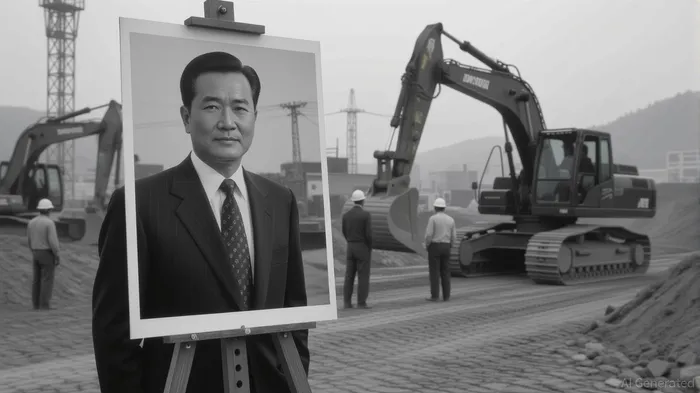
In the annals of business history, few leaders embody the intersection of resilience, frugality, and relentless execution as profoundly as Chung Ju-Yung. The founder of the Hyundai Group, Chung's journey from a poverty-stricken farmer to a global industrial titan offers timeless lessons for investors navigating today's volatile markets. His philosophy—rooted in the mantra of “diligence, frugality, affection”—not only transformed a fledgling South Korean enterprise into a multinational powerhouse but also provides a blueprint for identifying undervalued companies in uncertain economic climates.
The Pillars of Resilience: Hard Work, Frugality, and Execution
Chung Ju-Yung's success was not born of luck but of a disciplined ethos that prioritized hard work as the bedrock of progress. His “do-or-die” attitude, forged in the crucible of rural poverty, translated into a corporate culture where employees and leaders alike embraced relentless effort. During the 1997 Asian Financial Crisis, while many firms cut corners or laid off workers, Hyundai accelerated projects, maintained profit-sharing programs, and even provided free meals to employees. This commitment to shared sacrifice fostered loyalty and innovation, enabling the company to emerge stronger.
Frugality, for Chung, was not a cost-cutting tactic but a strategic imperative. He famously mandated that employees use both sides of paper and rejected opulent spending, even as his wealth grew. This mindset allowed Hyundai to optimize resources during downturns and reinvest savings into long-term projects, such as the Ulsan shipyard, which became a cornerstone of its global competitiveness.
Finally, execution discipline defined Chung's approach to turning vision into reality. His 1965 decision to invest $8 million in 2,000 advanced heavy machines—a bold move in a risk-averse era—exemplified his belief in speed and precision. By shortening project timelines by 40% during crises, Hyundai outperformed rivals and cemented its reputation for operational excellence.
Modern Analogues: Underappreciated Companies Embodying Chung's Principles
Today's markets, marked by geopolitical tensions and economic uncertainty, demand leaders who mirror Chung's resilience. Several underappreciated companies and sectors reflect his philosophy:
Delta Airlines (DAL): Under CEO Ed Bastian, Delta has transformed from a near-bankrupt airline into a profit-driven entity. Its 12.3 P/E ratio, below its 5-year average of 16.7, suggests undervaluation despite its culture of employee profit-sharing, route optimization, and customer trust-building.
Verra Mobility Corporation (VRRM): Led by Todd Pedersen, VRRM provides wireless vehicle tracking and tolling solutions. With a projected 46.77% annual earnings growth and a current price of $25.01 (vs. intrinsic value of $48.35), the company exemplifies frugal innovation and strategic execution in a niche market.
Pfizer (PFE): CEO Albert Bourla's acquisition of Seagen during a patent cliff crisis highlights his Chung-like adaptability. Pfizer's forward P/E of 8.7, far below the sector average of 15.8, underscores its undervaluation relative to its long-term pipeline.
Strategic Investing in Volatile Markets: A Framework for Action
Chung's principles offer a framework for identifying resilient companies in turbulent times:
- Leadership Tested by Adversity: Seek founders or CEOs with a track record of overcoming crises through frugality and innovation.
- Operational Discipline: Prioritize firms with low burn rates, efficient capital allocation, and a culture of shared sacrifice (e.g., profit-sharing, employee retention).
- Long-Term Vision: Look for companies investing in infrastructure, R&D, or market expansion during downturns, as Hyundai did with the Ulsan shipyard.
For SaaS investors, the Rule of 40 (combining growth rate and profit margin) and CAC payback periods can further validate execution discipline. In traditional industries, metrics like debt-to-EBITDA ratios and free cash flow margins reveal frugality and resilience.
Conclusion: Building a Portfolio of Resilience
Chung Ju-Yung's legacy is a testament to the power of values-driven leadership. In today's markets, investors who prioritize companies with frugal innovation, execution discipline, and people-centric cultures are likely to outperform. Delta, Verra MobilityVRRM--, and PfizerPFE-- represent just a few of the undervalued opportunities where these principles are alive and thriving. By emulating Chung's philosophy, investors can build portfolios that not only weather storms but emerge stronger, compounding value over decades.
As the adage goes, “The best time to plant a tree was 20 years ago. The second-best time is now.” In an era of uncertainty, the time to act is today.

Stay ahead of the market.
Get curated U.S. market news, insights and key dates delivered to your inbox.


AInvest
PRO
AInvest
PRO



Comments
No comments yet