
Resilience in 401(k) Portfolios: How a 2025 Market Rebound Turned Patience into Prosperity


 Aime Summary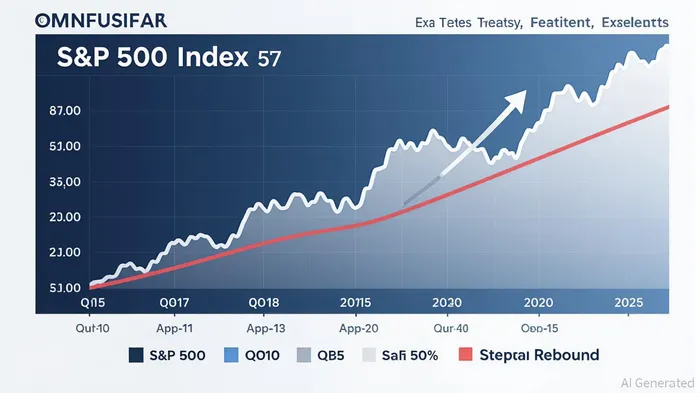
The first quarter of 2025 tested the mettle of investors like never before. Triggered by policy uncertainty under the Trump administration—including a 25% tariff on foreign-made cars and aggressive trade rhetoric—the S&P 500 plummeted from a 22x price-to-earnings ratio to 20x, erasing trillions in market value. The "Magnificent 7" tech stocks, which had driven 63% gains in 2024, collapsed by 15% year-to-date, while the equal-weight S&P 500 fared better, dropping just 1%. This divergence underscored a critical lesson: market volatility is inevitable, but resilience is earned through discipline.
Behavioral Finance and the 2025 Selloff
The selloff exposed the fragility of human psychology in investing. Behavioral finance principles like loss aversion and herd mentality amplified the downturn. Investors, fearing further declines, sold off shares at the worst possible moment, locking in losses and missing the subsequent rebound. Charles Schwab's Second Quarter 2025 SDBA Indicators Report revealed that self-directed 401(k) investors who stayed the course saw their average account balances surge 7.9% in Q2, reaching $362,302. In contrast, those who panicked and liquidated positions faced prolonged recovery timelines.
The data is stark: an investor who remained invested from 1980 to 2025 achieved a 12% annualized return. But someone who sold after a downturn and re-entered only after two years of positive returns saw returns drop to 10% annually. Over decades, this 2% gap compounds into millions. For example, a $5,000 annual contribution over 40 years would yield $6.1 million for the disciplined investor versus $3.6 million for the reactive one.
Tesla, a bellwether of the Magnificent 7, exemplifies this dynamic. After a 15% drop in Q1 2025, its shares rebounded 32% in Q2, driven by renewed demand for AI-driven manufacturing and energy solutions. Investors who clung to their positions during the selloff were rewarded, while those who sold missed out on a critical inflection pointIPCX--.
Market Recovery Patterns and Portfolio Discipline
History shows that markets recover from corrections. Since the 1920s, the S&P 500 has averaged 14% returns two years after a 10% drawdown. The 2025 rebound followed this pattern, with the index surging 10.9% in Q2 alone. This recovery was fueled by three factors:
1. Rebalancing: Investors who maintained target allocations (e.g., 60/40 stock/bond splits) bought undervalued equities during the selloff, capitalizing on the rebound.
2. Dollar-Cost Averaging: Consistent contributions to 401(k)s allowed investors to purchase shares at lower prices, reducing the impact of volatility.
3. Tax-Loss Harvesting: Selling underperforming assets to offset gains proved critical for tax efficiency, as seen in Morgan Stanley's analysis of 120,000 investors who stayed on track during the 2020 crash.
The role of target-date funds (TDFs) also shone. Over 60% of Fidelity 401(k) participants held TDFs in 2025, which automatically adjusted allocations toward bonds as the market stabilized. This passive strategy minimized emotional decision-making and preserved capital during the downturn.
Lessons for Long-Term Investors
The 2025 selloff and rebound offer three enduring lessons for retirement savers:
1. Avoid Panic Selling: Selling at the bottom guarantees missed gains. The S&P 500's 10.9% Q2 rebound erased the Q1 decline for those who stayed invested.
2. Diversify and Rebalance: A 60/40 portfolio structure cushioned losses, while rebalancing ensured systematic "buy low, sell high" execution.
3. Embrace Dollar-Cost Averaging: Regular contributions smoothed out market fluctuations, as seen in the 14.3% average 401(k) savings rate in 2025.
The bond market also played a role. The 10-year Treasury yield fell from 4.80% to 4.15% in Q1 2025 as investors flocked to safety, but it rebounded to 4.50% by Q3 as economic clarity improved. This volatility highlights the importance of balancing equities with fixed income to manage risk.
Conclusion: Patience as a Strategic Advantage
The 2025 market turmoil reaffirmed that portfolio discipline is the cornerstone of long-term success. Investors who adhered to their financial plans, resisted emotional impulses, and leveraged tools like rebalancing and tax-loss harvesting emerged stronger. For those nearing retirement, the lesson is to maintain a conservative tilt as the recovery unfolds. For younger investors, the takeaway is to stay fully invested in equities, where the long-term growth potential remains robust.
As the market navigates the next phase of policy uncertainty, the 2025 rebound serves as a reminder: volatility is a feature, not a bug. By embracing patience, discipline, and historical patterns, investors can transform market turbulence into a catalyst for prosperity.

Stay ahead of the market.
Get curated U.S. market news, insights and key dates delivered to your inbox.
AInvest
PRO
AInvest
PRO



Comments
No comments yet