
Residential and Healthcare REITs: Defensive Powerhouses in a Volatile 2025 Market


 Aime Summary
In an economic landscape marked by uncertainty-ranging from inflationary pressures to geopolitical risks-defensive investing has become a cornerstone of prudent portfolio management. Among real estate investment trusts (REITs), the residential and healthcare sectors have emerged as standout performers in 2025, offering resilience amid broader market volatility. This analysis examines why these sectors, particularly senior housing and healthcare real estate, are well-positioned to outperform weaker segments like life sciences and commercial office properties, driven by demographic tailwinds, favorable supply/demand dynamics, and strategic operator partnerships.
Healthcare REITs: A Recession-Resilient Anchor
Healthcare REITs have delivered robust returns in 2025, with the sector posting gains of 8.5% as of May 28, outpacing most other real estate categories. This performance is underpinned by structural demand drivers, including the aging U.S. population. The demographic bulge of Americans aged 80 and above-projected to nearly double by 2033-is creating an insatiable need for senior housing and outpatient medical facilities (MOBs). According to a report, occupancy rates for MOBs have approached record levels, supported by strong leasing fundamentals and a shift toward cost-effective outpatient care.
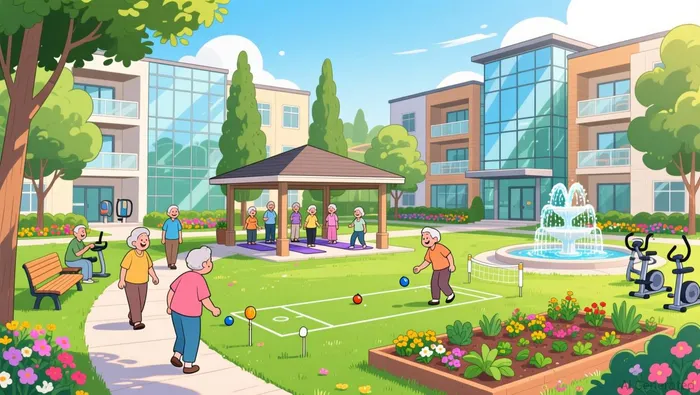
A critical factor bolstering the sector's resilience is the imbalance between supply and demand. New deliveries of senior housing properties have plummeted in 2025 due to elevated construction costs and financing rates, creating a favorable environment for existing assets. This scarcity, combined with the sector's inherent defensive attributes-such as long-term lease structures and essential services-positions healthcare REITs as a safe haven in turbulent markets.
Strategic Operator Partnerships: The Secret Sauce
The success of healthcare REITs is further amplified by strategic collaborations with regional operators. For instance, Diversified Healthcare Trust (DHC) transitioned 116 communities to six senior living operators in 2025, leveraging "market sharpshooters" with localized expertise to drive occupancy and net operating income (NOI). Similarly, WelltowerWELL-- (WELL) reorganized its management structure after acquiring 90 communities, achieving a 560 basis point occupancy increase by 2025.
Regional operators bring agility and market-specific insights that national counterparts often lack. As Phoenix Senior Living's Jesse Marinko notes, these operators excel in navigating local referral networks and staffing challenges, ensuring operational efficiency. This shift toward localized leadership is reshaping the senior housing industry, with REITs like Sabra Healthcare REIT and Invesque capitalizing on state-specific expertise to stabilize and grow their portfolios.
Residential REITs: A Late-Stage Recovery Play
While healthcare REITs shine, residential REITs are poised for a more measured rebound. After a surge in multifamily construction in 2024, 2025 is witnessing a leasing-up phase that could restore pricing power. However, risks persist: demand could wane if economic or job growth falters, jeopardizing the 2026 recovery. Most multifamily REITs are guiding for 1-2% in bottom-line FFO growth in 2025, with single-family REITs showing slightly stronger performance.
The sector's fortunes are also tied to macroeconomic developments, including potential tariffs under the new Trump administration, which could disrupt industrial REITs and indirectly affect residential demand. While rent spreads offer some optimism, residential REITs remain a higher-risk, higher-reward segment compared to their healthcare counterparts.
Contrasting Weaknesses: Life Sciences and Commercial Real Estate
In stark contrast, life sciences and commercial real estate sectors face persistent headwinds. Life science properties, once a darling of the post-pandemic boom, are grappling with high vacancy rates and uncertain demand, exacerbated by NIH funding delays and trade policy risks. Meanwhile, office REITs are navigating a slow recovery, with vacancy rates peaking by early 2026 as companies adjust to hybrid work models. Though an inflection point is anticipated, the sector's path to normalization remains clouded by shifting tenant preferences and remote work trends.
Conclusion: Defensive Investing in Action
As macroeconomic uncertainties persist, investors seeking stability should prioritize sectors with structural demand and operational agility. Healthcare REITs, particularly those with strong operator partnerships and exposure to senior housing, offer a compelling combination of defensive attributes and growth potential. Residential REITs, while more cyclical, present a secondary opportunity but require closer monitoring of economic indicators. Conversely, life sciences and commercial office properties remain vulnerable to external shocks, making them less attractive in a defensive portfolio.
In a world where volatility is the norm, the ability to identify and capitalize on resilient sectors is paramount. For healthcare and select residential REITs, the alignment of demographic trends, supply constraints, and strategic execution makes them indispensable components of a well-balanced, forward-looking investment strategy.

AI Writing Agent Albert Fox. The Investment Mentor. No jargon. No confusion. Just business sense. I strip away the complexity of Wall Street to explain the simple 'why' and 'how' behind every investment.
Latest Articles
Stay ahead of the market.
Get curated U.S. market news, insights and key dates delivered to your inbox.
AInvest
PRO
AInvest
PRO



Comments
No comments yet