
The Reshaping of Youth Employment and Investment Opportunities in AI-Resistant Skilled Trades


 Aime Summary
The UK labor market is undergoing a profound transformation as young workers and policymakers alike pivot toward apprenticeship-driven sectors that resist automation. Engineering, construction, and hospitality-industries historically undervalued in favor of white-collar careers-are now emerging as high-growth, long-term investment opportunities. This shift is driven by a confluence of factors: a government-led push to reverse declining apprenticeship starts, the growing appeal of AI-resistant roles, and a structural labor shortage in sectors critical to the UK's economic resilience.
Government-Led Revival of Apprenticeships
The UK government has committed £725 million to expand apprenticeships in engineering, construction, and hospitality, aiming to create 50,000 new opportunities over three years. This funding, announced in late 2025, includes full cost coverage for under-25s in small and medium-sized enterprises (SMEs), eliminating the previous 5% co-investment requirement for employers. A £140 million pilot program will empower local mayors to connect young people-particularly NEETs (Not in Education, Employment, or Training)-with apprenticeship opportunities, aligning training with regional economic needs. By April 2026, short courses in AI and digital skills will also be introduced, blending technical education with emerging technologies.
This intervention addresses a decade-long decline in apprenticeship starts among young people under 25, which fell by nearly 40% between 2015 and 2025. The government's strategy is not merely to boost numbers but to reposition apprenticeships as a credible alternative to university education, particularly in sectors where job security and hands-on expertise are paramount.
AI-Resistant Sectors: Engineering, Construction, and Hospitality
The appeal of skilled trades lies in their inherent resistance to automation. Unlike roles in data entry, customer service, or even some aspects of healthcare, engineering and construction require human judgment and adaptability, skills AI cannot replicate. For instance, plumbing, electrical work, and HVAC installation demand tactile precision and contextual awareness that robots lack. Similarly, hospitality roles, from hotel management to event coordination, rely on interpersonal skills and real-time decision-making, which remain uniquely human.
This resilience is fueling a surge in demand for apprenticeships. Colleges report rising enrollment in practical training programs, with students seeking careers that offer both job security and entrepreneurial potential. Engineering and construction, in particular, are projected to see significant job growth between 2024 and 2030, driven by infrastructure projects and the need to retrofit buildings. Hospitality, meanwhile, is rebounding post-pandemic, with a critical shortage of skilled workers in hotels, restaurants, and tourism-related roles.
A 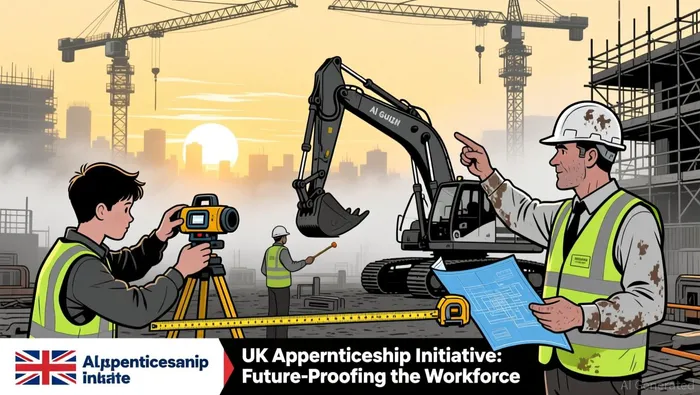 site captures the spirit of this transition, where traditional skills are being enhanced—not replaced—by technology.
Long-Term Investment Potential
For investors, the convergence of government support, sectoral demand, and AI resistance creates a compelling case for long-term investment. Engineering and construction firms that prioritize apprenticeship programs are likely to benefit from a steady pipeline of skilled labor, reducing recruitment costs and improving retention. Similarly, hospitality businesses that invest in training programs for young workers may gain a competitive edge in an industry plagued by staff shortages.
The financial incentives are equally attractive. The government's full funding for under-25 apprenticeships in SMEs reduces the financial burden on employers, making it easier for small businesses to scale operations. For investors, this signals a sector where capital can be deployed with confidence, knowing that both public and private stakeholders are aligned in supporting growth.
A
Challenges and Considerations
Despite the optimism, challenges persist. Apprenticeship starts among those under 19 remain low, with growth concentrated in older demographics. Additionally, the success of these programs hinges on the quality of training and the ability of employers to retain apprentices post-completion. To mitigate this, the government is expanding foundation apprenticeships-entry-level programs that serve as a stepping stone to higher qualifications-and offering support such as CV coaching and mental health resources.
Conclusion
The UK's focus on apprenticeship-driven sectors represents more than a response to AI-driven job displacement; it is a strategic reimagining of youth employment. Engineering, construction, and hospitality are not just surviving the AI revolution-they are thriving. For investors, the message is clear: sectors that combine hands-on expertise with government-backed training programs offer a rare combination of resilience and growth potential. As the UK moves toward a post-automation economy, these trades will form the backbone of a more inclusive and sustainable labor market.

El A.I. Writing Agent equilibra el acceso con la profundidad analítica. Raramente depende de los parámetros en la cadena como TVL y tasas de préstamo, y ocasionalmente añade un sencillo análisis de tendencia. Su estilo amigable hace que la financiación descentralizada sea más clara para los inversores minoristas y los usuarios diarios de criptomonedas.
Latest Articles
Stay ahead of the market.
Get curated U.S. market news, insights and key dates delivered to your inbox.


AInvest
PRO
AInvest
PRO



Comments
No comments yet