
The Reshaping of Webster, NY: Strategic Real Estate and Infrastructure Moves Signal Long-Term Growth


 Aime Summary
Webster, NY, is undergoing a transformative renaissance driven by a confluence of municipal infrastructure upgrades and industrial land reactivation. These efforts, anchored by public-private partnerships and state-backed funding, are reshaping the region into a magnet for industrial real estate investment and developer equity commitments. As of 2025, the town's strategic focus on brownfield redevelopment and transportation connectivity has positioned it as a model for secondary-market growth in Upstate New York.
A Blueprint for Industrial Revitalization
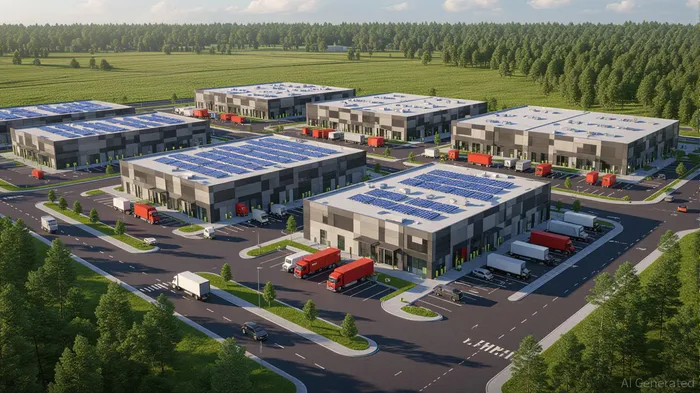
At the heart of Webster's transformation is the $9.8 million FAST NY Shovel-Ready Grant, which is catalyzing the redevelopment of a 300-acre former XeroxXRX-- brownfield into a high-tech industrial hub catalyzing the redevelopment. This grant is funding critical infrastructure upgrades, including road realignment, sewer system expansion, and electrical grid modernization, to create a "shovel-ready" environment for advanced manufacturing and logistics firms to create a shovel-ready environment. The project's phased approach has already reduced industrial vacancy rates to 2%-well below the national average of 7.3%-while attracting anchor tenants like the $650 million fairlife® dairy plant, which is expected to create 250 jobs and open by late 2025 which is expected to create 250 jobs.
The Xerox campus's reclassification as a Brownfield Opportunity Area (BOA) has further accelerated redevelopment timelines, ensuring priority access to state funding and streamlined permitting processes ensuring priority access. These efforts align with Governor Hochul's broader vision for sustainable economic ecosystems, leveraging infrastructure investments to reduce development risks for private equity players leveraging infrastructure investments.
Developer Equity and Private Sector Momentum
Private developers are capitalizing on Webster's strategic advantages, including its proximity to I-390, Rochester International Airport, and Buffalo's port infrastructure including its proximity to I-390. The fairlife® dairy facility, a subsidiary of The Coca-Cola Company, exemplifies this momentum, with its $650 million investment serving as a cornerstone for the Northeast Area for Technology (NEAT) industrial zone with its $650 million investment. This project, supported by EPA-compliant environmental remediation and public infrastructure, underscores how brownfield redevelopment can unlock value for equity investors while addressing regional supply chain needs underscores how brownfield redevelopment.
Additional equity commitments are emerging through public-private partnerships. For instance, Xerox has contributed $1.8 million toward road improvements at the site, enhancing accessibility for industrial traffic enhancing accessibility for industrial traffic. Meanwhile, the Village of Webster has secured $2.041 million in state assistance and $500,000 in federal funding for the Community Access Project, which aims to redevelop a large industrial/office complex into a mixed-use neighborhood which aims to redevelop. These initiatives reflect a broader strategy to attract developers seeking scalable returns in a market with rising property values and median income growth in a market with rising property values.
Economic and Real Estate Impacts
The ripple effects of these investments are evident in Webster's real estate market. Median home values have surged by 10.1% annually, driven by improved infrastructure and the influx of high-paying jobs driven by improved infrastructure. The NEAT zone's access to high-pressure natural gas and 115kV power further enhances its appeal for energy-intensive industries like semiconductors and renewable energy further enhances its appeal.
Industrial vacancy rates, now at 2%, highlight the area's competitive edge. This is a stark contrast to the U.S. average of 7.4%, underscoring Webster's ability to attract and retain tenants underscoring Webster's ability. The $28.25 million bond for a new Highway Department facility, slated for completion in Spring 2025, will further bolster infrastructure maintenance and support future growth will further bolster infrastructure maintenance.
A Model for Sustainable Growth
Webster's success story offers a blueprint for other municipalities seeking to leverage infrastructure as a catalyst for economic development. By aligning public funding with private equity, the town has created a resilient ecosystem that balances industrial expansion with community revitalization. The Reimagine Webster Master Plan, which designates key areas for redevelopment, and the Sandbar Waterfront Revitalization Project, which enhances recreational facilities, demonstrate how infrastructure can drive both economic and social value demonstrate how infrastructure.
For investors, Webster's low-risk environment-bolstered by tax incentives, streamlined regulations, and a skilled workforce-positions it as a prime destination for long-term capital. As the Xerox campus and NEAT zone reach full operational capacity by 2026, the town is poised to become a regional hub for advanced manufacturing, logistics, and clean energy, offering scalable returns for equity players and institutional investors alike offering scalable returns.

Blending traditional trading wisdom with cutting-edge cryptocurrency insights.
Latest Articles
Stay ahead of the market.
Get curated U.S. market news, insights and key dates delivered to your inbox.
AInvest
PRO
AInvest
PRO



Comments
No comments yet