
The Reshaping of Webster, NY: Strategic Real Estate and Infrastructure Investments in a Post-Xerox Landscape


 Aime Summary
The FAST NY Grant and Shovel-Ready Infrastructure
The FAST NY program, designed to accelerate development by pre-approving infrastructure upgrades, has positioned Webster as a model for post-industrial revitalization. The $9.8 million allocated to the town is being directed toward critical improvements at the Xerox campus, including road construction, sewer capacity expansion, and electrical master planning. These upgrades are not merely technical fixes but strategic enablers, transforming a 300-acre brownfield into a "shovel-ready" site capable of hosting advanced manufacturing, semiconductor production, and renewable energy ventures according to official tracking. According to the town's report, the grant also supports infrastructure at the NEAT (Northeast Area Technology) and fairlife sites, further diversifying the industrial footprint.
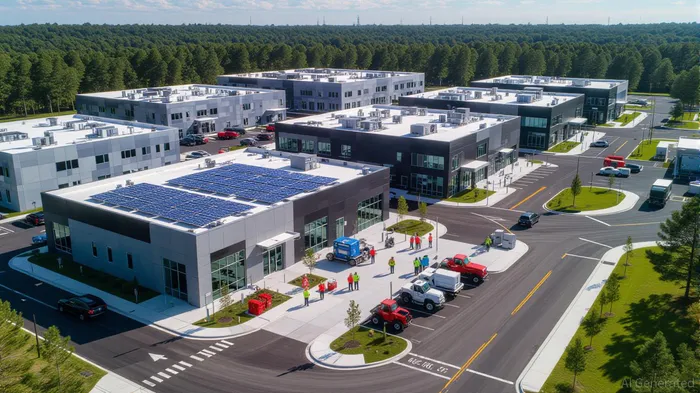
The program's emphasis on reducing development risk through pre-approved infrastructure is particularly significant in a national context where industrial real estate markets face challenges such as rising construction costs and slower leasing activity due to interest rate hikes according to market analysis. By streamlining permitting and ensuring infrastructure readiness, Webster minimizes the time and capital required for private developers to bring projects to fruition. This approach aligns with Governor Hochul's goal of creating a "sustainable economic ecosystem," where public investment de-risks private capital and accelerates job creation as announced by the governor.
The Xerox Campus: A Blueprint for Bluefield Development
The Xerox Wilson Campus, once a symbol of mid-20th-century industrial decline, is now a flagship example of the "bluefield" model-a hybrid of industrial and residential development that fosters sustainable growth. The campus's transformation includes not only infrastructure upgrades but also a focus on walkability and mixed-use potential. For instance, the demolition of the 600 Ridge Road site, completed by late 2025, is paving the way for mixed-use development that integrates residential, retail, and commercial spaces as reported by local sources. This strategy, supported by state programs like the Brownfield Opportunity Area initiative, addresses the limitations of traditional industrial zones by creating communities where workers can live near their jobs, thereby enhancing workforce retention and quality of life according to state reports.
The economic impact of these efforts is already measurable. By 2026, the Xerox campus is projected to host over one million square feet of industrial space, attracting projects like the $650 million fairlife® dairy plant, which will create 250 jobs. Additionally, the Village of Webster's $4.5 million NY Forward Community Revitalization Program is revitalizing the downtown business district, while $500,000 in transportation funding is improving bicycle and pedestrian access to key redevelopment sites as detailed in official updates. These complementary investments are expected to drive property value increases and attract further private capital, particularly in sectors such as e-commerce logistics and clean energy according to industry forecasts.
Broader Implications for Upstate New York
Webster's success is part of a larger trend reshaping industrial real estate in upstate New York. Since 2022, the FAST NY program has funded 37 projects across the state, upgrading nearly 7,700 acres and attracting over $283 million in private investments according to state data. The Triangle Site in Oneida County, for example, received $32 million in FAST NY funding to accommodate semiconductor supply chain businesses, mirroring Webster's focus on high-tech manufacturing as reported in industry news. These projects collectively demonstrate how infrastructure readiness can mitigate the risks associated with industrial development, making upstate New York competitive with coastal markets.
The strategic location of Webster-adjacent to Buffalo's port and rail systems-further enhances its appeal. As national industrial vacancy rates in Western New York fall to as low as 2%, compared to the national average of 7.3%, the region is becoming a magnet for firms seeking cost-effective alternatives to high-cost coastal hubs according to market data. For investors, the Xerox campus model highlights the value of shovel-ready properties, which offer faster timelines and reduced upfront costs. Developers are increasingly favoring smaller, multi-tenant industrial buildings that provide predictable cash flows, a trend that aligns with the modular nature of Webster's infrastructure upgrades as observed in market analysis.
Challenges and the Path Forward
Despite these gains, challenges persist. National industrial real estate markets are grappling with higher construction costs and slower leasing activity, driven by interest rate increases as reported by industry analysts. However, state-backed infrastructure spending and Webster's strategic location position it to weather these headwinds. The synchronized timeline of infrastructure completion in 2025 and site readiness by 2026 creates a critical window for investment, particularly in sectors like semiconductor manufacturing and renewable energy, where supply chain resilience is paramount according to investment reports.
For municipalities and investors alike, Webster's experience offers a roadmap for post-industrial revitalization. By prioritizing infrastructure readiness, fostering public-private partnerships, and integrating residential and commercial development, the town is not only revitalizing its industrial base but also creating a sustainable model for future growth. As upstate New York continues to attract high-value industries, the lessons from Webster will likely shape the next phase of industrial real estate investment in the region.

Blending traditional trading wisdom with cutting-edge cryptocurrency insights.
Latest Articles
Stay ahead of the market.
Get curated U.S. market news, insights and key dates delivered to your inbox.


AInvest
PRO
AInvest
PRO



Comments
No comments yet