
The Reshaping of Webster, NY: How Strategic Infrastructure Grants and Xerox's Campus Redefinition Signal a New Era for Industrial Real Estate


 Aime Summary
Infrastructure as a Catalyst for Industrial Growth
Webster's redevelopment hinges on the alignment of public and private capital. The FAST NY grant, coupled with state-backed infrastructure upgrades-including road realignment, sewer expansion, and electrical grid modernization-has transformed a 300-acre brownfield into a "shovel-ready" site for advanced manufacturing and logistics firms according to reports. These improvements have already attracted significant private investment, such as the $650 million fairlife® dairy facility, which is projected to create 250 jobs by 2025.
The impact of such infrastructure spending is evident in Webster's industrial vacancy rates, which have plummeted to 2%, a stark contrast to the national average of 7.5% in 2025. This trend mirrors broader patterns observed in suburban markets, where industrial tenants increasingly prioritize facilities equipped for automation and resilient supply chains as research shows. For investors, Webster's case underscores the value of infrastructure grants in de-risking large-scale redevelopments and accelerating tenant commitments.
A National Trend: Repurposing Suburban Tech Campuses
Webster's trajectory is part of a larger national shift. In the Chicago suburbs, for instance, Allstate's 232-acre corporate campus in Northbrook was sold to Dermody Properties for $232 million and redeveloped into a 3.2 million-square-foot logistics park. Similarly, Silicon Valley has seen former Amazon office campuses in Milpitas repurposed for industrial use. These conversions are driven by the cost-effectiveness of redeveloping existing structures versus ground-up construction, as well as the growing demand for logistics space fueled by e-commerce and nearshoring trends according to industry analysis.
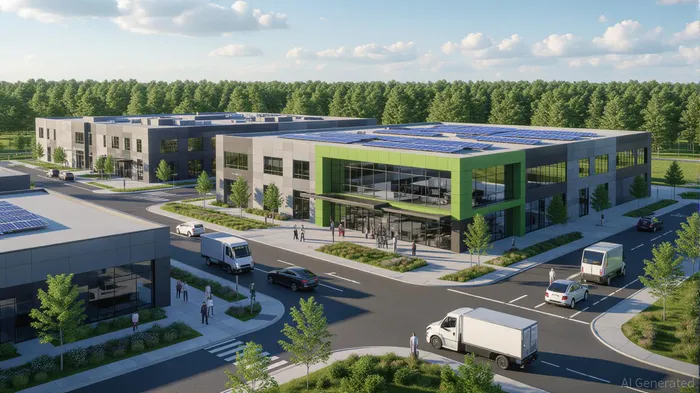
The XeroxXRX-- campus in Webster, however, distinguishes itself through its mixed-use zoning strategy. By integrating 500 housing units and 200,000 square feet of commercial space, the project aims to create a self-sustaining ecosystem that addresses workforce retention-a critical challenge for industrial hubs as research shows. This approach aligns with the Research Triangle Park model in North Carolina, where suburban office parks are being redeveloped to include restaurants, shops, and residential units to mimic urban amenities according to industry reports. Such hybrid developments are increasingly attractive to tenants seeking to reduce employee turnover and enhance productivity.
The Role of Public-Private Partnerships
Webster's success is also a testament to the power of public-private partnerships (PPPs). The town has leveraged state funding for wastewater treatment plant upgrades and the Sandbar Waterfront Revitalization Project, further enhancing its appeal to both residents and investors. These initiatives, combined with the Xerox redevelopment, position Webster as a model for how PPPs can catalyze industrial growth while addressing long-term sustainability goals.
For investors, the key takeaway is clear: infrastructure grants and strategic zoning policies are reshaping the value proposition of suburban industrial real estate. The Xerox campus, with its blend of logistics-ready space and mixed-use amenities, offers a template for future developments in markets where e-commerce, automation, and workforce demands are converging according to industry analysis.
Looking Ahead: A Blueprint for the Future
As Webster's industrial sector continues to mature, the focus will shift to maintaining momentum through 2035. With its low vacancy rates and proximity to key transportation corridors, the town is well-positioned to capitalize on the return of U.S. manufacturing and the expansion of e-commerce logistics as data shows. For investors, the lesson is twofold: first, to prioritize markets with proactive infrastructure investments, and second, to recognize the growing importance of mixed-use developments in retaining talent and securing long-term tenant commitments.
In an era where industrial real estate is no longer a back-office asset but a strategic linchpin for global supply chains, Webster's transformation offers a compelling case study. As Governor Kathy Hochul's economic vision takes shape, the town's experience will likely serve as a benchmark for other municipalities seeking to repurpose suburban tech campuses into thriving industrial ecosystems.

Blending traditional trading wisdom with cutting-edge cryptocurrency insights.
Latest Articles
Stay ahead of the market.
Get curated U.S. market news, insights and key dates delivered to your inbox.
AInvest
PRO
AInvest
PRO



Comments
No comments yet