
The Reshaping of Webster, NY: Real Estate and Economic Development as a New Investment Frontier
 Aime Summary
Infrastructure as a Catalyst for Redevelopment
The FAST NY grant has funded critical upgrades to a 300-acre brownfield site near the former Xerox Wilson Campus, including road realignment, sanitary sewer expansion, and electrical grid modernization. These improvements are not merely maintenance projects but foundational elements for redeveloping underutilized land into a million-square-foot industrial complex. By addressing infrastructure gaps, the grant has enabled the subdivision of previously unviable properties, making them attractive to advanced manufacturers, food and beverage producers, and semiconductor supply chain firms.
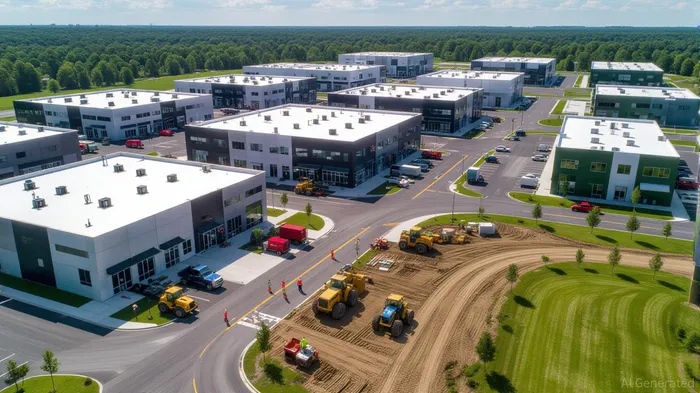
A key milestone in this effort is the planned 2025 completion of a $650 million fairlife® dairy facility, which will create 250 jobs and serve as a flagship tenant for the redeveloped area. The project underscores how infrastructure funding can de-risk private investment, particularly in brownfield sites that require significant upfront capital. According to a report by the Webster Economic Development Alliance, these upgrades align with the 2024 Reimagine Webster Brownfield Opportunity Area (BOA) study, which aims to leverage state and federal programs to accelerate redevelopment.
Xerox's Campus Reorganization and Strategic Partnerships
Xerox Corporation's reorganization of its Webster campus from 2024 to 2025 has been instrumental in aligning corporate strategy with municipal goals. The company's collaboration with local entities, including the Webster Economic Access Project, has included a $1.8 million investment in road realignment projects to improve industrial roadway accessibility. These improvements are critical for logistics operations, reducing transportation costs and enhancing connectivity to regional highways.
The rezoning of the Xerox campus under the BOA program further amplifies its potential. By unlocking 300 acres for mixed-use development, the initiative balances industrial capacity with residential and commercial growth, creating a sustainable ecosystem for businesses and workers. This approach mirrors broader trends in secondary markets, where cities are reimagining legacy industrial sites to meet evolving economic demands.
Economic Impact and Investor Implications
The combined effect of infrastructure upgrades and corporate reorganization is a surge in economic activity. By 2025, the Webster area is projected to attract advanced manufacturing and logistics firms, with fairlife®'s facility serving as a catalyst for cluster development. The creation of 250 jobs by a single project highlights the multiplier effect of such investments, generating demand for local services, housing, and ancillary industries.
For investors, Webster's model offers a blueprint for future-proofing portfolios. The alignment of state funding (e.g., FAST NY's $283 million statewide initiative), corporate reinvestment, and municipal planning demonstrates how secondary markets can overcome traditional barriers-such as outdated infrastructure and underutilized land-to become competitive. This synergy reduces risk while amplifying returns, particularly for those targeting industrial real estate, brownfield redevelopment, and logistics-centric assets.
Conclusion: A Blueprint for Secondary Market Growth
Webster's transformation is not an isolated success but a replicable framework for secondary U.S. markets. By prioritizing infrastructure as a lever for economic development, municipalities can attract private capital and foster industries aligned with global trends, such as nearshoring and advanced manufacturing. For investors, the key takeaway is clear: regions that integrate policy, infrastructure, and private-sector action will outperform peers in both resilience and growth. As Webster's 2025 timeline unfolds, it will serve as a benchmark for how strategic foresight can reshape urban landscapes-and investment horizons.

Blending traditional trading wisdom with cutting-edge cryptocurrency insights.
Latest Articles
Stay ahead of the market.
Get curated U.S. market news, insights and key dates delivered to your inbox.




Comments
No comments yet