
The Reshaping of Urban Mobility and Autonomous Vehicle Infrastructure


 Aime Summary
The transformation of urban mobility is accelerating, driven by the convergence of (AI), electric vehicles, and . Yet, as the December 2025 San Francisco blackout starkly illustrated, the vulnerabilities of this new infrastructure remain exposed. When a fire at a Pacific Gas and Electric (PG&E) substation plunged 130,000 residents into darkness, it not only disrupted traffic signals and public transit but also immobilized Waymo's autonomous vehicles, which rely on real-time data and infrastructure connectivity
according to a report. This incident underscores a critical truth for investors: the future of mobility is inseparable from the resilience of the energy systems that power it.
The San Francisco Blackout: A Stress Test for AI-Driven Mobility
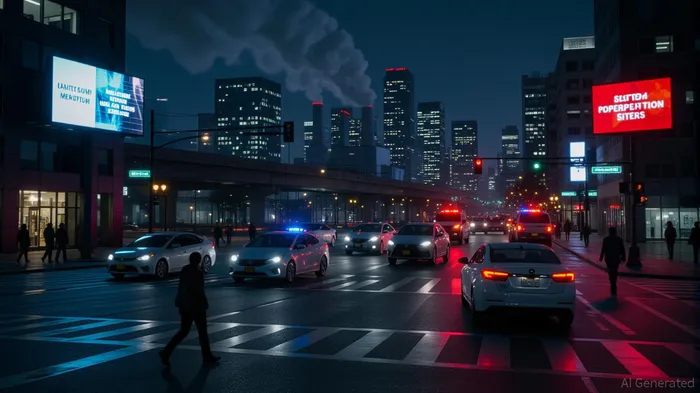
The 2025 blackout, caused by an equipment failure at a key substation, revealed how AI-driven systems are both dependent on and vulnerable to traditional infrastructure. Waymo's self-driving cars, which had previously demonstrated robustness in complex urban environments, were rendered inoperable at intersections where traffic signals failed
according to reports. The company's decision to suspend services highlighted a systemic risk: autonomous systems lack the redundancy to operate during prolonged power outages or data network disruptions
according to an analysis.
This event also exposed broader weaknesses in urban infrastructure. Traffic congestion worsened as stalled autonomous vehicles blocked lanes, and public transit systems like BART and Muni ground to a halt
according to ABC News. For investors, the takeaway is clear: the next wave of mobility innovation must be paired with grid resilience. Cities and companies that fail to address these interdependencies risk stalling progress-and profitability.
Waymo's Expansion: A Blueprint for Resilient AI-Driven Mobility
Waymo, the autonomous vehicle pioneer, is navigating this challenge through strategic expansion and partnerships. By 2025, the company had launched services in San Francisco, Phoenix, and Los Angeles, with plans to enter Atlanta, Miami, and international markets like London by 2026
according to company updates. However, its growth is not merely geographic. Waymo has invested in a new Phoenix-based factory to produce thousands of autonomous Jaguar I-PACE vehicles, ensuring scalability while reducing reliance on third-party suppliers
according to industry reports.
 Crucially, Waymo is integrating energy resilience into its operations. In San Francisco, , while in Phoenix,
according to company sustainability reports. These initiatives align with broader trends: the U.S. Department of Energy's (GRIP) program, , is accelerating projects to strengthen grid flexibility and reliability
according to official announcements. For investors, Waymo's dual focus on mobility and energy adaptation exemplifies how AI-driven platforms can mitigate systemic risks while capturing growth.
Grid Resilience as a Strategic Investment Theme
The San Francisco blackout and Waymo's strategies highlight a growing investment opportunity: grid modernization. The U.S. House of Representatives passed legislation in December 2025 to enhance grid reliability, addressing supply chain vulnerabilities and surging demand from AI and data centers
according to policy analysis. Meanwhile, the DOE's aims to fast-track multi-gigawatt generation and transmission projects, ensuring infrastructure can support AI-driven energy needs
according to official statements.
Investors should focus on companies and regions that combine AI-driven mobility with grid resilience. For example, Waymo's partnership with Via in Chandler, Arizona, integrates autonomous vehicles into public transit, reducing costs while leveraging renewable energy sources
according to city announcements. Similarly, data centers-key consumers of AI-driven energy-are adopting virtual power plant models to stabilize demand
according to industry analysis. These innovations suggest that the most compelling returns will come from ecosystems where mobility, energy, and AI are co-designed.
Risks and Rewards in the New Mobility Era
While the opportunities are vast, risks persist. The 2025 blackout demonstrated that even advanced AI systems cannot operate in isolation from failing infrastructure. Moreover,
according to investment analysis. Yet, these risks also create openings for investors who prioritize long-term resilience.
The key lies in diversification. For instance, the U.S. , driven in part by autonomous fleets like Waymo's
according to market data. Similarly, startups specializing in AI-driven grid optimization or decentralized energy systems are attracting capital as cities modernize. Investors who align with these trends-whether through established players like Waymo or emerging innovators-stand to benefit from the reshaping of urban infrastructure.
Conclusion
The San Francisco blackout was a wake-up call, exposing the fragility of systems that promise to redefine mobility. Yet, it also illuminated a path forward: the integration of AI-driven platforms with resilient energy infrastructure. Waymo's expansion and partnerships with regional utilities and grid modernization programs exemplify how this integration can be achieved. For investors, the lesson is clear: the future of urban mobility is not just about smarter cars or algorithms-it's about building ecosystems where technology and infrastructure evolve in tandem. Those who recognize this will find themselves at the forefront of a transformative era.

Stay ahead of the market.
Get curated U.S. market news, insights and key dates delivered to your inbox.






Comments
No comments yet