
The Reshaping of the U.S. Labor Market: Implications for Investors
 Aime Summary
The U.S. labor market is undergoing a quiet but profound transformation. Recent downward revisions to nonfarm payroll data—particularly the staggering 258,000 job loss adjustments for May and June 2025—signal a structural shift in labor demand. These revisions, combined with sector-specific wage growth and geographic divergences, are reshaping the investment landscape. For investors, the challenge is clear: rebalance portfolios to capitalize on emerging strengths while hedging against sectors facing headwinds.
Structural Shifts: Winners and Losers
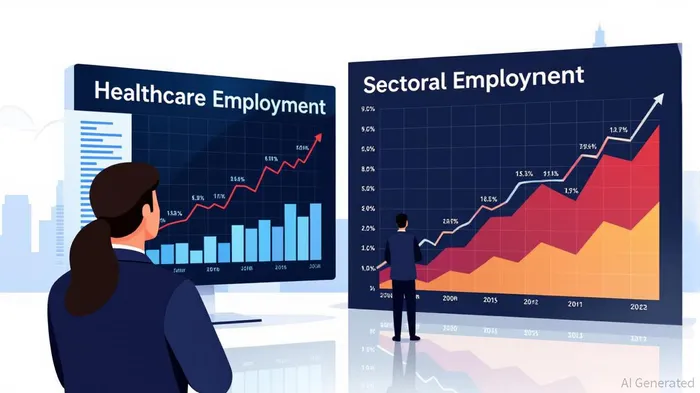
The July 2025 payroll report painted a stark picture: while healthcare and social assistance added 73,000 jobs (85% of total gains), manufacturing and retail trade continued to hemorrhage positions. Healthcare's resilience is driven by demographic tailwinds—aging populations and expanding access to care—and its 3.9% year-over-year wage growth outpaces the broader economy. Conversely, manufacturing's 4.0% decline in job openings (April 2025) and retail's six-month employment slide (62,000 lost jobs) reflect structural vulnerabilities.
Investors should prioritize sectors with durable demand. Healthcare's growth is not cyclical but foundational. Companies in ambulatory services, hospitals, and home healthcare are likely to outperform. Meanwhile, manufacturing's struggles are tied to trade policy uncertainty and automation-driven productivity gains. A would underscore this divergence.
Wage Dynamics: A Double-Edged Sword
Average hourly earnings rose 3.9% annually, outpacing inflation and suggesting persistent wage pressures. However, this growth is uneven. Unionized workers in professional services and government roles saw 4.6% wage growth, while non-union manufacturing jobs lagged. This disparity highlights the importance of sectoral labor market tightness.
For equity investors, companies with pricing power—such as those in healthcare or technology—can absorb higher labor costs. Conversely, labor-intensive sectors like retail and hospitality face margin compression. A could identify at-risk areas.
Geographic Divergence: Location as a Strategic Factor
Employment gains are concentrated in high-growth states like Texas, Florida, and Ohio, driven by population influxes and pro-business policies. Texas, for instance, added 37,700 jobs in April 2025, primarily in professional services. Conversely, Missouri and Washington faced declines in leisure and construction. Investors should consider regional exposure, favoring real estate or infrastructure plays in high-growth areas.
Actionable Insights for Portfolio Rebalancing
- Overweight Healthcare and Social Assistance: Position in companies with recurring revenue streams, such as telehealth providers or medical device manufacturers.
- Underweight Manufacturing and Retail: Reduce exposure to cyclical sectors prone to margin pressure.
- Hedge Against Rate Cuts: The Fed's September meeting now carries a 75% probability of a rate cut. Defensive sectors like utilities and consumer staples could outperform.
- Monitor Labor Force Participation: A stable 62.6% participation rate masks underlying fragility. Sectors with labor shortages (e.g., healthcare) may require higher wages, benefiting skilled labor-focused ETFs.
The Fed's Dilemma: Jobs vs. Inflation
The revised payroll data complicates the Fed's balancing act. While wage growth (3.9%) remains above the 2% inflation target, employment weakness suggests a rate cut is likely. Investors should prepare for a shift in monetary policy, favoring long-duration assets like growth equities and Treasury bonds. A would illustrate this pivot.
Conclusion
The U.S. labor market is not merely slowing—it is recalibrating. Structural shifts in demand, geographic trends, and wage dynamics demand a reevaluation of sectoral exposure. By tilting portfolios toward resilient sectors like healthcare and hedging against vulnerable industries, investors can navigate the next earnings and policy cycle with confidence. The key lies in recognizing that the labor market's reshaping is not a temporary blip but a long-term realignment of economic fundamentals.

Stay ahead of the market.
Get curated U.S. market news, insights and key dates delivered to your inbox.






Comments
No comments yet