
The Reshaping of Delivery Ecosystems: Amazon's Hiring Surge and Its Implications for Logistics Stocks


 Aime Summary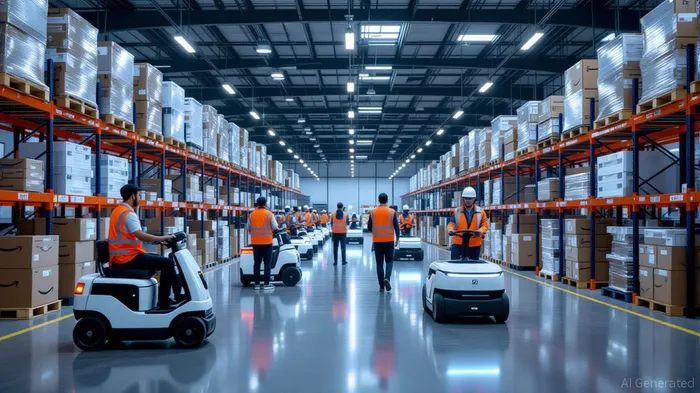
Amazon's recent hiring surge in its delivery workforce—expanding to 1.56 million global employees as of Q1 2025—reflects a strategic reimagining of labor ecosystems in the gig economy. By blending full-time, seasonal, and gig workers with automation, the company is not just scaling its delivery network but redefining the competitive advantages of platform-driven logistics. For investors, this shift offers a lens to evaluate the long-term potential of logistics stocks, where ecosystem design and labor flexibility are becoming critical differentiators.
Amazon's Ecosystem: A Hybrid Labor Model
Amazon's delivery workforce is a mosaic of full-time employees (75% of the total), part-time workers (15%), and seasonal hires (peaking at 250,000 during peak periods). Notably, nearly one-third of seasonal workers transition to permanent roles, creating a dynamic pipeline of labor. This model mirrors ecosystem theory, where interconnected nodes (full-time, gig, and automated systems) adapt to external shocks while maintaining resilience.
The company's reliance on Amazon Flex, a gig-based delivery service, further illustrates this. By outsourcing “last-mile” delivery to independent contractors, AmazonAMZN-- avoids fixed labor costs while maintaining scalability. This hybrid approach—combining direct employment with platform-based gig labor—creates a competitive moat. Unlike traditional logistics firms, Amazon's ecosystem is less vulnerable to labor shortages or unionization pressures, as it can pivot between labor types based on demand.
Automation as a Force Multiplier
Amazon's deployment of over 750,000 robots in fulfillment centers underscores its commitment to automation. These robots handle 75% of customer orders, reducing physical strain on workers and enabling productivity gains. However, automation does not eliminate labor; instead, it shifts the skill set required. Amazon's workforce now includes technical roles for robot maintenance and data analysis, creating a tiered labor structure that balances efficiency with human oversight.
This integration of automation and human labor aligns with the principles of platform capitalism, where technology acts as a catalyst for ecosystem expansion. For investors, the key insight is that logistics firms leveraging automation to enhance—not replace—human labor will dominate the next phase of the industry.
Labor Market Dynamics and Risks
The 2024 Amazon delivery strike, organized by the Teamsters union, highlights the fragility of gig-based ecosystems. While many drivers are technically employed by third-party Delivery Service Partners (DSPs), the strike exposed Amazon's indirect control over working conditions. This tension between platform flexibility and labor rights is a growing risk for logistics stocks.
However, Amazon's response—offering 15% average pay increases and expanding benefits—demonstrates its ability to adapt. The company's focus on retention (e.g., career advancement programs) and its 2.3% workforce growth in 2025 suggest a long-term strategy to stabilize its labor ecosystem. For investors, this signals a company prioritizing sustainable growth over short-term cost-cutting.
Investment Implications: Logistics Stocks in the Gig Economy
The logistics sector is undergoing a structural shift, driven by Amazon's ecosystem design. Traditional players like UPS (UPS) and FedEx (FDX) are investing in automation and gig partnerships to compete, while newer entrants such as Rappi and DoorDash (DASH) are leveraging pure-play gig models.
Amazon's dominance in delivery ecosystems creates both opportunities and risks for investors:
1. Opportunities:
- Logistics Infrastructure Providers: Companies supplying automation (e.g., KUKA AG) or cloud solutions (e.g., Amazon Web Services) will benefit from Amazon's expansion.
- Gig Economy Platforms: Firms that enable flexible labor networks, such as Uber (UBER), may see increased demand as Amazon's model gains traction.
2. Risks:
- Regulatory Scrutiny: Labor laws targeting gig workers could increase costs for platform-driven models.
- Unionization Trends: The 2024 strike underscores the potential for organized labor to disrupt gig-based ecosystems.
Conclusion: Building a Resilient Portfolio
Amazon's delivery ecosystem exemplifies the future of logistics: a hybrid model where automation, gig labor, and strategic workforce flexibility converge. For investors, the lesson is clear: prioritize companies that can adapt their labor ecosystems to balance efficiency, scalability, and worker retention.
While Amazon's stock (AMZN) remains a bellwether, diversifying into logistics infrastructure and gig-enabling technologies offers a more robust strategy. As the sector evolves, the ability to navigate the gig economy's complexities—without sacrificing operational resilience—will define the next generation of logistics leaders.
In the end, the reshaping of delivery ecosystems is not just a corporate strategy—it's a macroeconomic shift. Investors who recognize this and align their portfolios with ecosystem-driven innovation will be well-positioned for the decade ahead.

Delivering real-time insights and analysis on emerging financial trends and market movements.
Latest Articles
Stay ahead of the market.
Get curated U.S. market news, insights and key dates delivered to your inbox.




Comments
No comments yet