
Research Solutions Q1 2026 Earnings Call: Contradictions Emerge on AI Rights, B2C Strategy, ARR Growth, and Internal AI Efficiency
 Aime Summary
Date of Call: September 30, 2025
Financials Results
- Revenue: $12.3M, compared to $12.0M in Q1 FY2025 (up ~2.5% YOY)
- EPS: $0.02 per diluted share (net income $749k) vs $0.02 per diluted share (net income $669k) in prior-year quarter
- Gross Margin: 50.6%, a 270 basis point improvement vs Q1 FY2025 (Platform GM 88.1%, up 70 bps; TTM blended GM 50%)
Guidance:
- Expect a Q2 adjusted EBITDA dip due to seasonality but likely less pronounced than last year; possible sequential EBITDA growth.
- Aim to outperform fiscal 2025 in each remaining quarter and drive another record year with expanding cash flow.
- New logo sales expected to generate >$1 new ARR per $1 invested; churn/upsell teams slightly below $1 per $1; payback ~1+ years.
- Priorities: improve Scite B2C net ARR, continue ARR and ASP growth, improve retention/upsell, stabilize transaction business to flat/slow growth, manage costs toward a weighted Rule of 40.
- Expect to grow cash balance in FY2026 and service Scite earnout from operating cash flow.
Business Commentary:
* Revenue and ARR Growth: - Research Solutions reportedtotal revenue of $12.3 million for Q1 FY2026, with a 5% increase year-over-year; and annual recurring revenue (ARR) reached $21.3 million, a 21% year-over-year increase. - The growth was driven by strong B2B sales performance, including significant new platform sales to major clients like Real Chemistry.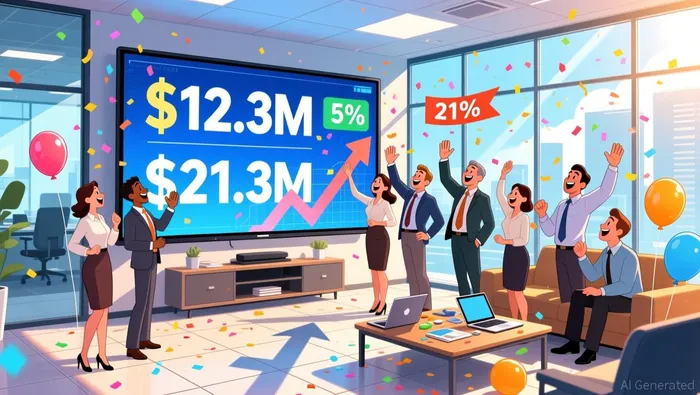
Platform Subscription Revenue and Margin Expansion: - Platform subscription revenue increased by 18% to $5.1 million, contributing to a 50.6% gross margin, which improved by 270 basis points. - This was due to a higher proportion of revenue from the higher-margin platform business and lower transaction revenue.
Transaction Revenue and Customer Base: - Transaction revenue was $7.2 million, a 6% decline year-over-year, primarily due to reduced revenue from a few large customers. - The decline is attributed to economic conditions and changes in research priorities, though the company anticipates some stabilization in the transaction business.
Product Strategy and Innovation: - Research Solutions introduced new AI rights offerings and AI gateway products, enhancing its position in the AI and scientific research space. - These innovations aim to address market trends, such as enterprises wanting to use AI on research articles and publishers moving into AI licensing.
Sentiment Analysis:
Overall Tone: Positive
- Management highlighted 'the strongest organic first quarter B2B results on record,' ARR up 21% year-over-year, adjusted EBITDA up 16% to $1.5M (second-best in company history), and commentary that investments in sales are yielding material ARR gains and healthy operational cash flow.
Q&A:
- Question from Jacob Stephan (Lake Street Capital Markets): Can you help us think through attach rate on the AI rights add-on product for new logos versus current customers and how significant it is to the ASP uplift?
Response: Product is new with limited sales; attach rate unclear now — expect visibility in 1–2 quarters; industry studies suggest sizable ARR uplift potential but AI rights were not a material contributor to this quarter's ASP increase.
- Question from Jacob Stephan (Lake Street Capital Markets): How are you planning to increase B2C attach rate and improve net churn/conversion from trial to paid?
Response: Trial is 7 days; churn and lifetime value have improved but trial-to-paid conversion is below prior-year levels; management is rolling out product improvements, rigorous metric testing and AI-enabled development to boost conversion and engagement.
- Question from Richard Baldry (ROTH Capital): The ARR strength in Q1 looked atypical—was there any pull-forward or is this sustainably higher? Can you break down the drivers?
Response: No pull-forwards; strength driven by upgraded sales teams, disciplined sales process, marketing-driven top-of-funnel and several larger deals; management believes similar-sized deals can recur and that growth is sustainable.
- Question from Richard Baldry (ROTH Capital): G&A was the lowest in nearly two years—any one-time items or is this sustainable going forward?
Response: Reduction partly from an executive departure and lower legal costs; management views current G&A as a reasonable run rate though modest increases are possible for discrete items like recruiting or legal.
- Question from Richard Baldry (ROTH Capital): How much internal productivity gain are you getting from AI and how much further can it go?
Response: AI tools are dramatically accelerating development, especially UI/UX and light changes; impact is meaningful but hard to quantify and expected to free engineers for higher-value work rather than directly cut headcount.
- Question from Derek Greenberg (Maxim Group): For the transaction segment, you cited three customers driving declines—what visibility do you have for potential recovery in the second half?
Response: Visibility is limited; decline driven by one churn and two customers buying less; some stabilization observed and Q1 decline eased versus Q4, but second-half improvement is hopeful rather than certain.
- Question from Derek Greenberg (Maxim Group): Any impact from the government shutdown on your end markets or customers in Q2?
Response: No material impact observed across government, corporate or academic customer segments.
- Question from Derek Greenberg (Maxim Group): Update on the 'headless' strategy plugging into customers' workflows—progress and pipeline?
Response: No major new update; company continues product changes and supports many large customers with headless integrations, and a material portion of the pipeline is headless work as clients build internal LLM/tooling.
- Question from Derek Greenberg (Maxim Group): You previously said you expected at least one acquisition this year—how is the M&A pipeline looking?
Response: Active pipeline and productive discussions; several opportunities are near but management does not expect a close by year-end.
Contradiction Point 1
AI Rights Attach Rate and Impact on ASP
It involves the expected attach rate and impact of the AI rights add-on product on ASP uplift, which directly affects revenue growth expectations.
Can you clarify the attach rate for the AI rights add-on product in new customer deals versus existing customer add-ons, and how much this contributes to the overall ASP increase? - Jacob Stephan (Lake Street Capital Markets)
20251114-2026 Q1: The AI rights product is new, so we don't have precise attach rate data yet. Visibility on attach rates should improve in the next few quarters. Industry studies suggest ARR uplift potential is significant, possibly up to 50%, but actual impact on ASPs in this quarter was minor, driven more by large new logo deals. - Roy Olivier(CEO)
What is the attach rate for AI rights add-on products with new customers and existing customer add-ons? What is the impact on the overall ASP increase? - Jacob Stephan (Lake Street Capital Markets, LLC, Research Division)
2026Q1: It's a new product, so no clear attach rate yet. We've sold it to some existing customers. Visible attach rates may emerge in the next 1-2 quarters. Industry talks suggest potential 50% uplift on ARR by adding AI to vertical SaaS solutions, but this could vary. - Roy Olivier(CEO)
Contradiction Point 2
B2C Product Strategy and Conversion Rates
It highlights differences in strategy and execution regarding the B2C product, which impacts customer engagement and revenue growth.
Is the B2C product's trial period affecting conversion rates and short-term user sign-ups? - Jacob Stephan (Lake Street Capital Markets)
20251114-2026 Q1: Churn is improving, but trial conversion rates are below last year's levels. Users are not signing up for brief periods to complete one paper. Instead, the issue is with new sign-ups for the fall, where conversion rates need improvement. - Roy Olivier(CEO)
What is your B2C product strategy shift, and how will you increase attach rate and net churn? - Jacob Stephan (Lake Street Capital Markets, LLC, Research Division)
2026Q1: Competition has increased. We're focusing on product improvements to boost conversion rates and messaging to highlight distinct advantages. - Roy Olivier(CEO)
Contradiction Point 3
ARR Growth and Sales Strategy
It raises questions about the sustainability and drivers of ARR growth, impacting investor perceptions of the company's business model.
Can you explain the non-seasonal ARR growth in Q1 and whether there was a pull-forward? - Richard Baldry (ROTH Capital)
20251114-2026 Q1: There were no pull forwards. Our investments in new sales processes and training over the past year have driven ARR growth. The disciplined sales approach, focused on understanding customer problems and pricing accordingly, has contributed to the strong results. - Roy Olivier(CEO)
Can you explain the non-seasonal drivers of ARR growth and their sustainability? - Richard Baldry (ROTH Capital Partners, LLC, Research Division)
2026Q1: Sales process improvements, new sales process, and focused marketing contributed to this growth. - Roy Olivier(CEO)
Contradiction Point 4
AI Impact on Internal Efficiency and Productivity
It pertains to the role of AI in enhancing internal efficiency and productivity, which are crucial for operational efficiency and cost management.
How is AI impacting efficiency and productivity gains? - Richard Baldry (ROTH Capital)
20251114-2026 Q1: AI is used in development to speed up processes, especially for UI/UX changes. It has significantly improved development speed, allowing us to focus on more critical tasks and enhance customer workflows. - Josh Nicholson(CSO)
Can you explain the trend of lower COGS despite higher revenues? - Richard Baldry (ROTH Capital)
2025Q4: We're benefiting from prepayments for hosting services, making them cheaper. Also, AI services are becoming less expensive. These factors help in stabilizing labor costs and contribute to high gross margins. - William Nurthen(CRO)
Contradiction Point 5
B2C Conversion and Churn Rates
It highlights the discrepancy in the reported performance of the B2C product, particularly in terms of conversion rates and churn, which are critical for understanding customer engagement and revenue stability.
How is AI affecting internal efficiency and productivity? - Richard Baldry(ROTH Capital)
20251114-2026 Q1: Churn is improving, but trial conversion rates are below last year's levels. Users are not signing up for brief periods to complete one paper. Instead, the issue is with new sign-ups for the fall, where conversion rates need improvement. - Roy Olivier(CEO)
What B2C trends are you seeing as May classes end? - Jacob Stephan(Lake Street Capital Markets)
2025Q3: B2C revenue growth in Q3 was driven by increased conversion rates and reduced churn as compared to Q2. - Roy Olivier(CEO)

Discover what executives don't want to reveal in conference calls
Latest Articles
Stay ahead of the market.
Get curated U.S. market news, insights and key dates delivered to your inbox.
AInvest
PRO
AInvest
PRO



Comments
No comments yet