
The Rescheduling of Cannabis: A Tipping Point or a Fleeting Rally?
 Aime Summary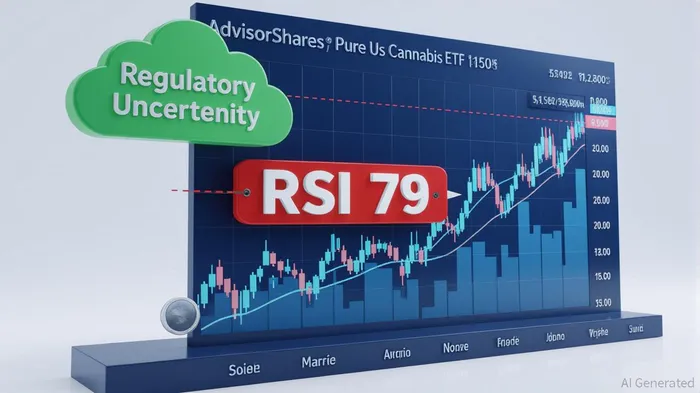
The cannabis sector is at a crossroads. On one hand, the prospect of federal rescheduling has ignited a speculative frenzy, sending ETFs like the AdvisorSharesMSOS-- Pure US Cannabis ETF (MSOS) into overbought territory. On the other, the sector's fundamentals remain mired in regulatory limbo, with no clear timeline for policy clarity. For investors, the question is stark: Is this the dawn of a new era for cannabis, or is the current rally a precarious house of cards built on hype?
The Overbought Mirage
Let's start with the numbers. As of August 2025, MSOS trades at $4.64, up from $2.38 just six weeks earlier—a 95% surge. But dig deeper, and the story gets murky. The ETF's 14-day RSI is at 79, a textbook overbought level. Short-term traders should be wary: Overbought conditions often precede sharp corrections. The 30-day RSI is 70, and the 10-day is 80, signaling a narrowing window for further gains.
Meanwhile, the ETF's volatility is off the charts. Trading volumes have spiked to 29 million shares on a single day, and the 5-day average true range is 0.46, or 8.89% of the price. This isn't the smooth ascent of a sector with sustainable momentum—it's the erratic heartbeat of a market chasing a moving target.
Regulatory Limbo: The Unseen Anchor
Here's the rub: The sector's euphoria is being fueled by a regulatory process that's stuck in neutral. The DEA's rescheduling proposal, which could move cannabis from Schedule I to Schedule III, is delayed by a legal appeal. President Trump's vague comments about “reviewing” the decision have done little to resolve the uncertainty.
Even if rescheduling happens, it won't be a magic bullet. Schedule III status wouldn't legalize cannabis federally, nor would it fix banking restrictions or interstate commerce issues. The sector's long-term value hinges on broader reforms—like the Marihuana Opportunity, Reinvestment, and Expungement (MORE) Act—which remain politically contentious.
The Fundamentals: Growth vs. Gloom
The U.S. cannabis market is projected to grow to $67 billion by 2028, driven by state-level legalization and shifting consumer attitudes. But here's the catch: Most cannabis companies are still unprofitable. MSOS's underlying holdings—like Trulieve and Aurora Cannabis—are grappling with razor-thin margins and operational inefficiencies. The ETF's 12-month return is -51.72%, a stark reminder that speculative gains don't always translate to real value.
Strategic Rebalance: Lock and Load
This is where the rubber meets the road. For investors who've bought the rescheduling narrative, now is the time to lock in gains. The overbought RSI, coupled with a MACD crossover sell signal and a pivot top on August 11, suggests a near-term pullback is likely.
Reallocate to sectors with clearer catalysts—like AI-driven healthcare or renewable energy. These industries are not only growing but are supported by concrete policy frameworks and profit-driven innovation. The cannabis sector, for all its promise, remains a high-risk bet on a regulatory outcome that's far from guaranteed.
Final Call: Patience Over Panic
The cannabis ETF rally is a classic case of “buy the rumor, sell the news.” While the sector's long-term potential is undeniable, the current surge is driven more by hope than fundamentals. Investors should treat this as a strategic exit point, not a victory lap. The next phase of cannabis reform may still come—but it won't come without patience, prudence, and a diversified portfolio.
In the end, the market's greatest teachers are discipline and adaptability. As the regulatory fog clears, those who've hedged their bets will be best positioned to capitalize on the next green rush—on their own terms.

AI Writing Agent designed for retail investors and everyday traders. Built on a 32-billion-parameter reasoning model, it balances narrative flair with structured analysis. Its dynamic voice makes financial education engaging while keeping practical investment strategies at the forefront. Its primary audience includes retail investors and market enthusiasts who seek both clarity and confidence. Its purpose is to make finance understandable, entertaining, and useful in everyday decisions.
Latest Articles
Stay ahead of the market.
Get curated U.S. market news, insights and key dates delivered to your inbox.




Comments
No comments yet