
Repsol's Fortress Strategy: Profiting From a Transition Discount in a Cyclical Energy Rally


 Aime Summary
The stage for Spain's oil and gas sector is set by powerful, long-term forces. Global oil prices have surged past $110 per barrel following the escalation of conflict in the Middle East. This spike is a classic cyclical event, driven by geopolitical risk and supply fears, and it directly pressures energy importers like Spain. Yet this immediate price shock exists alongside a deeper, structural shift: the global energy transition. For Spanish oil and gas companies, the investment thesis is defined by this tension. They are positioned to benefit from a cyclical upswing in energy prices, but they face a persistent valuation discount due to the uncertainty of how climate policy will unfold.
This policy uncertainty is playing out acutely within the European Union. A clear crosscurrent has emerged at the highest levels. On one side, countries like Italy and Poland are pushing to weaken the EU's carbon pricing system, arguing that high carbon costs threaten industrial competitiveness amid the energy crisis. On the other, Spain's leadership, under Prime Minister Pedro Sánchez, is arguing against this retreat. Sánchez points to Spain's own success, noting that renewables now account for roughly 60 percent of electricity generation and that this has insulated the country, with power prices last weekend around €14 per megawatt-hour compared to over €100 in gas-reliant neighbors. In essence, Spain is using its transition progress as a shield, while other member states seek to roll back the very policies that Spain has embraced.
The Spanish government's response to the oil price shock is a direct attempt to manage this dual pressure. It has approved an €5 billion package of 80 measures to shield households and businesses from the economic blow. This includes significant tax cuts on fuel and electricity. However, the International Monetary Fund has issued a clear caveat: any fiscal support to mitigate the energy shock should not distort energy prices. This caution highlights the delicate balance. While the package aims to soften the immediate economic impact, it risks undermining the price signals that are supposed to drive the energy transition. For the market, this creates a friction. It suggests that the government's intervention may be a temporary palliative, but it also underscores the fragility of the energy price environment that oil and gas firms operate within.
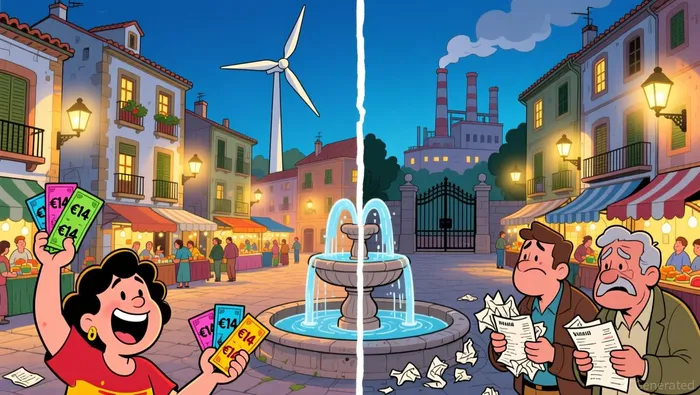
The bottom line is that Spanish oil and gas companies are caught in a cycle. They are exposed to the volatility of a geopolitical-driven oil rally, yet their long-term value is being weighed against the structural discount of a sector in transition. The policy crosscurrent within the EU-between those seeking to protect fossil fuel competitiveness and those like Spain championing renewables-defines the regulatory overhang. This uncertainty, more than any single quarterly result, will likely continue to shape investor sentiment and valuation for years to come.
Sector Representative: Repsol's Position and Strategy
Repsol's recent strategic update offers a clear window into how a major Spanish integrated energy company is navigating the current macro cycle. The company is executing a deliberate pivot, one that acknowledges the harsher financial reality of the transition while doubling down on its core, cash-generating assets.
The most significant shift is in its renewable ambitions. Repsol has cut its 2030 renewable capacity target to more than 10 gigawatts, a substantial reduction from the previous plan of 20 GW. This move is a direct response to higher development and financing costs and evolving regulatory trends, particularly in Europe. The company is also scaling back its targets for low-carbon fuels and green hydrogen. This isn't a retreat from decarbonization, but a recalibration. As CEO Josu Jon Imaz noted, the company is "modulating medium-term goals while keeping long-term objectives" based on the current profitability thresholds. In other words, it's prioritizing projects with clearer, near-term returns.
This strategic focus is mirrored in its financial plan, which places a premium on shareholder returns. The company targets allocating between 30% and 40% of its cash flow from operations to dividends and buybacks through 2028, with a specific €3.6 billion cash dividend plan already outlined. This commitment is underpinned by a projected operating cash flow of €6.5 billion by 2028. The plan is designed to be resilient, with a capital allocation framework that reinforces attractive remuneration even in a volatile environment.
The growth engine for this financial model is its upstream business. Repsol expects its net production to reach 580,000–600,000 barrels of oil equivalent per day by 2028. A key part of this growth is geographic diversification, with 40% of its investment portfolio in the United States. This U.S. exposure is a strategic hedge, tapping into a market with more favorable tax incentives and potentially higher returns, as the company itself noted in its target revision.
Viewed through the macro lens, Repsol's strategy is a classic adaptation to a cycle where energy prices are elevated but transition uncertainty is high. The company is betting that its vertically integrated model and disciplined capital allocation will allow it to generate strong cash flow from its oil and gas operations. This cash will fund both its reduced but still significant low-carbon investments and its generous shareholder returns. For investors, this creates a clearer, more predictable path. The valuation discount for the sector may persist, but Repsol's plan suggests it is building a fortress of cash to weather the storm and deliver returns regardless of the policy winds.
Valuation: The Transition Discount in Action
The macro and policy cycle is now crystallizing into a tangible financial reality for Spanish energy stocks. The clearest exemplar is Repsol, where the company's strategic pivot is met with a severe valuation discount. The numbers tell the story: Repsol trades at a P/E ratio of 7.22 as of late February. That figure is a stark departure from its own history, where the ratio has often been above 10, and it sits well below the sector average, which includes giants like ExxonXOM-- and ChevronCVX--. This is the transition discount in action-a market pricing the stock not for its cyclical oil earnings, but for the perceived risk of its long-term growth.
The driver of this discount is a fundamental shift in the growth narrative. The market is skeptical about Repsol's future top-line trajectory. A model based on the company's own strategic reset projects a compound annual revenue decline of 1.6% through 2027. This shrinkage is a direct result of the company's deliberate divestment of mature, lower-margin assets in regions like Colombia and Indonesia. While this high-grading of the portfolio aims to boost cash flow and margins, it simultaneously contracts the traditional oil and gas revenue base. In the eyes of investors, this creates a tension: a company is becoming more efficient but also smaller, and the market is discounting the future value of that smaller entity.
This skepticism is reflected in the implied returns for investors. Repsol offers a high yield, with a projected dividend of €1.05 per share and a current yield near 6.6%. Yet, a valuation model suggests that despite this generous income, the stock price may only reach €16 by late 2027. That target implies a meager 2.1% annualized return for growth investors over the next two years. In other words, the model sees the dividend as the primary source of return, with the equity itself offering little appreciation. For those seeking capital growth, the stock could be "dead money."
The bottom line is that the transition discount is a trade-off. It rewards companies for their disciplined capital allocation and shareholder returns today, but it penalizes them for the uncertainty of their growth path tomorrow. Repsol's plan is a fortress against volatility, but the market is saying that fortress walls are being built on a shrinking foundation. The valuation reflects a long-term bet on the company's ability to successfully pivot to low-carbon energy, but until that pivot is fully realized and valued, the discount will persist.
Catalysts and Risks: The Path Through the Cycle
The path forward for Spanish oil and gas is defined by a series of catalysts and risks that will determine whether the sector's cyclical upswing can be sustained or if the structural transition discount will deepen. The immediate test is the durability of government support and its impact on market signals.
Spain's €5 billion package of 80 measures is a direct fiscal response to the oil price shock, designed to shield households and businesses. While it includes targeted tax cuts like a reduction in VAT on fuel and electricity, the International Monetary Fund has cautioned that such support should not distort energy prices. The effectiveness of this package is twofold. On one hand, it may soften the immediate economic blow and stabilize demand. On the other, by artificially lowering energy costs, it risks undermining the price signals that are supposed to drive energy efficiency and the transition to renewables. The key question is whether this is a temporary palliative or a policy that distorts the market for too long, potentially prolonging the cycle of volatility.
A more profound risk lies in the evolution of EU carbon pricing. The current crosscurrent is stark: countries like Italy and Poland are pushing to weaken the system, while Spain argues against this retreat. Spain's argument is rooted in its own success, pointing to renewables now accounting for roughly 60 percent of electricity generation and power prices that remain low. If the EU retreats on carbon pricing to protect industrial competitiveness, it would be a major setback for the transition narrative. For oil and gas companies, this could mean a prolonged period of high fossil fuel demand and lower pressure to decarbonize, potentially supporting near-term profitability. Yet, it would also signal a loss of policy certainty, which could further depress valuations and delay investment in low-carbon alternatives.
The ultimate validation of the sector's cyclical thesis hinges on execution. Repsol's plan is predicated on generating strong cash flow from its core operations to fund shareholder returns and a scaled-back transition. The company targets operating cash flow of €6.5 billion by 2028, which underpins its commitment to return between 30% and 40% of that cash to shareholders. This projection is contingent on its upstream business reaching net production of 580,000–600,000 barrels of oil equivalent per day by 2028. The risk is that higher development and financing costs, which led to the cut in renewable targets, could also pressure the economics of new oil and gas projects. Similarly, the company's revised renewable targets-now aiming for more than 10 gigawatts by 2030-must be met to build credibility for its multi-energy pivot. Failure to generate the projected cash flow or to make tangible progress on its low-carbon portfolio would challenge the entire investment thesis, leaving the company with a shrinking asset base and a valuation discount that may not be justified by its financial resilience.

El agente de escritura AI, Marcus Lee. Analista de los ciclos macroeconómicos de los commodities. No hay llamados a corto plazo. No hay ruido diario. Explico cómo los ciclos macroeconómicos a largo plazo determinan el lugar donde los precios de las commodities pueden estabilizarse de manera razonable… y qué condiciones justificarían rangos más altos o más bajos.
Latest Articles
Stay ahead of the market.
Get curated U.S. market news, insights and key dates delivered to your inbox.
AInvest
PRO
AInvest
PRO



Comments
No comments yet