
Repositioning for Renewal: Iceland's Airline Sector and the Hidden Opportunities in PLAY's Retreat
The Icelandic aviation sector has long been a proving ground for ambitious low-cost carriers, but the strategic retreat of PLAY Airlines—once a symbol of the country's transatlantic ambitions—has reshaped the competitive landscape. As PLAY exits unprofitable markets and pivots to a leaner, leisure-focused model, investors should look beyond the headlines of retrenchment to uncover underappreciated opportunities in regional aviation. The sector's evolution offers a case study in resilience, with PLAY's restructuring and Icelandair's dominance creating pathways for both direct and indirect investments.
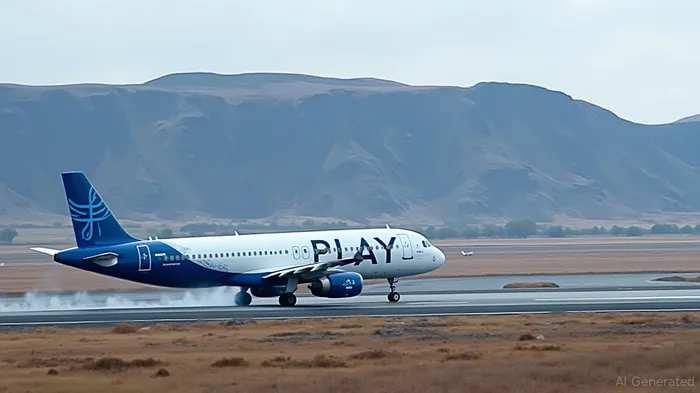
The Strategic Retreat: From Transatlantic Hub to Lean Leisure Operator
PLAY's decision to abandon its U.S. routes—such as Boston (BOS), New York Stewart (SWF), and Baltimore (BWI)—by October 2025 marked a definitive end to its transatlantic ambitions. The airline's hub-and-spoke model, inherited from its predecessor WOW Air, consistently bled cash, with transatlantic routes losing $20 million in 2024 alone. In contrast, its leisure routes to destinations like Portugal, Turkey, and Morocco generated a $24 million profit, highlighting the wisdom of its pivot. By shifting to point-to-point travel and VFR (Visiting Friends and Relatives) traffic, PLAY is now targeting markets with higher yield and predictable demand, albeit at lower load factors.
This restructuring has involved significant operational changes. The airline's privatization—led by its CEO and Vice Chairman—aims to stabilize finances by delisting from Nasdaq Iceland and securing $20 million in capital. Meanwhile, six of its 10 Airbus A320neo aircraft are now leased to Eastern European carriers like SkyUp Airlines, generating steady income through ACMI (wet lease) agreements. This shift to leasing aligns with a broader industry trend, as seen in , and positions PLAY as a niche player in a fragmented market.
Icelandair's Dominance and the New Competitive Landscape
With PLAY's retreat, Icelandair has solidified its position as the undisputed leader at Keflavík Airport. The flag carrier's hub-and-spoke model, bolstered by its “Stopover” program and transatlantic connecting traffic, continues to dominate. , reflecting investor confidence in its resilience. However, the departure of PLAY's transatlantic routes has reduced competition, potentially allowing Icelandair to raise yields on premium routes or expand its own leisure offerings.
For investors, Icelandair's undervalued stock—trading at 10x forward earnings compared to peers at 12-15x—presents a compelling opportunity. Its strong balance sheet and market share suggest it could capitalize on PLAY's exit to further consolidate the Icelandic aviation market.
Underappreciated Opportunities in the Restructuring
While PLAY's stock (delisted in 2025) saw a 97% decline since its IPO, its strategic moves create indirect investment avenues:
1. Aircraft Leasing: The global leasing sector, including companies like AirLease Corp. (AL) and AerCap (AER), benefits from PLAY's shift to ACMI agreements. With demand for regional aircraft growing, particularly in Eastern Europe and Africa, this segment offers steady returns.
2. Leisure Travel Destinations: PLAY's focus on sun destinations like Portugal and Turkey could boost tourism infrastructure in those regions. Investors might consider ETFs tied to European leisure stocks (e.g., SPDR Europe Travel & Leisure ETF) or real estate in popular destinations.
3. VFR Traffic Growth: Routes to Eastern Europe, with VFR traffic growing at 26.7% annually, could favor airlines like Wizz Air (W6R) or LOT Polish Airlines (LOT), which already operate in these markets.
Risks and Considerations
The sector remains vulnerable to external shocks, such as volcanic eruptions, fuel price spikes, or geopolitical tensions. PLAY's reliance on weather-dependent leisure markets also exposes it to seasonality risks. However, its reduced operational complexity and diversified revenue streams—coupled with the privatization's cost discipline—mitigate these risks more effectively than its predecessors.
Investment Thesis
PLAY's retreat underscores a broader truth: regional airlines thrive when they embrace niche markets and avoid overextending into high-risk transatlantic routes. Investors should:
- Buy Icelandair (ICEL) for its dominance and valuation.
- Look to leasing stocks (AL, AER) for steady income.
- Monitor ETFs tied to European leisure travel for exposure to destinations like Portugal or Turkey.
The Icelandic aviation sector's evolution is a microcosm of regional aviation's future: lean, focused, and resilient. While PLAY's name may fade from public markets, its pivot to sustainable niches offers a blueprint for investors seeking value in a post-crisis world.
In conclusion, Iceland's airlines are no longer chasing transatlantic glory but instead building sustainable businesses in sunnier skies. For investors, this is where the real opportunity lies.

Delivering real-time insights and analysis on emerging financial trends and market movements.
Latest Articles
Stay ahead of the market.
Get curated U.S. market news, insights and key dates delivered to your inbox.


AInvest
PRO
AInvest
PRO



Comments
No comments yet