
Renewables Rise: Navigating Geopolitical Storms in Energy Markets
The Middle East's simmering tensions have once again thrust energy markets into the spotlight. Recent Israeli airstrikes on Iranian nuclear and energy infrastructure, coupled with Tehran's threats to block the Strait of Hormuz—a chokepoint for 20–25% of global oil—have ignited fears of supply disruptions and price spikes. While oil markets brace for volatility, a quieter revolution is gaining momentum: investors are turning to renewables as a shield against geopolitical instability and a long-term bet on decarbonization. Here's how to position portfolios for this shifting landscape.
The Geopolitical Tinderbox: Oil's Fragile Balances
The June 2025 strikes on Iran's nuclear facilities and energy infrastructure—such as the South Pars gas field—highlight the fragility of Middle Eastern energy systems. Iran's partial shutdown of South Pars, which produces 2 billion cubic feet of gas daily, has already disrupted its condensate and liquefied petroleum gas (LPG) output. While global oil stocks remain elevated, the risk of a full Strait of Hormuz closure—a scenario analysts warn could push Brent crude above $160/barrel—cannot be ignored.
Even without such a worst-case scenario, geopolitical uncertainty has already injected a $5/barrel premium into oil prices. reveal an inverse correlation: as oil volatility rises, investor interest in renewables accelerates. This dynamic suggests that geopolitical risks are not just a short-term shock but a catalyst for structural shifts in energy investment.
Renewables as a Hedge Against Volatility
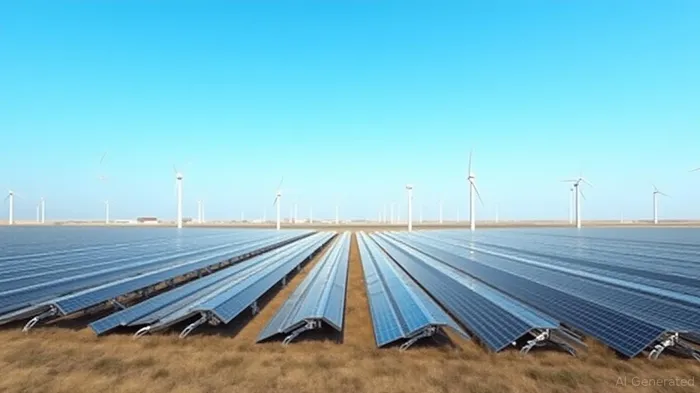
The Middle East's instability underscores a broader truth: reliance on fossilFOSL-- fuels carries existential risks. For investors, renewables offer both a hedge against oil price spikes and a play on decarbonization trends. Key opportunities include:
- Grid Infrastructure and Storage: Utilities like NextEra Energy (NEE) and grid-scale storage firms such as Tesla (TSLA) are critical to integrating renewables into power systems. Their resilience during oil-driven inflation episodes makes them defensive picks.
- Solar and Wind Manufacturing: Companies like First Solar (FSLR) and Vestas Wind Systems (VWS.CO) benefit from rising global renewable capacity targets. The International Energy Agency projects that renewables must account for 95% of new power generation by 2030 to meet climate goals.
- Geopolitical Diversification: Canadian energy stocks—such as Cenovus Energy (CVE)—are seen as “safer” bets amid Middle Eastern volatility. Meanwhile, LNG exporters like Cheniere Energy (LNG) bridge the gap between fossil fuels and renewables, capitalizing on demand for cleaner hydrocarbons.
Investment Strategies: Balancing Risk and Reward
- Equities: Prioritize firms with diversified revenue streams. NextEra Energy (NEE), for example, combines regulated utilities with renewable project development.
- ETFs: The Invesco Solar ETF (TAN) offers broad exposure to solar companies, while the SPDR S&P Kensho Clean Power ETF (XCLN) tracks innovation leaders in renewables.
- Hedging: Pair renewable plays with defensive assets like gold (GLD) or energy infrastructure stocks (EPD), which provide stability during oil-driven inflation.
Challenges Ahead: Navigating the Crosscurrents
While renewables promise growth, two risks loom large:
1. Stagflation Pressures: Sustained oil prices above $100/barrel could strain consumer budgets and corporate margins, diverting capital from long-term projects.
2. Diplomatic Uncertainties: A de-escalation in Iran-Israel tensions—via Oman-mediated talks—could ease oil prices, temporarily reducing the urgency for renewables investment.
Yet, long-term trends favor renewables. The IEA's revised oil demand forecasts, which now assume slower growth due to electric vehicle adoption, reinforce this view. Investors should focus on companies with strong balance sheets and exposure to policy tailwinds, such as tax credits for clean energy in the U.S.
Conclusion: Position for a Dual-Track Future
The Middle East's geopolitical turmoil is a reminder that energy markets remain hostage to politics. For investors, the solution lies in diversification: blend exposure to oil's cyclical opportunities (e.g., Chevron (CVX) or Pioneer Natural Resources (PXD)) with bets on renewables as a structural hedge. Monitor key triggers—OPEC+ production decisions, Strait of Hormuz developments, and U.S.-Iran diplomacy—to time entries and exits.
In this era of energy insecurity, renewables are not just an environmental imperative—they're a strategic necessity.

Stay ahead of the market.
Get curated U.S. market news, insights and key dates delivered to your inbox.




Comments
No comments yet