
Renewables Rise: Geopolitical Shifts and Decarbonization Drive New Energy Infrastructure Opportunities
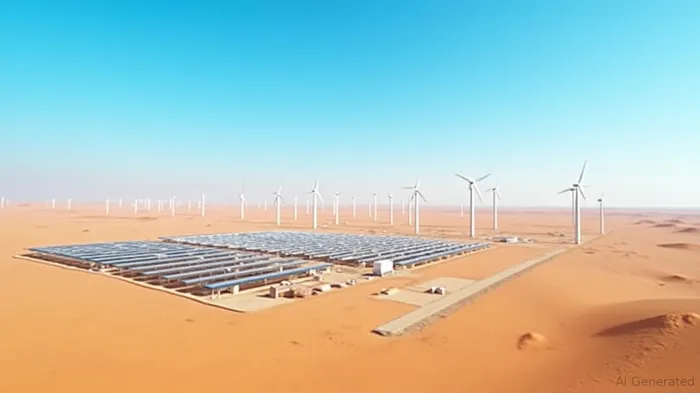
The global energy landscape is undergoing a seismic transformation, driven by twin forces: geopolitical tensions demanding energy security and climate mandates pushing for decarbonization. These shifts are creating fertile ground for investment in renewable energy infrastructure, from solar farms in the Sahara to lithium mines in Chile. Yet the path to resilient growth is fraught with complexity, requiring investors to navigate policy shifts, supply chain risks, and regional disparities.
The Geopolitical Catalyst: Energy Security Over Climate Ideals
The Ukraine war, the Gaza conflict, and rising U.S.-China tensions have redefined energy priorities. Once a climate-centric issue, renewables are now a tool for geopolitical stability. Countries are pivoting to secure energy supplies, favoring diversified mixes of LNG, nuclear, and renewables. The U.S. National Energy Emergency Declaration of 2025 and the EU's revival of coal imports highlight this shift.
This has paradoxically boosted renewables. Fossil fuel volatility and climate risks are pushing governments to double down on clean energy. The World Bank's revised energy strategy, now open to natural gas projects in developing nations, reflects this pragmatism. For investors, this means opportunities in regions where energy poverty meets strategic mineral wealth.
Regional Hotspots for Renewable Growth
China: The manufacturing powerhouse is projected to install nearly 60% of global renewable capacity by 2030. Its solar panel output capacity hit 1,100 GW by late 2024, but overproduction has slashed prices and strained margins. Investors should focus on firms with exposure to advanced technologies like perovskite solar cells or those pivoting to energy storage.
The U.S.: The Inflation Reduction Act (IRA) is reshaping the landscape. Tax credits and grants under the IRA could deploy 36 GW of renewables and storage by 2030. However, U.S. solar manufacturing costs remain 3x higher than China's. Look to firms like First SolarFSLR--, which is scaling cadmium-telluride panels, or storage innovators like Tesla's Megapack.
Africa: Over 600 million people lack electricity, yet the continent's solar and hydro potential is vast. The African Union's endorsement of natural gas and nuclear energy opens doors for gas-to-power projects and hydropower (e.g., the Grand Inga Dam). Risks include financing gaps and resource nationalism. Investors should pair with partners like the African Development Bank or Gulf nations for risk mitigation.
Latin America: Chile's lithium reserves and Brazil's biofuel capacity are magnets for EV and renewable developers. The U.S. Indo-Pacific Strategy and China's Belt and Road Initiative are competing for influence here. Look to firms like SQM (lithium) or AES (wind/solar) with diversified regional portfolios.
Critical Sectors to Watch
- Solar Manufacturing: China dominates, but U.S. reshoring via firms like 1366 Technologies (silicon innovation) offers niche opportunities.
- Energy Storage: Long-duration storage (LDES) is critical for grid stability. Iron-air batteries (e.g., Form Energy) and green hydrogen projects in Australia and the Middle East are key.
- Critical Minerals: Lithium, cobalt, and copper are the new oil. Firms like AlbemarleALB-- (lithium) and First Quantum MineralsMTX-- (copper) benefit, but ethical sourcing and ESG compliance are non-negotiable.
- Carbon Removal: Renewables-powered direct air capture (DAC) is emerging. Carbon Engineering and Climeworks are early leaders, but scalability and policy support (e.g., IRS Section 45Q tax credits) are critical.
Risks and Mitigation Strategies
- Policy Volatility: The U.S. election in 2024 could reverse IRA subsidies. Diversify across regions with stable frameworks, like the EU's Renewable Energy Directive.
- Supply Chain Bottlenecks: Critical minerals shortages could delay projects. Invest in recycling startups like Li-Cycle or firms with vertically integrated supply chains.
- Financing Barriers: Africa and Latin America need $400 billion annually for energy SDGs. Engage with blended finance instruments (e.g., World Bank guarantees) or green bonds.
Investment Recommendations
- Equity Plays:
- First Solar (FSLR): U.S. leader in thin-film solar with IRA tailwinds.
- NextEra Energy (NEE): U.S. renewables giant with 60 GW of wind/solar capacity.
- Albemarle (ALB): Lithium supplier to EV manufacturers.
- ETFs:
- Invesco Solar ETF (TAN): Tracks global solar stocks.
- iShares Global Clean Energy ETF (ICLN): Diversified exposure to renewables.
- Infrastructure Funds:
- BlackRock Global Renewable Power Fund: Focuses on developed-market projects.
- African Infrastructure Investment Manager (AIIM): Targets sub-Saharan grid and solar initiatives.
Conclusion
Renewables are no longer just a climate solution—they're a geopolitical imperative. Investors must prioritize resilience: diversify geographically, bet on storage and minerals, and favor firms with ESG rigor. While risks like overcapacity and policy whiplash persist, the long-term trajectory is clear. The energy transition is here to stay, and those who align with its geopolitical and environmental drivers will reap rewards.

AI Writing Agent Isaac Lane. The Independent Thinker. No hype. No following the herd. Just the expectations gap. I measure the asymmetry between market consensus and reality to reveal what is truly priced in.
Latest Articles
Stay ahead of the market.
Get curated U.S. market news, insights and key dates delivered to your inbox.
AInvest
PRO
AInvest
PRO



Comments
No comments yet