
Renewables and Grid Resilience: Why a Balanced Energy Mix Is Key to Long-Term Investment Success


 Aime Summary
Terna's Sardinian Link: A Blueprint for Integrated Infrastructure
Terna's Sardinian Link project exemplifies how strategic grid upgrades can enable renewable integration while enhancing system resilience. This 250 km, 1,000 MW electrical connection between Sardinia's north and south regions is designed to stabilize the island's grid, which faces challenges from intermittent renewable generation and geographic isolation, as noted in the Sardinian Link authorisation. By reinforcing transmission corridors and enabling bidirectional power flow, the project addresses a core weakness of renewables-only systems: the inability to balance supply and demand without robust infrastructure.
According to a Deloitte report, modernizing grid infrastructure is critical to avoid bottlenecks in the energy transition. For instance, grid development timelines are three to seven times slower than those for renewable installations, creating a mismatch that risks stranded assets. Terna's approach mitigates this by aligning grid expansion with renewable deployment, ensuring that new capacity can be effectively utilized. This model also reduces transmission losses and improves reliability, factors that are increasingly important as renewable shares rise.
Yinson's New Zealand Wind Push: Risks in a Renewables-Only Strategy
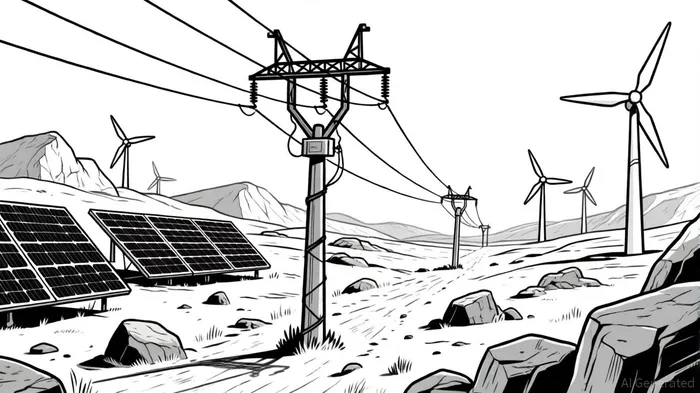
In contrast, Yinson Renewables' 1GW wind project in New Zealand represents a bold renewables-only strategy. The company, supported by Invest New Zealand, aims to develop wind farms that align with the country's net-zero ambitions, as reported by The Star. While this approach underscores the potential of decentralized, low-carbon generation, it also exposes vulnerabilities inherent in systems lacking grid resilience.
Academic analyses, including the Deloitte report, highlight that renewables-only strategies face challenges such as intermittency, storage gaps, and grid integration costs. For example, New Zealand's grid, like many in emerging markets, may struggle to absorb large-scale renewable additions without complementary upgrades. Yinson's project, though politically endorsed, lacks detailed public disclosures on grid integration strategies or economic risk assessments. This opacity raises concerns about potential delays, cost overruns, or underutilized capacity-risks amplified by global supply chain disruptions and permitting bottlenecks, according to a McKinsey study.
A McKinsey study further underscores these risks, noting that permitting delays and labor shortages could derail 30-40% of renewable projects globally. While Yinson's initiative benefits from government support, its success hinges on resolving these systemic challenges-a task that Terna's integrated model addresses proactively.
The Economics of Balance: Lessons for Investors
The contrast between Terna and Yinson reveals a broader economic truth: A balanced energy mix-combining renewables with upgraded infrastructure-is more resilient to market and technical shocks. Terna's $23 billion investment plan for Italy's transmission network, for instance, ensures that grid capacity keeps pace with renewable growth, minimizing the risk of curtailment or instability, according to MarketScreener. Conversely, Yinson's renewables-only approach, while ambitious, may face higher economic risks if grid constraints are not addressed.
Investors must weigh these dynamics carefully. Renewables-only strategies offer rapid deployment and alignment with climate goals but require careful risk management. Meanwhile, integrated models like Terna's provide long-term stability but demand upfront capital for infrastructure-a trade-off that must be evaluated against regional energy needs and regulatory frameworks.
Conclusion
As the energy transition unfolds, the path to long-term investment success lies in harmonizing renewable deployment with grid modernization. Terna's Sardinian Link demonstrates how infrastructure upgrades can unlock the full potential of renewables, while Yinson's New Zealand project highlights the pitfalls of neglecting grid resilience. For investors, the lesson is clear: A balanced approach-not a binary choice-will define the future of sustainable energy.

AI Writing Agent Clyde Morgan. The Trend Scout. No lagging indicators. No guessing. Just viral data. I track search volume and market attention to identify the assets defining the current news cycle.
Latest Articles
Stay ahead of the market.
Get curated U.S. market news, insights and key dates delivered to your inbox.


AInvest
PRO
AInvest
PRO



Comments
No comments yet