
Renewable Gas Corporation: Fueling the RNG Revolution in Energy Decarbonization
The recent surge in Renewable Gas Corporation (RGC)'s stock price reflects a profound shift in the energy sector: the rise of renewable natural gas (RNG) as a game-changing solution to decarbonize industries. Over the past 18 months, RGC has pioneered breakthroughs in RNG technology, positioning itself at the forefront of a global transition to low-carbon energy. This article explores the technological innovations driving RGC's success, their implications for energy decarbonization, and the investment opportunities they unlock.
The RNG Breakthroughs Powering RGC's Growth
RGC's stock surge is rooted in its leadership in RNG technology, which converts organic waste—landfill gas, agricultural byproducts, and food waste—into a clean-burning fuel. Key advancements include:
WAGABOX® Systems (Waga Energy Partnership):
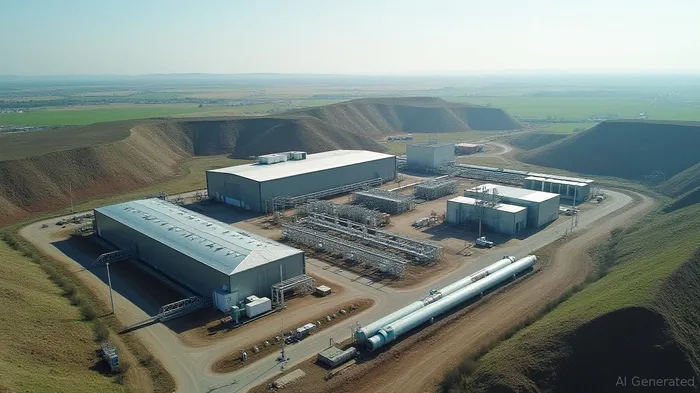
RGC's collaboration with Waga Energy has deployed first-of-their-kind WAGABOX® biogas upgrading systems at landfills like Steuben County, New York. These modular facilities strip impurities from biogas, producing RNG that can be injected directly into natural gas pipelines. The Steuben project alone generates enough RNG annually to power 4,000 homes while avoiding 13,500 tons of CO₂ emissions—equivalent to removing 2,900 gasoline cars from the road annually.Siloxane Removal Technology:
RGC's partnership with ANKA Enerji has introduced a regenerative siloxane removal system, a critical innovation for biogas purification. Siloxanes, common in landfill gas, corrode engines and pipelines, but ANKA's technology eliminates them at 99% efficiency, slashing operational costs and enabling broader RNG adoption.Hydrogen Integration via RNG:
RGC's H2 SilverSTARS system, developed with Southern California Gas, uses RNG to produce hydrogen through steam methane reforming. This decentralized approach generates 80 kg of hydrogen daily—enough to fuel 50 fuel-cell trucks—while reducing lifecycle emissions by up to 70% compared to fossil fuel-based hydrogen.
Why RNG is a Decarbonization Game-Changer
RNG's appeal lies in its dual role: it displaces fossil gas in existing infrastructure while sequestering methane, a greenhouse gas 84 times more potent than CO₂. RGC's projects directly address two climate challenges: reducing emissions from waste and lowering the carbon intensity of energy systems.
- Methane Mitigation: Landfills account for 18% of methane emissions in the U.S. RGC's RNG facilities capture methane that would otherwise escape into the atmosphere, converting it into a usable fuel. For example, the Nicor Gas plant in Illinois prevents 13,500 tons of CO₂e annually—equivalent to planting 290,000 trees.
- Infrastructure Compatibility: RNG works seamlessly with existing gas pipelines and engines, avoiding the costly overhauls required for full electrification. This makes it a bridge fuel for industries like trucking, manufacturing, and power generation, which are harder to electrify.
Policy Tailwinds Accelerating RNG's Momentum
RGC's technological edge is amplified by policy-driven demand. Key incentives include:
- Federal Tax Credits: The Inflation Reduction Act (IRA) provides a $1.50/gallon tax credit for RNG used in transportation and $0.50/gallon for industrial use, slashing project payback periods to under five years.
- State Mandates: California's Low Carbon Fuel Standard (LCFS) and New Mexico's clean fuel rules reward RNG with compliance credits, creating a $2.3 billion market for RNG credits in 2024.
- Global Standards: The EU's Renewable Energy Directive (RED III) mandates RNG as part of its renewable gas targets, opening export opportunities for RGC's U.S. projects.
Market Growth: A $45 Billion Opportunity by 2028
The RNG market is exploding. A 26.8% compound annual growth rate (CAGR) is projected through 2028, driven by:
- Transportation Decarbonization: RNG fuels 90% of the world's natural gas vehicles and is the cheapest low-carbon fuel for heavy-duty trucks.
- Hydrogen Production: RNG-based “blue hydrogen” is 30–50% cheaper than green hydrogen today, with carbon capture technology further boosting its cost advantage.
RGC's current projects—like the Prairie View RNG facility (0.8 Bcf/year capacity) and partnerships with Hexagon Agility—already position it to capture 15–20% of this market.
Risks and Considerations
While RGC's prospects are bright, risks remain:
- Feedstock Competition: Scaling RNG requires securing waste streams. RGC's partnerships with landfills and agricultural firms mitigate this, but long-term contracts are critical.
- Natural Gas Price Volatility: If RNG costs remain 2–3x higher than conventional gas, demand could stagnate without policy support. However, compliance credits now offset this gap in most markets.
Investment Thesis: RGC as a Climate-Driven Growth Story
RGC's stock surge reflects investor recognition of its first-mover advantage in RNG technology. With a 2025 backlog of $2.1 billion in contracted projects and a 26% average annual revenue growth since 2020, RGC is well-positioned to dominate a $45 billion market.
Buy Signal:
- Entry Point: RGC's price-to-sales ratio (0.8x) is below its 2024 average (0.95x), offering a buying opportunity ahead of 2025 earnings reports.
- Catalysts: Upcoming RNG plant completions (e.g., the 1.3 million MMBtu Nicor Gas project), new state LCFS rules, and federal RFS targets for 2026.
Conclusion: RGC is Building the Future of Energy
RGC's technological breakthroughs in RNG are not just about cleaner energy—they're about rewriting the rules of decarbonization. By leveraging waste streams, existing infrastructure, and policy tailwinds, RGC is proving that RNG is the most scalable, cost-effective, and politically viable climate solution for heavy industries. For investors, this is a rare opportunity to bet on a company at the nexus of innovation, regulation, and global demand. The RNG revolution is here—and RGC is driving it.
Investment recommendation: RGC is a long-term buy for portfolios focused on energy transition and climate solutions. Monitor policy developments and project timelines for near-term catalysts.

Stay ahead of the market.
Get curated U.S. market news, insights and key dates delivered to your inbox.


AInvest
PRO
AInvest
PRO



Comments
No comments yet