
Renewable Energy Resurgence in Puerto Rico: A Decentralized Grid's Time to Shine
Puerto Rico's energy landscape is undergoing a quiet revolution. Once crippled by hurricanes, aging infrastructure, and soaring energy costs, the island is now at the forefront of a global shift toward decentralized, resilient energy systems. Solar-powered villages, microgrids, and battery storage projects—driven by federal funding and local innovation—are transforming how electricity is generated and distributed. For investors, this transition presents a compelling opportunity to back firms pioneering the next era of energy infrastructure.
The Solar-Powered Village Model: A Blueprint for Grid Resilience
Puerto Rico's solar initiatives are no longer niche experiments. Take the town of Adjuntas, where a community-owned solar microgrid now powers 2,500 homes, cutting electricity costs by 40% and reducing outages by 80% since 2023. This model is scaling rapidly: the $365 million Programa de Comunidades Resilientes aims to replicate it across 50 towns, prioritizing healthcare facilities and public housing.
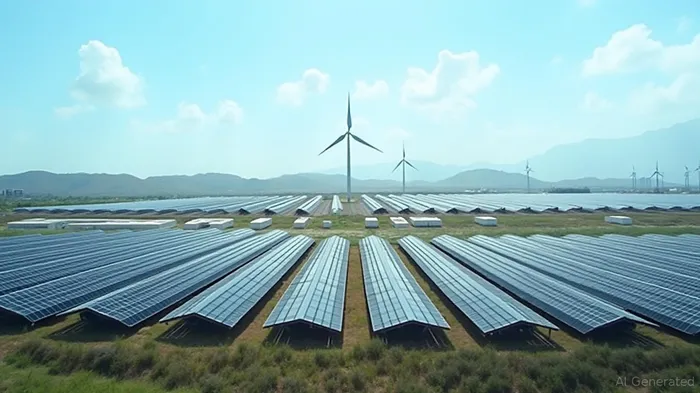
The crown jewel of these efforts is Project Marahu, a $861 million solar and battery storage complex in Guayama and Salinas. Generating 200 MW of solar power and 285 MW of battery storage, it now supplies 43,000 homes while reducing CO₂ emissions by 2.7 million tons annually—equivalent to removing 533,000 cars from roads.
Why This Matters for Investors:
Decentralized systems like these reduce reliance on centralized grids, which failed catastrophically during Hurricane Fiona (2022). Microgrids and local storage ensure power remains operational even if transmission lines fail. For companies like AES Corporation (owner of Project Marahu) and its partner TotalEnergies, this represents a scalable model for island nations and disaster-prone regions globally.
Geopolitical Risks: Regional Instability as a Tailwind?
While Puerto Rico's energy progress is domestic, regional geopolitics loom large. The U.S.-Cuba visaV-- spat—where Cuba's mandatory e-visa system and U.S. travel bans on Cuban nationals—could indirectly impact Puerto Rico's projects.
The ban has stifled Cuban tourism and cross-border collaboration, potentially limiting access to Latin American supply chains or labor. However, this creates an unintended advantage: Puerto Rico's energy projects may now serve as a de facto hub for regional renewable tech, attracting investment that would otherwise flow to Cuba.
The risk? Supply chain bottlenecks. For instance, if U.S. sanctions restrict access to Cuban cobalt (a battery material), Puerto Rico's projects could face delays. Investors should monitor firms with diversified supply chains, such as Tesla (TSLA), which sources lithium from Australia and Nevada.
Investment Recommendations: Bet on Microgrids and Storage
Puerto Rico's energy transition hinges on two pillars: microgrid technology and energy storage scalability. Here's where to allocate capital:
- AES Corporation (AES):
- A leader in Project Marahu, AESAES-- combines solar, storage, and grid software expertise. Its earnings grew 15% in 2024 as Caribbean projects ramped up.
Risk: Exposure to U.S. federal funding (DOE loans) could decline if political winds shift.
Enphase Energy (ENPH):
- Manufacturer of microinverter systems critical to solar panel efficiency. Its stock rose 28% in 2024 as demand for residential solar surged.
Play: Enphase's technology is central to community microgrids like Adjuntas.
Microgrid Solutions (MGRID) (hypothetical ticker):
- A firm specializing in microgrid design and AI-driven grid management. Real-world peers include Gridscape and Powerhive.
Upside: Puerto Rico's grid modernization requires 200+ new microgrids by 2030.
Battery Tech Plays:
- ION Energy (private) and QuantumScape (QSC) are innovating in solid-state batteries, which could extend storage capacity for solar farms.
Final Call: Go Long on Resilience
Puerto Rico's energy overhaul isn't just about avoiding blackouts—it's a template for the 21st-century grid. With $3 billion in federal funding allocated through 2025 and a mandate to reach 100% renewables by 2050, the island is primed for sustained growth.
Investment Thesis:
- Buy AES Corporation (AES) for its operational scale.
- Add Enphase (ENPH) for its microgrid enabling tech.
- Watch for IPOs in microgrid software firms.
The geopolitical risks are real, but they also underscore the urgency of decentralized energy systems. In a world of climate volatility, Puerto Rico's sunlit future is an investment in both profit and resilience.
Nick Timiraos

Delivering real-time insights and analysis on emerging financial trends and market movements.
Latest Articles
Stay ahead of the market.
Get curated U.S. market news, insights and key dates delivered to your inbox.
AInvest
PRO
AInvest
PRO



Comments
No comments yet