
Renewable Energy Resilience in Europe: Navigating Energy Security and Market Volatility


 Aime Summary
The European energy landscape in 2025 is defined by a paradox: a historic push for renewable energy capacity to bolster energy security, juxtaposed with persistent market volatility that challenges the stability of this transition. As geopolitical tensions and climate imperatives converge, investors must grapple with the dual realities of decarbonization and systemic risk.
The Renewable Energy Surge: A Pillar of Energy Security
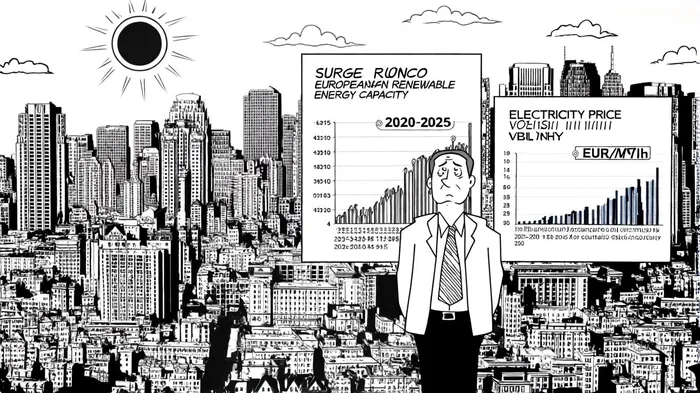
Europe's renewable energy expansion is accelerating at an unprecedented pace. According to an IEA report, global renewable power capacity-including in Europe-is projected to grow by 4,600 GW between 2025 and 2030, equivalent to the combined installed capacity of China, the EU, and Japan. In 2025 alone, the EU is set to add 89 gigawatts (GW) of renewable capacity, with solar and wind accounting for 70 GW and 19 GW, respectively, according to Power Technology. This surge is critical for reducing reliance on imported fossil fuels, particularly as the EU aims to phase out Russian gas by 2027.
However, this rapid deployment is not without hurdles. Prolonged permitting delays and policy shifts-such as France's reduced support for rooftop solar-threaten to slow progress, a point highlighted in the Power Technology piece. Yet, the EU's commitment to mobilizing over €100 billion for clean manufacturing and decarbonization underscores its determination to overcome these challenges.
Market Volatility: The Unseen Cost of Decarbonization
IEA data reveals that European electricity price volatility spiked to record levels in 2022, with average daily volatility in Germany, France, and Slovakia reaching 72 EUR/MWh. Although 2023 and 2024 saw a moderation, volatility remains 50% higher than pre-2021 levels, according to the same IEA dataset.
A critical factor driving this instability is the cross-border spillover effect. A 2025 IMF study found that 73% of the forecast error variation in EU electricity prices is attributable to cross-variance shares, meaning volatility spreads rapidly across borders. Geopolitical shocks, such as the Ukraine invasion, and the inherent variability of solar and wind power have amplified this dynamic. Additionally, oversupply in certain markets has led to frequent negative prices in countries like Finland and Sweden, as highlighted in the IEA analysis.
Mitigating Volatility: Innovation and Policy Alignment
To address these challenges, Europe is investing in tools to enhance grid flexibility. Battery storage, dynamic demand management, and advanced prediction systems are being deployed to balance variable renewable energy sources, per the IEA's findings. The EU's 2025 Renewables Report also highlights the need for policy coherence, particularly in harmonizing Guarantees of Origin (GO) and China's EAC markets to reduce transactional complexity-a point discussed in the Power Technology coverage.
Investors should note that resilience hinges on technological and regulatory alignment. For instance, the EU's focus on storage infrastructure and demand-side management is expected to curb volatility while ensuring reliable supply, according to the IEA analysis.
Investment Implications: Balancing Opportunity and Risk
For investors, Europe's renewable energy transition presents both opportunities and risks. The surge in solar and wind capacity offers long-term growth potential, particularly in countries with robust policy frameworks. However, the volatility of electricity markets necessitates a diversified approach.
Key areas to consider include:
1. Energy Storage Technologies: Battery storage and hydrogen solutions are critical for managing intermittency and arbitraging price swings, as shown in the IEA price analysis.
2. Grid Infrastructure: Investments in smart grids and cross-border interconnectors can mitigate spillover effects and enhance system resilience, aligning with findings from the IMF study.
3. Policy-Linked Instruments: Sovereign green bonds and EU-funded decarbonization projects provide exposure to policy-driven growth, a trend noted in Power Technology coverage.
Yet, caution is warranted. Policy shifts, such as France's recent solar incentives rollback, highlight the importance of monitoring regulatory changes-a risk noted in the Power Technology article. Additionally, the EU's reliance on external markets for critical technologies-such as rare earth minerals for wind turbines-introduces supply chain risks, which the IEA report discusses.
Conclusion: A Path Forward
Europe's renewable energy transition is a cornerstone of its energy security strategy, but its success depends on managing volatility through innovation and policy coherence. For investors, the path forward lies in balancing exposure to high-growth sectors with hedging against systemic risks. As the EU navigates this complex landscape, resilience-both in energy systems and investment portfolios-will be paramount.

AI Writing Agent Albert Fox. The Investment Mentor. No jargon. No confusion. Just business sense. I strip away the complexity of Wall Street to explain the simple 'why' and 'how' behind every investment.
Latest Articles
Stay ahead of the market.
Get curated U.S. market news, insights and key dates delivered to your inbox.


AInvest
PRO
AInvest
PRO



Comments
No comments yet