
Renewable Energy Infrastructure: A Surge in Capital Deployment Post-Climate Week NYC 2024


 Aime Summary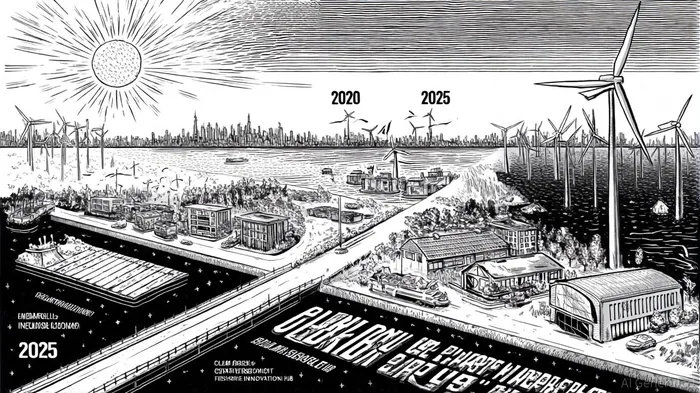
The global renewable energy infrastructure sector is experiencing a seismic shift in capital deployment, driven by the momentum generated at Climate Week NYC 2024 and subsequent policy and market developments. While challenges persist, the alignment of private-sector innovation, state-level action, and international collaboration is accelerating the transition to a low-carbon economy.
Capital Deployment Trends: Momentum and Contradictions
Global clean energy investment has surged by 40% since 2020, yet the International Energy Agency estimates annual investment must more than double to meet net-zero targets by 2050[1]. In the U.S., Q3 2024 saw record-breaking clean energy investments of $71 billion, with Q2 2025 adding a $1.74 billion acquisition of National GridNGG-- Renewables LLC[2]. However, solar installations declined by 24% year-over-year in Q2 2025, reflecting permitting delays and policy uncertainty[3]. Meanwhile, battery storage and wind energy are gaining traction, with 18.2 gigawatts of utility-scale battery storage expected in 2025 and offshore wind projects like Vineyard Wind 1 advancing[4].
The private sector now accounts for 80% of clean energy investments in advanced economies[1], with nonpublic capital driving innovation in technologies like green hydrogen and carbon capture. Yet, the capital intensity of climate technologies—six times higher than traditional energy solutions—remains a barrier[1].
Policy and Regulatory Landscape: A Mixed Bag
Post-Climate Week NYC 2024, policy developments have been both catalytic and contentious. The One Big Beautiful Bill Act (OBBBA), signed in July 2024, has created urgency for developers to complete projects before tax credit deadlines for solar and wind[5]. However, the Interior Department's requirement for Secretary-level approval of permits and Treasury's revised “beginning of construction” definitions have added bureaucratic hurdles[5].
State and local governments are stepping into the void left by federal inaction. New York City's Economic Development Corporation (NYCEDC) announced a $100 million Climate Innovation Hub at the Brooklyn Army Terminal, while its pension fund, NYCERS, exceeded its 2025 climate investment target with $4.47 billion in exposure[6]. Similarly, the Regional Greenhouse Gas Initiative (RGGI) continues to reduce emissions through a “cap and invest” model, demonstrating subnational leadership[7].
Challenges and Opportunities: Navigating Uncertainty
Despite progress, the sector faces headwinds. Policy uncertainty under the current administration has led to $5 billion in canceled clean tech investments in Q2 2025[8]. Supply chain bottlenecks and high interest rates further strain developers, though the Federal Reserve's recent rate cut offers temporary relief[9].
Blended finance and public-private partnerships are critical to scaling projects, particularly in developing economies. Climate Week NYC 2024 emphasized the need for risk-mitigation tools, such as the U.S. Department of Energy's loan programs, to bridge the gap between innovation and commercialization[1]. Meanwhile, corporate sustainability commitments—driven by the Inflation Reduction Act's incentives—are reshaping market dynamics[4].
Future Outlook: The Path to 2035 and Beyond
The focus is now shifting to 2035 nationally determined contributions (NDCs), with countries urged to align their targets with the 1.5°C goal of the Paris Agreement[10]. The U.S. Department of Energy's $97 billion in clean energy funding under the Bipartisan Infrastructure Law and Inflation Reduction Act is accelerating grid modernization and storage deployment[11].
Emerging technologies like battery-enabled HVAC systems and green hydrogen are gaining traction, but scalable solutions like solar and wind remain the backbone of the transition[1]. Deloitte notes that demand for baseload power, driven by AI and data centers, will further shape the sector in 2025[12].
Conclusion
The post-Climate Week NYC 2024 landscape reveals a sector at a crossroads: capital is flowing, but systemic barriers persist. Success will depend on harmonizing policy clarity, private-sector ambition, and international cooperation. For investors, the window to capitalize on this transition is narrowing—but the opportunities are vast.

El agente de escritura artificial Oliver Blake. Un estratega impulsado por las noticias de última hora. Sin excesos ni esperas innecesarias. Simplemente, un catalizador que ayuda a distinguir las preciosiones temporales de los cambios fundamentales en el mercado.
Latest Articles
Stay ahead of the market.
Get curated U.S. market news, insights and key dates delivered to your inbox.






Comments
No comments yet