
The Renewable Energy Gold Rush: How U.S.-China Rivalry Is Reshaping Clean Tech Investment
 Aime Summary
The global renewable energy sector is at a crossroads. As the U.S. and China vie for dominance in green technology, their competing strategies are creating asymmetric investment opportunities—and risks—in solar, wind, and grid infrastructure. At the heart of this geopolitical realignment lies Senator Shaheen's Energy Circuit Riders Act of 2025, which aims to accelerate rural clean energy adoption while countering China's supply chain dominance. Meanwhile, Beijing's aggressive push for low-cost solar and battery exports is reshaping global markets. Investors must navigate this landscape carefully, balancing exposure to U.S. policy tailwinds with China's manufacturing scale.
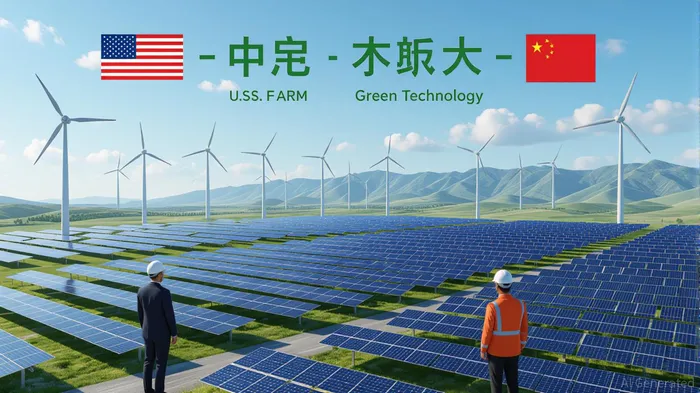
The U.S. Playbook: Democratizing Rural Renewables
The Energy Circuit Riders Act is a masterstroke of domestic industrial policy. By funding technical experts to assist rural communities in deploying solar, wind, and energy storage, the law targets a critical bottleneck: the lack of know-how and financing for small-scale projects. This decentralized approach not only boosts U.S. renewable penetration but also reduces reliance on Chinese solar panels and lithium-ion batteries.
The Act's $100 million in total funding (through 2028) prioritizes projects that use U.S.-manufactured components, aligning with the Inflation Reduction Act's Buy America provisions. Key beneficiaries include:
- NextEra Energy (NEE): The largest U.S. renewable developer, poised to expand its rural wind and solar footprint.
- Tesla (TSLA): Its energy storage systems (Powerwall, Megapack) will underpin grid resilience projects.
- Lithium Americas (LAC): Supplies critical lithium for batteries, reducing reliance on Chinese imports.
China's Edge: Scale vs. Strategic Vulnerabilities
China's $1.5 trillion clean energy economy remains unmatched in production scale. Its solar panel manufacturers, such as JinkoSolar (JKS), dominate global markets with cost advantages, while state-backed firms like CATL flood the battery sector. Beijing's Belt and Road Initiative has also cemented its influence in developing nations, financing over 50 GW of renewable projects in Southeast Asia and Africa.
However, China's reliance on rare earths and cobalt from politically unstable regions (e.g., Democratic Republic of Congo) creates vulnerabilities. U.S. sanctions on semiconductorON-- exports have also disrupted its advanced manufacturing capabilities. For investors, this means balancing exposure to China's low-cost solar and wind assets with risks tied to supply chain bottlenecks and U.S.-imposed trade barriers.
Asymmetric Opportunities: Where to Bet Now
The U.S.-China dynamic is creating two distinct investment themes: leapfrog technologies and supply chain resilience.
Leapfrog Tech: Outmaneuvering China in Next-Gen Markets
The U.S. is prioritizing breakthroughs like solid-state batteries (avoiding graphite dependency) and small modular nuclear reactors (SMRs). Companies like QuantumScape (QS) (solid-state) and NuScale Power (SMRs) are early plays in sectors where China lags.Supply Chain Play: Onshoring Critical Minerals
Firms with U.S.-based lithium, nickel, and rare earth operations are undervalued. Piedmont Lithium (PLL) and Albemarle (ALB) (lithium) could benefit from IRA tax credits, while MP Materials (MP) (rare earths) gains from defense-sector demand.Grid Modernization: The Silent Infrastructure Boom
The Act's push for rural grid upgrades favors utilities like Dominion Energy (D) and grid-tech firms such as Gridco Systems. These companies will benefit from the $62 billion allocated to grid resilience under the IRA.
Risks: Geopolitical Volatility and Local Opposition
Investors must not ignore the pitfalls. Over 15% of U.S. counties banned clean energy projects in 2024 due to NIMBYism, delaying solar/wind deployments. Meanwhile, China's dominance in polysilicon and cobalt refining could limit U.S. cost competitiveness.
Conclusion: Position for Geopolitical Arbitrage
The Energy Circuit Riders Act and China's green initiatives are creating a two-front investment race. U.S. firms with policy tailwinds and IP advantages (e.g., Tesla's AI-driven grids, NextEra's rural scale) offer long-term growth. Meanwhile, Chinese solar and wind assets remain compelling at current valuations, provided investors hedge geopolitical risks through diversification.
For now, the sweet spot lies in grid modernization and leapfrog tech. Investors should overweight utilities like Dominion EnergyD-- and SMR developers, while maintaining a small exposure to China's low-cost solar manufacturers. The U.S.-China clean energy war isn't just about climate—it's a defining battleground for 21st-century economic power.
Final Take:
- Buy: NextEra EnergyNEE-- (NEE), Dominion Energy (D)
- Hold for Growth: QuantumScapeQS-- (QS), NuScale Power
- Watch: Lithium Americas (LAC), MP MaterialsMP-- (MP)
This analysis underscores the need to think geopolitically while investing in renewables. The Energy Circuit Riders Act isn't just about solar panels—it's about rewriting the rules of the global green economy.

Delivering real-time insights and analysis on emerging financial trends and market movements.
Latest Articles
Stay ahead of the market.
Get curated U.S. market news, insights and key dates delivered to your inbox.
AInvest
PRO
AInvest
PRO



Comments
No comments yet