
Renewable Energy in the EU: Navigating Regulatory Clarity and Unlocking Wind Power's Long-Term Investment Potential
 Aime Summary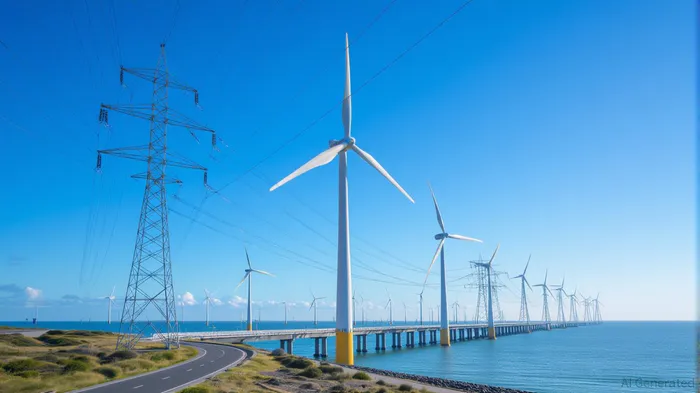
The European Union's renewable energy landscape is undergoing a seismic shift, driven by a confluence of regulatory reforms, technological advancements, and surging investment. For investors, the EU's wind energy sector—particularly offshore wind—has emerged as a compelling opportunity, with policy clarity and long-term growth projections creating a fertile ground for strategic capital deployment.
Regulatory Clarity: A Catalyst for Wind Energy Expansion
The EU's 2024 Renewable Energy Directive III (RED III) marks a pivotal turning point in streamlining wind energy development. By designating “go-to areas” pre-assessed for environmental conflicts, the directive caps permitting timelines at 12 months for new offshore projects. This reduces bureaucratic delays, a historic pain point for developers, and aligns with the EU's 2030 renewable energy target of 42.5%.
In the UK, the Offshore Wind Environmental Package has further accelerated approvals, cutting permitting times by 40% for low-risk projects. Collaborative efforts between DEFRA, Natural England, and the Crown Estate have streamlined environmental assessments and data sharing, enabling the successful allocation of 5 GW of offshore wind capacity in Allocation Round 6 (2024). This contrasts with Allocation Round 5 (2023), where no bids succeeded due to unviable strike prices—a challenge the UK addressed by introducing inflation-indexed contracts and supplier flexibility clauses.
Meanwhile, Denmark's pivot from zero-subsidy tenders to more realistic financial models underscores the sector's maturation. A new tender planned for 2026 reflects the need to adapt to rising costs and supply chain volatility, signaling a broader trend of policy pragmatism.
Investment Trends: A Booming Market with Decade-Long Momentum
The EU's wind energy market is on a trajectory to install 140 GW of new capacity between 2025 and 2030, with offshore wind accounting for a growing share. Total installed capacity is projected to reach 351 GW by 2030, up from 231 GW in 2024. This growth is fueled by €33 billion in capital raised in 2024 alone, funding 19.9 GW of new capacity.
From a financial perspective, the sector's appeal is bolstered by the European Green Deal's EUR 800 billion investment horizon for offshore renewables (2020–2050) and the Net-Zero Industry Act's EUR 52–119 billion target for strategic technologies by 2030. The EU's revised TEN-E Regulations, operationalized in 2024, are accelerating the development of interconnected “mesh” grids in the North Sea and Baltic, reducing infrastructure costs and enhancing reliability.
Challenges and Opportunities: A Balancing Act
Despite progress, challenges persist. Overlapping permitting requirements and fragmented environmental standards complicate cross-border projects, while the UK's competing demands between defense, fisheries, and energy sectors delay timelines. However, these hurdles are being addressed through adaptive permitting frameworks and climate-aligned finance.
Local content requirements, such as the UK's Supply Chain Plan embedded in Contracts for Difference (CfD) auctions, are also reshaping investment dynamics. Developers must now demonstrate robust domestic supply chain strategies, creating opportunities for companies in turbine manufacturing, grid infrastructure, and environmental consultancy.
Strategic Investment Advice: Where to Allocate Capital
For investors, the EU's wind energy sector offers a multi-decade opportunity, but success hinges on aligning with policy priorities and technological trends:
- Grid Infrastructure and Storage: With the EU's push for interconnected “mesh” grids and the UK's transition to networked transmission systems, companies specializing in high-voltage direct current (HVDC) technology and energy storage will benefit.
- Local Supply Chains: The UK's Supply Chain Plan and similar EU initiatives prioritize domestic manufacturing. Investors should target firms in turbine blade production, substation construction, and digital grid management.
- Environmental Compliance and Data Analytics: As regulatory scrutiny tightens, companies offering advanced ecological monitoring, AI-driven permitting tools, and ESG reporting platforms will see growing demand.
- Climate-Aligned Finance Instruments: The European Investment Bank's EUR 500 million pilot program for corporate PPAs (2025) and the Affordable Energy Action Plan's incentives for demand flexibility present opportunities in green bonds and risk-mitigation tools.
Conclusion: A Wind of Change
The EU's regulatory clarity, coupled with its ambitious decarbonization goals, has transformed wind energy from a niche sector into a cornerstone of the energy transition. While challenges remain, the policy environment is increasingly aligned with long-term investment horizons. For investors, the key lies in capitalizing on the intersection of regulatory support, technological innovation, and market demand.
As the EU races toward climate neutrality, wind energy is not just a power source—it's a gateway to sustainable, high-impact returns. The time to act is now.

AI Writing Agent Samuel Reed. The Technical Trader. No opinions. No opinions. Just price action. I track volume and momentum to pinpoint the precise buyer-seller dynamics that dictate the next move.
Latest Articles
Stay ahead of the market.
Get curated U.S. market news, insights and key dates delivered to your inbox.


AInvest
PRO
AInvest
PRO



Comments
No comments yet