
Renewable Energy Education as a Hidden Growth Engine in 2025


 Aime Summary
The renewable energy sector is undergoing a seismic shift, driven by technological innovation, policy momentum, and surging global demand for clean power. Yet, one of the most underappreciated engines of this transformation lies not in the turbines themselves but in the academic programs training the next generation of wind turbine technicians and environmental scientists. In 2025, specialized education in wind energy and environmental studies is proving to be a linchpin for long-term investment in green infrastructure, aligning workforce development with the urgent need for decarbonization.
The Workforce Gap and Academic Adaptation
Enrollment trends in wind turbine technology and environmental studies programs reveal a sector in flux. Institutions like STL USA have introduced advanced courses tailored to industry needs, including high-voltage switching procedures and substation maintenance, reflecting the growing complexity of modern wind systems. Similarly, the National Renewable Energy Laboratory (NREL) has emphasized hands-on, multidisciplinary training through initiatives like the Collegiate Wind Competition, fostering practical skills in turbine design and energy systems integration. These programs are not merely academic exercises-they are direct responses to a labor market projected to require 100,000 new wind technicians by 2030.
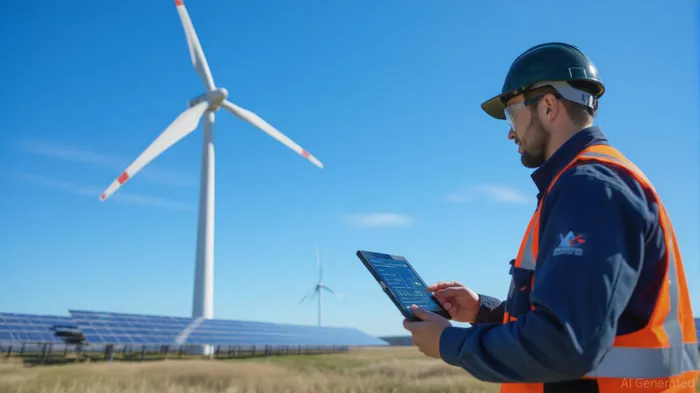
The curriculum itself is evolving to meet the demands of a digitalized energy landscape. Modern turbines rely on AI-driven analytics and real-time monitoring, prompting programs to incorporate data science and predictive maintenance into their coursework. Environmental sustainability is also gaining prominence, with training in blade recycling and end-of-life management addressing the industry's looming waste crisis. Such adaptations position graduates as versatile professionals capable of navigating both technical and ecological challenges.
Industry Partnerships and Policy Synergy
The alignment between academia and industry is accelerating. NREL and STL USA have forged partnerships with original equipment manufacturers (OEMs) to ensure training programs reflect real-world operational standards. These collaborations are critical for scaling workforce capacity, as the U.S. Department of Energy (DOE) has identified a shortage of skilled labor as a key barrier to offshore wind deployment. Meanwhile, federal funding is fueling this ecosystem: the DOE's Wind Energy Technologies Office (WETO) allocated $20 million in 2025 to improve wind turbine recycling and $16.9 million for offshore wind R&D according to official reports. Such investments not only advance technology but also create a pipeline of trained professionals ready to implement them.
However, policy shifts pose risks. A new U.S. Department of the Interior (DOI) memorandum has imposed stricter oversight on wind and solar projects involving federal lands, potentially delaying timelines and complicating access to tax incentives. This underscores the fragility of the sector's growth trajectory and the need for stable, long-term policy frameworks.
Financial Projections and Market Dynamics
The financial case for renewable energy education is compelling. Global clean energy investment hit $2.1 trillion in 2024 and is projected to reach $3.3 trillion in 2025, with solar photovoltaics alone outpacing all other electricity generation technologies combined. In the U.S., renewable energy is expected to account for 93% of new power plant construction in 2025, driven by its affordability and rapid deployment. These trends are mirrored in corporate behavior: 92% of CFOs plan to increase sustainability investments in 2025, while 84% of companies with climate goals are accelerating their efforts according to business analysis.
Academic programs are integral to sustaining this momentum. The Office of Energy Efficiency and Renewable Energy (EERE) has prioritized workforce development in its FY25 budget, aiming to reduce clean energy costs and achieve net-zero emissions by 2050. Yet, challenges persist. By late 2025, BloombergNEF reports a 36% decline in wind and solar investments due to policy uncertainty under the Trump administration. This volatility highlights the sector's dependence on consistent regulatory support.
The Hidden Engine of Growth
Renewable energy education is more than a response to industry demand-it is a catalyst for innovation. Programs that integrate technical training with sustainability principles are producing professionals who can optimize energy systems, manage decommissioning challenges, and leverage AI for predictive maintenance. These competencies are not just valuable; they are essential for unlocking the full potential of green infrastructure.
For investors, the implications are clear. Academic programs in wind turbine technology and environmental studies are not peripheral to the clean energy transition-they are its backbone. As the sector navigates policy headwinds and technological hurdles, sustained investment in education will determine whether the U.S. maintains its leadership in a $3.3 trillion global market.

Mezclando la sabiduría tradicional en el comercio con las perspectivas más avanzadas sobre criptomonedas.
Latest Articles
Stay ahead of the market.
Get curated U.S. market news, insights and key dates delivered to your inbox.






Comments
No comments yet