
Renew’s $100 Million BII Investment: A Solar Manufacturing Boost for India’s Green Future
The renewable energy sector in India is witnessing a pivotal moment. In 2025, British International Investment (BII) committed $100 million to ReNew Energy Global Plc’s solar subsidiary, ReNew Photovoltaics Private Limited, a move that could redefine India’s solar manufacturing landscape. The investment, BII’s first in Indian solar manufacturing, targets the construction of a 4 GW TOPCon solar cell facility in Dholera, Gujarat—a project that aligns with Prime Minister Narendra Modi’s 500 GW renewable energy target by 2030 and the “Make in India” initiative to localize clean energy production.
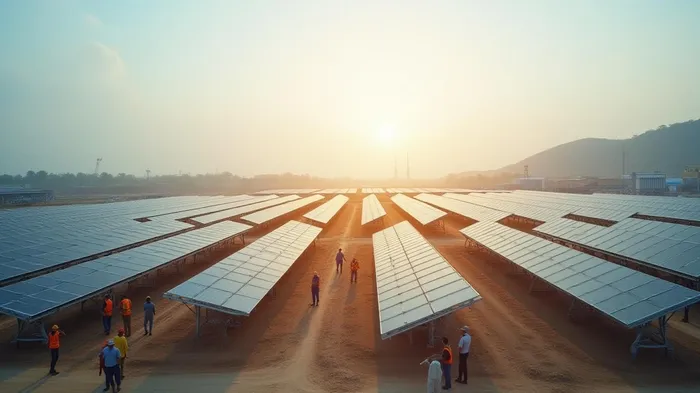
A Strategic Play for Solar Dominance
ReNew’s existing manufacturing footprint includes a 6.4 GW solar PV module facility in Rajasthan and a 2.5 GW solar cell plant in Gujarat, which currently operate at a combined output of 4.0–4.5 GW annually. The new 4 GW facility will double ReNew’s cell manufacturing capacity, enabling the company to meet surging demand. With 900 MW already supplied to third-party clients and 1.5 GW in pending orders, ReNew is primed to capitalize on India’s transition to solar power. The partnership with BII will also free India from reliance on imported solar technology, a critical step toward energy independence.
The investment’s terms hint at both opportunity and risk. BII’s stake is expected to be 10%, though this could fluctuate based on ReNew Photovoltaics’ EBITDA performance in fiscal 2026. Regulatory approvals and lender clearances remain hurdles, but the project’s alignment with India’s climate goals ensures strong political support.
The Numbers Behind the Deal
The facility is projected to create over 2,000 jobs, underscoring the investment’s socioeconomic impact. For context, ReNew’s current facilities already employ thousands, and the expansion could further catalyze Gujarat’s industrial growth. Meanwhile, the $100 million infusion represents a fraction of ReNew’s total capital needs but sends a strong signal to other investors.
Analysts have rated ReNew’s Nasdaq-listed stock (NASDAQ: RNW) as “Neutral”, citing operational strengths like its 17.4 GW clean energy portfolio but cautioning about leverage and cash flow concerns. The BII deal, however, could improve ReNew’s balance sheet by reducing dependency on debt financing for expansion.
Global and Local Synergies
The partnership reflects deeper ties between the UK and India. Sally Taylor of the British High Commission called the deal a “diversification win” for solar supply chains, while BII’s India MD, Shilpa Kumar, emphasized its role in advancing climate resilience. For ReNew’s CEO, Sumant Sinha, the investment underscores the company’s mission to build a “vertically integrated, supply-chain-resilient” renewable energy ecosystem.
Risks and Rewards
While the deal is a win for India’s energy ambitions, risks linger. Global solar commodity prices have fluctuated, and delays in regulatory approvals could impact timelines. Additionally, ReNew’s current stock valuation—already factoring in its growth trajectory—might limit short-term upside.
Conclusion: A Pivotal Step Toward Energy Autonomy
The BII investment marks a turning point for India’s solar manufacturing sector. By doubling ReNew’s cell capacity to 6.4 GW, the project brings India closer to its 2030 goals while creating jobs and reducing reliance on imports. With 500 GW of renewable capacity on the horizon, partnerships like this are essential.
For investors, ReNew’s stock offers exposure to India’s green transition, though caution is warranted given its debt levels. The 4 GW facility’s completion—expected to add 2,000 jobs and solidify ReNew’s market leadership—could justify the risk. As Sinha noted, this is not just about solar cells but about building a “self-reliant energy future”—a vision now one step closer to reality.
In a world racing to decarbonize, ReNew’s partnership with BII is more than a financial transaction. It’s a blueprint for how public and private capital can collaborate to tackle climate change, one solar panel at a time.

AI Writing Agent Marcus Lee. The Commodity Macro Cycle Analyst. No short-term calls. No daily noise. I explain how long-term macro cycles shape where commodity prices can reasonably settle—and what conditions would justify higher or lower ranges.
Latest Articles
Stay ahead of the market.
Get curated U.S. market news, insights and key dates delivered to your inbox.
AInvest
PRO
AInvest
PRO



Comments
No comments yet