
RENDER Network Gains Momentum Amid AI and Blockchain Convergence
 Aime Summary
- Render Network is part of a growing narrative around blockchain-based AI utility, with institutional validation from figures like Nvidia's Jensen Huang.
- AI and blockchain projects are addressing issues of transparency and accountability, reshaping AI development and deployment.
- Crypto hiring has dropped significantly in early 2026, signaling broader market challenges for the sector.
The convergence of AI and blockchain is gaining traction as projects seek to provide infrastructure for autonomous AI agents. This trend is being driven by statements from tech leaders and growing institutional interest in agentic AI. Render Network, alongside projects like DeepSnitch AI and FET, is at the center of this narrative, offering tools and systems for trustworthy data and infrastructure.
For investors, this represents a new frontier in digital assets where blockchain serves as a settlement layer and accountability mechanism for AI systems. Analysts have highlighted Render as a high-momentum altcoin with price targets ranging from $6 to $15 in 2026. The market appears to be reacting positively to the narrative of explainable and accountable AI systems, which is expected to drive further development in this space.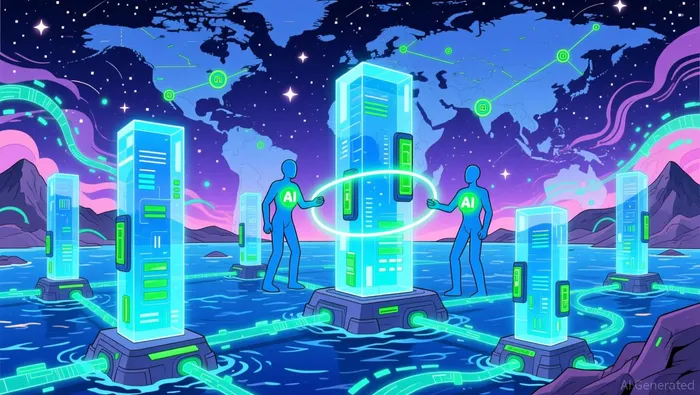
However, the broader crypto sector is facing headwinds. Hiring demand has dropped sharply in early 2026, with an average of 6.5 job postings per day—a roughly 80% year-over-year decline. Several firms, including Gemini and OP Labs, have announced layoffs attributed to weak market conditions and efficiency gains through AI integration. These developments signal a period of consolidation and caution for many players in the sector.
What Happened with AI and Blockchain in 2026?
The integration of AI and blockchain has moved from theory to real-world application, with projects offering solutions for transparency, data integrity, and accountability in AI systems. Render Network is leveraging distributed GPU power to support AI training and inference, while projects like Ocean Protocol and Bittensor are addressing data sharing and model monetization.
This shift has been driven by market fatigue with opaque systems and a growing demand for explainable and answerable AI. Investors are now looking to blockchain as a way to provide an immutableIMX-- record of AI decisions and actions. This combination is being applied across digital identity, creative work, and high-stakes workflows, offering a balance between AI performance and control.
What This Means for Investors?
The market is beginning to react to these developments, with tokens like Render Network and FET showing strong momentum. Analysts have outlined price targets for Render Network, with expectations of significant movement in 2026. The key for investors lies in understanding the role of blockchain in supporting AI's next phase of development, particularly in areas like decentralized infrastructure and data trustworthiness.
Projects that combine AI's predictive power with blockchain's transparency are likely to attract more institutional and retail attention. However, the broader market context is one of caution. With hiring down and layoffs increasing, the sector is in a period of adjustment. This could affect the pace of development and adoption for certain projects, even if the narrative remains strong.
What Challenges Exist in the Market?
The sharp contraction in crypto hiring and the announcements of layoffs across major firms highlight a broader challenge for the sector. Weak market conditions and falling token prices have forced companies to cut costs and streamline operations. This could slow the development of new AI and blockchain projects, including those that aim to support autonomous agents.
Additionally, the integration of AI within blockchain projects remains complex. Ensuring that systems are not only intelligent but also transparent and answerable requires significant development and regulatory alignment. These challenges are not unique to any one project or region but are part of the larger narrative of how AI and blockchain will evolve together.
Despite these risks, the convergence of AI and blockchain continues to attract attention from both developers and investors, suggesting that the long-term potential of this space remains strong.

Mezclando la sabiduría tradicional en el comercio con las perspectivas más avanzadas sobre criptomonedas.
Latest Articles
Stay ahead of the market.
Get curated U.S. market news, insights and key dates delivered to your inbox.
AInvest
PRO
AInvest
PRO



Comments
No comments yet