
Render Navigates AI Shift as Creative Demand Hits Record
 Aime Summary
- Render demand surged with 390+ million frames processed last year according to reports.
- AI integration accelerates but risks displacing traditional creative roles according to industry analysis.
- Over 2 million creators now use advanced tools for rendering workflows according to recent data.
Render (RENDER) faces pivotal industry shifts as cloud rendering demand hits unprecedented levels. Fox Renderfarm served over 2 million global users across 100+ countries in 2025 amid booming creative projects. Artificial intelligence now rapidly transforms post-production workflows while triggering ethical debates about creative displacement. This dual pressure creates both operational efficiencies and strategic dilemmas for stakeholders.
How Did Rendering Demand Grow in 2025?
Creative industries drove record cloud rendering usage last year. Fox Renderfarm delivered 193 billion seconds of processing time for animation, VFX, and architectural visualization projects. Major film productions like ‘The Kings of Kings’ and immersive Las Vegas Sphere events fueled this expansion. Global gatherings including Annecy Festival and SIGGRAPH Asia further highlighted sector growth according to industry reports. Sustained demand signals robust infrastructure needs.
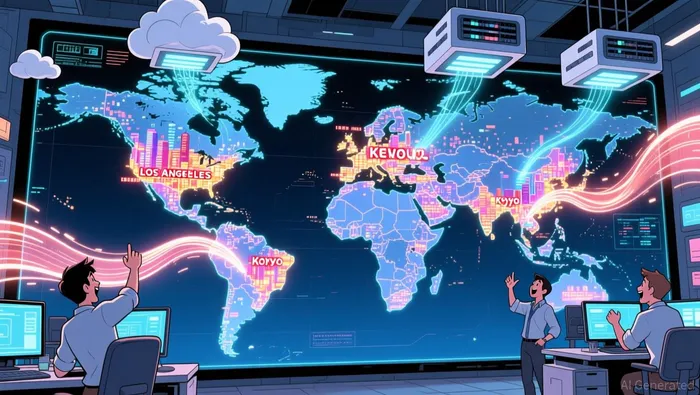
Partnerships with industry leaders like Blender and Digital Domain expanded technical capabilities during this surge. The 390-million-frame output demonstrates scaling potential across entertainment and design verticals. This growth trajectory positions rendering as critical digital infrastructure.
What Challenges Does AI Bring to Creative Industries?
AI adoption introduces quality and ethical concerns despite efficiency gains. The technology now handles scriptwriting, voice-overs, and content generation with mixed results. Many clients prioritize cost savings over creative excellence, risking artistic integrity in workflows. That said, 2026 promises AI that modifies existing outputs instead of full re-renders. Such advances could accelerate timelines but deepen dependency.
Legal uncertainties around AI-generated content compound workforce disruptions. Traditional roles like animators face displacement even as remote workflows become standard through tools like LucidLink. Balancing innovation with creator livelihoods remains unresolved. Industry dialogue must address these ethical headwinds urgently.
Which Tools Are Transforming Creative Workflows?
Developers now access diverse frameworks to streamline digital production. Comprehensive taxonomies catalog AI models like Stable Diffusion alongside game engines such as Unity. Open-source hardware including Raspberry Pi enables experimental approaches to rendering challenges. This democratization allows more creators to integrate advanced capabilities.
Specialized tools now cover real-time collaboration, 3D modeling and machine learning applications. Languages like Python and JavaScript provide flexible foundations for custom solutions. As tool diversity grows, workflow optimization becomes central to competitive advantage.

Blending traditional trading wisdom with cutting-edge cryptocurrency insights.
Latest Articles
Stay ahead of the market.
Get curated U.S. market news, insights and key dates delivered to your inbox.


AInvest
PRO
AInvest
PRO



Comments
No comments yet