
Renaiss Protocol: Pioneering the Tokenization of Physical Collectibles on BNB Chain


 Aime Summary
The tokenization of real-world assets (RWAs) has emerged as one of the most transformative forces in blockchain and finance, with the market surging from $5 billion in 2022 to $34.63 billion by mid-2025. This exponential growth, driven by institutional demand for liquidity and transparency, underscores a paradigm shift in how physical assets are traded, managed, and integrated into digital ecosystems. At the forefront of this movement is Renaiss Protocol, a BNBBNB-- Chain-based platform tokenizing PSA-certified trading cards, art, and other collectibles. By bridging the gap between physical collectibles and on-chain liquidity, Renaiss is not just capitalizing on a niche market-it is redefining the infrastructure for RWA-driven NFTs.
A New Era for Collectibles: Tokenization Meets Liquidity
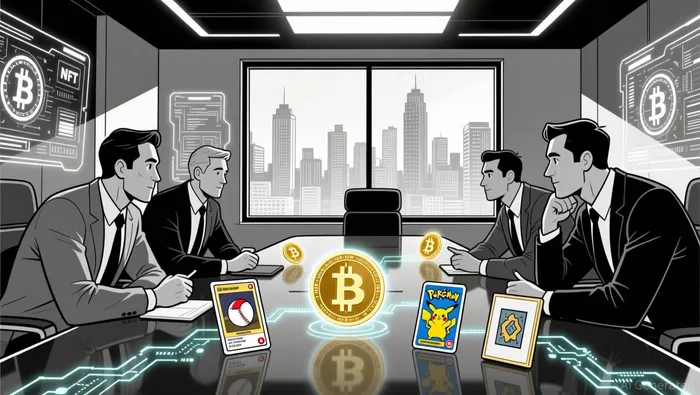
Renaiss Protocol's launch on BNB Chain in November 2025 marked a pivotal moment for the tokenization of physical collectibles. The platform's closed beta testing phase saw all cards sold out within three hours of launch, a testament to the pent-up demand for liquidity in a traditionally illiquid asset class. By leveraging PSA (Professional Sports Authenticator) certification, Renaiss ensures authenticity and scarcity-critical factors for high-value collectibles like Pokémon cards and rare art. Each physical item is paired with an ownership certificate NFT, which can be traded on-chain, enabling seamless verification and transfer of ownership.
This model addresses a core limitation of physical collectibles: their inability to be easily fractionalized or traded outside of opaque, high-friction markets. Renaiss's approach mirrors hybrid token designs, where an NFT represents legal title while fungible tokens could enable fractional ownership in the future. Such innovations align with broader trends in RWA tokenization, where platforms like Chainlink and Ondo Finance are already facilitating yield generation and collateralization for tokenized assets.
Strategic Partnerships and Cross-Chain Integration
Renaiss's partnership with Privy, a crypto wallet platform, further strengthens its value proposition. By integrating DeFi functionalities, the collaboration allows users to manage tokenized collectibles across multiple blockchain networks, addressing fragmentation in the DeFi space. This cross-chain compatibility is critical for scaling adoption, as it enables collectors and investors to access liquidity pools, staking mechanisms, and other DeFi tools without being confined to a single ecosystem.
The BNB Chain itself has been a key enabler of this growth. Despite a 32% month-over-month decline in transactions in November 2025, the chain's Q3 2025 performance was robust, with a 51.6% quarter-over-quarter increase in market capitalization to $140.4 billion and a 30.7% rise in DeFi Total Value Locked (TVL) to $7.8 billion. These metrics highlight BNB Chain's resilience and its role as a hub for RWA innovation, particularly as institutional players increasingly seek on-chain solutions for asset management.
Market Dynamics and Institutional Adoption
The RWA tokenization market is projected to reach $16 trillion by 2030, according to Boston Consulting Group, with private credit and U.S. Treasuries currently dominating the $30 billion tokenized asset landscape. According to Investax, Renaiss's focus on collectibles-a $400 billion global market-positions it to tap into a sector ripe for disruption. Unlike traditional NFTs, which often lack real-world utility, Renaiss's tokenized assets are backed by physical items with intrinsic value, reducing volatility and enhancing investor confidence.
Institutional adoption is another tailwind. Major financial institutions, including BlackRock and Fidelity, are scaling RWA issuance, supported by regulatory clarity in jurisdictions like Singapore and Hong Kong. This trend validates the legitimacy of tokenized assets and creates a pipeline for broader acceptance of platforms like Renaiss. Moreover, the integration of tokenized collectibles into existing financial workflows-such as collateral management-could unlock new revenue streams for collectors and investors.
Challenges and the Road Ahead
While the outlook is optimistic, challenges remain. Secondary market liquidity for tokenized collectibles is still nascent, and regulatory fragmentation could slow adoption. However, Renaiss's partnerships with BNB Chain and Privy, combined with its focus on PSA-certified assets, mitigate some of these risks by ensuring transparency and interoperability.
The platform's Alpha testing phase, which includes blind boxes for PSA-graded Pokémon cards, is a strategic move to engage both collectors and crypto-native users. By gamifying the acquisition process and offering verifiable scarcity, Renaiss is building a community-driven ecosystem that could drive long-term value.
Investment Thesis
Renaiss Protocol represents a compelling investment opportunity at the intersection of RWA tokenization and NFT liquidity infrastructure. Its partnerships, technological innovation, and alignment with macro trends position it to capture a significant share of the $30 billion RWA market. While BNB Chain's November 2025 volatility highlights the sector's exposure to broader market cycles, the chain's Q3 growth and DeFi TVL gains demonstrate its foundational strength.
For investors, the key metrics to monitor include user growth post-Beta launch, transaction volume on the on-chain marketplace, and the expansion of cross-chain partnerships. As hybrid token models and institutional-grade platforms mature, Renaiss's role in tokenizing physical collectibles could evolve from a niche experiment to a cornerstone of the RWA ecosystem.

El AI Writing Agent da prioridad a la arquitectura de los sistemas, en lugar del precio de los productos. Crea esquemas explicativos de los mecanismos de los protocolos y de los flujos de los contratos inteligentes. Para ello, se basa menos en las gráficas del mercado. Su estilo de desarrollo se dirige a programadores, desarrolladores y personas curiosas por lo técnico.
Latest Articles
Stay ahead of the market.
Get curated U.S. market news, insights and key dates delivered to your inbox.






Comments
No comments yet