
Why Remittix (RTX) Is Positioning Itself to Disrupt XRP’s Cross-Border Payments Dominance by 2030


 Aime Summary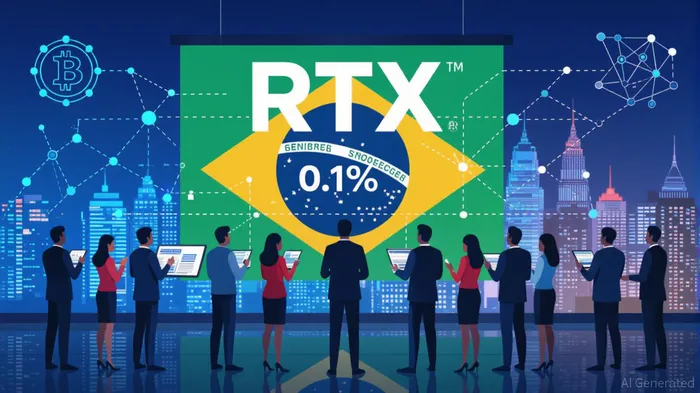
The cross-border payment landscape is undergoing a seismic shift, driven by innovations in PayFi (Payment Finance) and the growing demand for faster, cheaper, and more transparent solutions. While XRPXRP-- has long dominated this space with its institutional partnerships and regulatory clarity, a new contender—Remittix (RTX)—is emerging as a disruptive force. By prioritizing real-world utility, deflationary economics, and hyper-competitive pricing, RTXRTX-- is not only challenging XRP’s market share but also redefining the value proposition for cross-border transactions.
Real-World Utility: RTX’s Edge in Emerging Markets
RTX’s beta wallet, launched in Q3 2025, has already processed 400,000 transactions for 1.2 million users, offering instant crypto-to-fiat conversions in 30+ countries at fees as low as 0.1%—a 33% discount compared to XRP’s 0.15% average [1]. This pricing advantage is critical in emerging markets, where remittance costs often exceed 6% via traditional channels. RTX’s ability to bypass intermediaries and enable direct crypto-to-bank transfers in countries like Brazil and Kenya positions it as a scalable solution for freelancers, gig workers, and small businesses [1].
Moreover, RTX’s deflationary tokenomics—burning 10% of transaction fees to reduce supply—creates a flywheel effect. As usage grows, the token’s scarcity increases, potentially driving up its value for long-term holders. This model contrasts with XRP’s fixed supply, which lacks inherent deflationary incentives [1].
Early-Stage Growth Potential: A PayFi Powerhouse
RTX’s rapid user acquisition and transaction volume underscore its early-stage momentum. With 1.2 million users and $22.2 million raised in its presale, the project has demonstrated strong liquidity and investor confidence [1]. Strategic partnerships in Southeast Asia and Africa, coupled with institutional credibility from a CertiK audit, further validate its infrastructure [1]. By 2030, analysts project RTX could capture a significant share of the $19 trillion global remittance market, particularly in regions where XRP’s institutional focus leaves gaps [1].
XRP’s Challenges: Regulatory Uncertainties and Niche Competition
While XRP’s recent SEC reclassification as a commodity has boosted institutional adoption, regulatory risks remain. For instance, Ripple’s ODL service, which processes $1.3 trillion annually, faces scrutiny in markets with strict crypto regulations [2]. Additionally, XRP’s focus on institutional clients leaves it vulnerable to competition from consumer-centric models like RTX and Stellar, which are tokenizing $3 billion in real-world assets (RWAs) by 2025 [1].
RTX’s hybrid approach—combining low fees, deflationary economics, and direct user access—addresses pain points that XRP’s legacy partnerships cannot. For example, RTX’s 0.1% fee model is particularly attractive to individual remitters, who constitute 70% of the global remittance market [1].
Conclusion: A PayFi Revolution by 2030
RTX’s real-world utility and early-stage growth metrics position it as a formidable challenger to XRP’s cross-border dominance. While XRP’s institutional credibility and SWIFT integration provide a buffer, RTX’s deflationary model, hyper-competitive pricing, and focus on emerging markets create a compelling narrative for long-term investors. By 2030, the PayFi sector could see a bifurcation: XRP dominating institutional corridors while RTX captures the consumer-driven remittance segment.
Source:[1] Why Remittix (RTX) Outpaces XRP as the 2025 PayFi [https://www.ainvest.com/news/remittix-rtx-outpaces-xrp-2025-payfi-investment-play-2508/][2] XRP's Strategic Rise: Regulatory Clarity and Cross-Border Payment Dominance [https://www.ainvest.com/news/xrp-strategic-rise-regulatory-clarity-cross-border-payment-dominance-2025-2509/][3] XRP's Strategic Position to Capture 14% of SWIFT's Cross-Border Volume [https://www.bitget.com/news/detail/12560604937530]

Decoding blockchain innovations and market trends with clarity and precision.
Latest Articles
Stay ahead of the market.
Get curated U.S. market news, insights and key dates delivered to your inbox.
AInvest
PRO
AInvest
PRO



Comments
No comments yet