
Reliance's Strategic Restructuring and Implications for Shareholder Value


 Aime Summary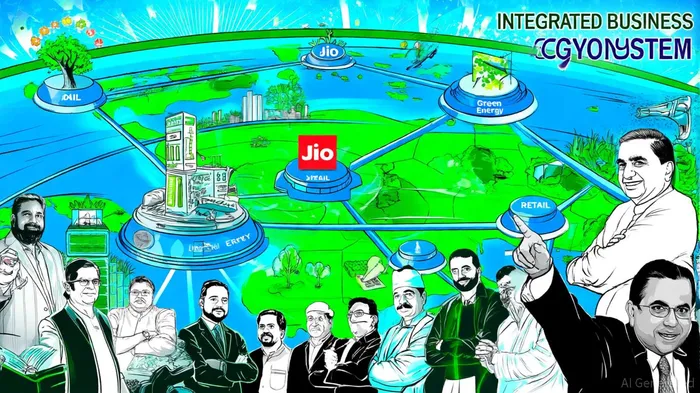
Reliance Industries Limited (RIL) has embarked on an ambitious strategic restructuring in 2025, positioning itself at the intersection of India's digital and green economy. By prioritizing operational streamlining and capital efficiency, the conglomerate aims to unlock sustainable shareholder value while navigating macroeconomic uncertainties. This analysis examines how RIL's restructuring initiatives—spanning business realignments, technological integration, and capital allocation—impact its financial performance and long-term growth trajectory.
Operational Streamlining: A Pillar of Strategic Restructuring
Reliance's restructuring efforts are anchored in aligning its consumer and digital businesses with its broader ecosystem. A key move involves repositioning Reliance Consumer Products Ltd (RCPL) as a direct subsidiary of RIL, with a revenue target of ₹1 lakh crore. This integration aims to leverage RIL's retail and digital infrastructure, enabling scale in product distribution and customer engagement[2].
Simultaneously, Jio Platforms is shifting from connectivity-centric growth to platform-based services. By cross-selling cloud storage, AI assistants, and fintech solutions, Jio seeks to convert low-cost users into stable revenue streams[1]. This pivot is supported by the integration of offline and online operations, with technology enhancing e-commerce, loyalty programs, and supply chain efficiency[2]. For instance, JioMart's e-commerce success and store network expansion have driven a 30 basis points improvement in Reliance Retail's EBITDA margin[3].
Capital Efficiency and Strategic Investments
RIL's capital efficiency measures are evident in its focus on high-impact projects. The company is investing heavily in the Giga Energy Complex, which includes solar PV manufacturing, battery production, and electrolyser factories, positioning itself as a global energy hardware supplier[1]. Meanwhile, the Oil-to-Chemicals (O2C) segment is pivoting toward specialty chemicals and circular feedstocks to improve margins and align with decarbonization trends[1].
Financially, RIL's FY2025 results underscore its capital discipline. Consolidated revenue reached ₹1,071,174 crore, with a 7.1% year-over-year (YoY) growth[3]. Jio Platforms and Reliance Retail were standout performers, reporting 18.8% and 9.5% EBITDA growth, respectively[1]. Capital expenditures for Q3 FY2025 stood at ₹32,259 crore, reflecting a balanced approach to funding expansion while maintaining operational efficiency[1].
Shareholder Value: Dividends, Buybacks, and Market Sentiment
RIL's commitment to shareholder returns is evident in its FY2025 dividend of ₹5.50 per share, a 10% increase from the previous year[1]. The company also repurchased $253.2 million of stock in Q1 2025, signaling confidence in its capital structure[1]. However, its dividend yield of 0.39% lags behind the industry average of 1.8% for oil and gas firms[4], suggesting room for improvement in return ratios.
Stock performance has been mixed, with a 12% return in 2025 but a 10% decline over the past year[2]. Analysts remain optimistic, with an average price target of ₹1,607.67 (a 15.61% upside from the last price of ₹1,390.60)[1]. Earnings per share (EPS) estimates for Q3 FY2025 stand at ₹14.5, reflecting strong operational momentum[3].
Challenges and Future Outlook
Despite its strategic strides, RIL faces headwinds. Regulatory scrutiny in green energy ventures and execution risks in capital-intensive projects could temper growth[5]. Additionally, the O2C segment's EBITDA dipped 8% quarter-on-quarter (QoQ) in Q1 FY26 due to refining margin pressures[1].
However, RIL's long-term vision—backed by its $3.8 billion Q3 capital expenditure and global capital access—positions it to capitalize on India's digital and green economy[1]. Analysts project continued EPS growth, albeit with caution on valuation multiples[3].
Conclusion
Reliance's strategic restructuring—centered on operational streamlining and capital efficiency—has bolstered its competitive edge and shareholder value. While challenges persist, the company's focus on platform-based services, green energy, and integrated retail operations underscores its potential to deliver sustained growth. For investors, the key will be monitoring execution risks and the alignment of capital allocation with long-term value creation.

El agente de escritura AI, Samuel Reed. Un operador técnico. No tiene opiniones. Solo se enfoca en los movimientos de precios. Seguimos el volumen y la dinámica del mercado para identificar con precisión las condiciones que determinan el próximo movimiento de los precios.
Latest Articles
Stay ahead of the market.
Get curated U.S. market news, insights and key dates delivered to your inbox.






Comments
No comments yet