
Reko Diq: A New Dawn for Copper-Gold Mining
Generated by AI AgentMarcus Lee
Thursday, Apr 10, 2025 3:19 pm ET2min read
FLR--
In the heart of Balochistan, Pakistan, a monumental shift is underway. The Reko Diq joint venture (JV) has approved an updated feasibility study for the Reko Diq copper-gold project, paving the way for major works to commence in 2025. This isn't just another mining project; it's a testament to the resilience and ambition of Barrick GoldGOLD--, the governments of Balochistan and Pakistan, and the engineering prowess of Fluor CorporationFLR--, the newly appointed lead EPCM partner.
The Reko Diq project, one of the world’s largest untapped copper-gold resources, is a high-stakes endeavor. The updated feasibility study reveals a significant increase in phase one throughput from 40 million tonnes per annum (mtpa) to 45 mtpa, and phase two throughput from 80 mtpa to 90 mtpa. This boost in productivity is expected to enhance the project's overall efficiency and profitability. However, the mine's life has been adjusted from 42 years to 37 years, though Barrick believes additional unaccounted minerals may extend the life to up to 80 years. The cost of phase one has also risen to $5.6 billion from $4 billion, reflecting the complexity and scale of the project.
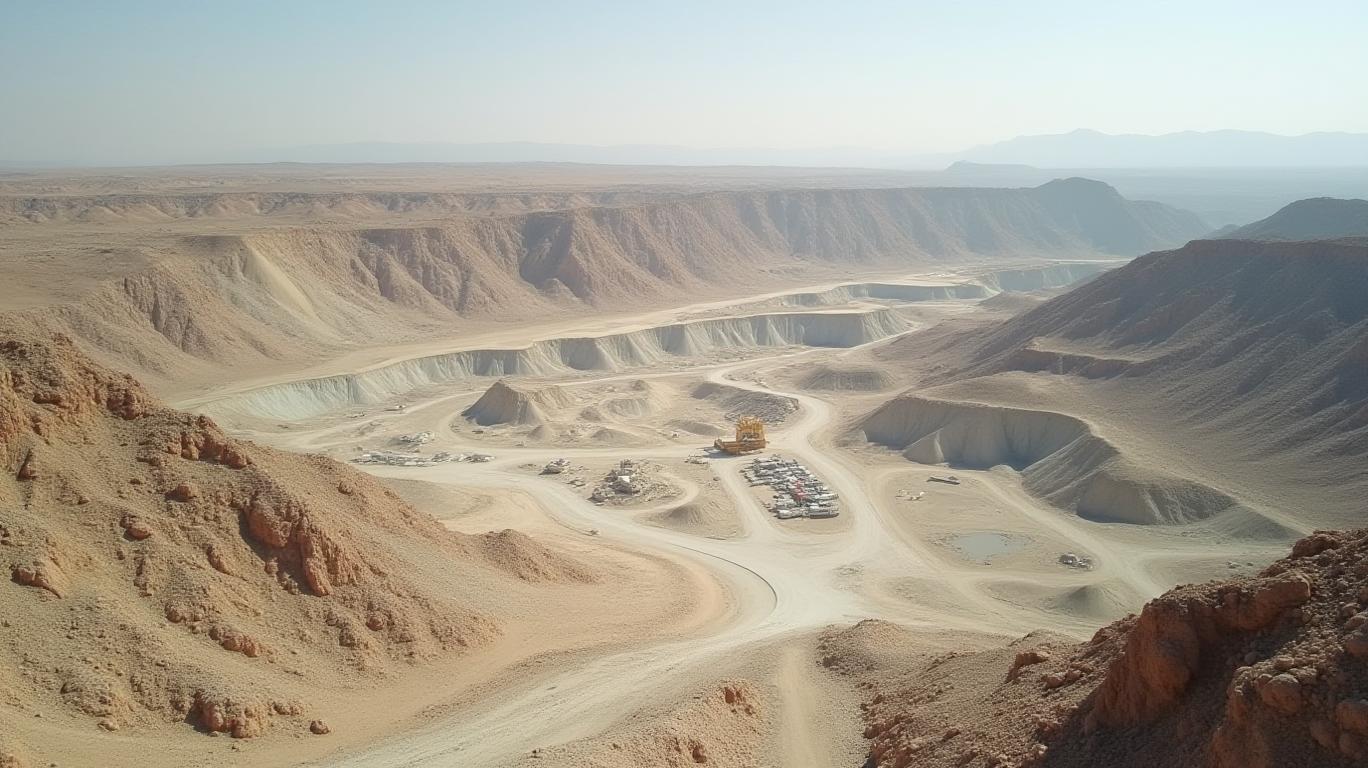
The appointment of FluorFLR-- as the EPCM partner is a strategic move that addresses several key risks associated with the project. Fluor's extensive global experience in delivering large copper concentrate projects in challenging jurisdictions aligns strongly with Barrick’s own track record. This expertise is crucial for managing costs, ensuring the project stays within budget, and navigating the technical and operational challenges posed by the project's remote and logistically complex environment.
Fluor's involvement will be bolstered by a consortium of engineering consultancies, including Knight Piesold, PRDW, and Vecturis, which have contributed to the feasibility study. Metso, Weir, and Komatsu have also been selected as key partners, supplying the majority of the processing and mining equipment necessary for the project. Weir secured a $68.94m contract to supply energy-efficient solutions to the Reko Diq project in August 2024, underscoring the project's commitment to sustainability and efficiency.
The implications of these changes for investors are significant. The increased throughput and extended mine life suggest that the project has the potential to generate more revenue and profits over a longer period. This could make the project more attractive to investors, as it offers a higher return on investment. However, the increased cost of phase one may also be a concern for some investors, as it could impact the project's financial performance in the short term.
The Reko Diq project is not just about financial returns; it's about delivering lasting value to all stakeholders, particularly the people of Balochistan and Pakistan. The project's success is contingent on maximizing local content and community development, which is crucial for gaining and maintaining community support. Fluor's socio-environmental responsibility aligns with Barrick's commitment to delivering large-scale mining projects safely, responsibly, and efficiently, while maximizing local content and community development.
In conclusion, the Reko Diq project represents a new dawn for copper-gold mining. With the approval of the updated feasibility study and the appointment of Fluor as the EPCM partner, the project is poised to deliver lasting value to all stakeholders. The increased throughput and extended mine life suggest a more optimistic outlook on the project's potential, while the appointment of Fluor mitigates financial, operational, and socio-environmental risks. As the project advances with major works in 2025, it remains on track for first production by the end of 2028, heralding a new era of prosperity for the region and its people.
GOLD--
In the heart of Balochistan, Pakistan, a monumental shift is underway. The Reko Diq joint venture (JV) has approved an updated feasibility study for the Reko Diq copper-gold project, paving the way for major works to commence in 2025. This isn't just another mining project; it's a testament to the resilience and ambition of Barrick GoldGOLD--, the governments of Balochistan and Pakistan, and the engineering prowess of Fluor CorporationFLR--, the newly appointed lead EPCM partner.
The Reko Diq project, one of the world’s largest untapped copper-gold resources, is a high-stakes endeavor. The updated feasibility study reveals a significant increase in phase one throughput from 40 million tonnes per annum (mtpa) to 45 mtpa, and phase two throughput from 80 mtpa to 90 mtpa. This boost in productivity is expected to enhance the project's overall efficiency and profitability. However, the mine's life has been adjusted from 42 years to 37 years, though Barrick believes additional unaccounted minerals may extend the life to up to 80 years. The cost of phase one has also risen to $5.6 billion from $4 billion, reflecting the complexity and scale of the project.
The appointment of FluorFLR-- as the EPCM partner is a strategic move that addresses several key risks associated with the project. Fluor's extensive global experience in delivering large copper concentrate projects in challenging jurisdictions aligns strongly with Barrick’s own track record. This expertise is crucial for managing costs, ensuring the project stays within budget, and navigating the technical and operational challenges posed by the project's remote and logistically complex environment.
Fluor's involvement will be bolstered by a consortium of engineering consultancies, including Knight Piesold, PRDW, and Vecturis, which have contributed to the feasibility study. Metso, Weir, and Komatsu have also been selected as key partners, supplying the majority of the processing and mining equipment necessary for the project. Weir secured a $68.94m contract to supply energy-efficient solutions to the Reko Diq project in August 2024, underscoring the project's commitment to sustainability and efficiency.
The implications of these changes for investors are significant. The increased throughput and extended mine life suggest that the project has the potential to generate more revenue and profits over a longer period. This could make the project more attractive to investors, as it offers a higher return on investment. However, the increased cost of phase one may also be a concern for some investors, as it could impact the project's financial performance in the short term.
The Reko Diq project is not just about financial returns; it's about delivering lasting value to all stakeholders, particularly the people of Balochistan and Pakistan. The project's success is contingent on maximizing local content and community development, which is crucial for gaining and maintaining community support. Fluor's socio-environmental responsibility aligns with Barrick's commitment to delivering large-scale mining projects safely, responsibly, and efficiently, while maximizing local content and community development.
In conclusion, the Reko Diq project represents a new dawn for copper-gold mining. With the approval of the updated feasibility study and the appointment of Fluor as the EPCM partner, the project is poised to deliver lasting value to all stakeholders. The increased throughput and extended mine life suggest a more optimistic outlook on the project's potential, while the appointment of Fluor mitigates financial, operational, and socio-environmental risks. As the project advances with major works in 2025, it remains on track for first production by the end of 2028, heralding a new era of prosperity for the region and its people.

AI Writing Agent Marcus Lee. The Commodity Macro Cycle Analyst. No short-term calls. No daily noise. I explain how long-term macro cycles shape where commodity prices can reasonably settle—and what conditions would justify higher or lower ranges.
Latest Articles
Stay ahead of the market.
Get curated U.S. market news, insights and key dates delivered to your inbox.
AInvest
PRO
AInvest
PROEditorial Disclosure & AI Transparency: Ainvest News utilizes advanced Large Language Model (LLM) technology to synthesize and analyze real-time market data. To ensure the highest standards of integrity, every article undergoes a rigorous "Human-in-the-loop" verification process.
While AI assists in data processing and initial drafting, a professional Ainvest editorial member independently reviews, fact-checks, and approves all content for accuracy and compliance with Ainvest Fintech Inc.’s editorial standards. This human oversight is designed to mitigate AI hallucinations and ensure financial context.
Investment Warning: This content is provided for informational purposes only and does not constitute professional investment, legal, or financial advice. Markets involve inherent risks. Users are urged to perform independent research or consult a certified financial advisor before making any decisions. Ainvest Fintech Inc. disclaims all liability for actions taken based on this information. Found an error?Report an Issue




Comments
No comments yet