
Reko Diq's Copper Potential: A Strategic Inflection Point for Global Supply Chains and Emerging Markets
The International Finance Corporation's (IFC) $400 million loan to Pakistan's RekoREK-- Diq copper-gold project marks a pivotal moment in the evolution of global commodity markets and emerging market infrastructure. This financing, part of a broader $700 million package, underscores the critical role of public-private partnerships in unlocking strategic resources while addressing the infrastructure deficits of developing economies. With copper demand surging due to the clean energy transition and geopolitical realignments reshaping supply chains, Reko Diq's development is not merely an infrastructure project—it is a harbinger of how emerging markets will shape the 21st-century resource landscape.
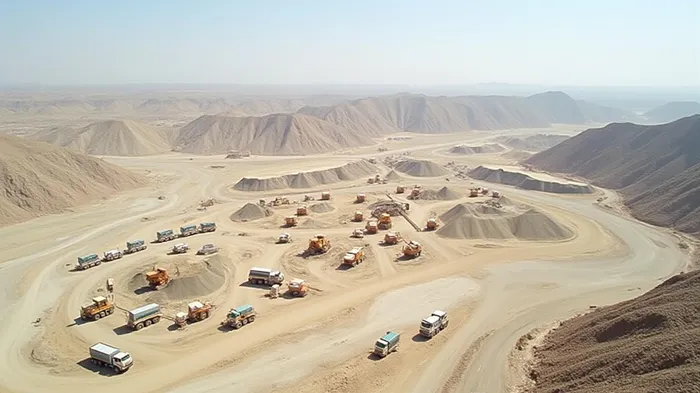
Global Copper Supply: A Race Against Time
Copper is the bedrock of the energy transition, critical for electric vehicles, solar panels, and grid infrastructure. The U.S. Geological Survey estimates that global copper demand could double by 2050, yet supply constraints loom large. Reko Diq, one of the world's largest undeveloped copper deposits, offers a lifeline. At full capacity, it will produce 460,000 tonnes annually—1.8% of current global supply—positioning it as the eighth-largest copper mine globally. This output will directly alleviate shortages, particularly in Asia, where China and India alone account for over half of global consumption.
The above visualization underscores copper's rising strategic value. As prices hover near decade highs, investors in copper equities—like Barrick Gold, a joint owner of Reko Diq—stand to benefit from both physical scarcity and geopolitical tailwinds. The project's gold byproduct (0.30 g/t) further enhances its economic viability, offering a dual hedge against inflation and supply chain disruptions.
Infrastructure as an Engine of Growth
Reko Diq's significance extends beyond raw materials. The project's $6.6 billion development cost requires a logistical and infrastructural overhaul of Pakistan's Balochistan province—a region plagued by underdevelopment and instability. The IFC's financing, alongside contributions from institutions like the World Bank and Asian Development Bank, signals a shift toward “build-and-sustain” models. Key challenges include constructing a 160km desalination pipeline, a hybrid solar-natural gas power grid, and either a 680km slurry pipeline to Gwadar Port or a dedicated rail link.
These investments align with China's Belt and Road Initiative (BRI) through the China-Pakistan Economic Corridor (CPEC), which aims to transform Gwadar into a regional trade hub. The project's success could catalyze broader infrastructure upgrades in emerging markets, where the World Bank estimates a $90 trillion investment gap exists through 2040. For investors, this highlights opportunities in construction firms with expertise in mining logistics and renewable energy integration.
ESG Considerations: Mitigating Risks, Capturing Value
The IFC's involvement comes with stringent environmental and social safeguards. The mine's water recycling system (85–90% efficiency) and carbon-reduction targets (15–20% lower emissions) reflect a growing emphasis on sustainability in resource extraction. However, risks remain: Balochistan's history of separatist violence, water scarcity, and community grievances demand careful management. The IFC's Compliance Advisor/Ombudsman (CAO) mechanism is a critical safeguard, but investors must monitor execution rigorously.
For ESG-focused funds, Reko Diq represents a test case: Can large-scale mining projects in emerging markets balance profit with local development? The project's goals—80% local workforce employment within a decade, plus healthcare and education initiatives—suggest a model for inclusive growth. Success here could set precedents for other projects in Africa and Latin America.
Investment Implications
- Copper Equities: Exposure to firms like Barrick Gold (ABX) or Teck Resources (TECK), which benefit from rising copper prices and project-specific upside.
- Infrastructure Funds: Target emerging-market infrastructure funds with expertise in energy and logistics, such as the IFC's own infrastructure debt vehicles.
- Geopolitical Plays: Consider ETFs tracking Asian equities (e.g., iShares MSCI Asia ex-Japan) or copper-focused ETPs like the iPath Copper ETN (JJC), which amplify exposure to supply-demand dynamics.
Conclusion
Reko Diq is a microcosm of 21st-century resource economics: a marriage of strategic resource extraction, infrastructure investment, and ESG accountability. For investors, it represents both risk and reward—a chance to capitalize on the energy transition while supporting emerging markets' growth. However, the project's long-term success hinges on execution. As the world grapples with supply chain vulnerabilities and climate imperatives, Reko Di's trajectory will be a bellwether for how public and private actors can collaborate to meet the demands of a resource-scarce future.
The road to 2033, when full production is slated to begin, is long. But with the right investments in people, technology, and governance, Reko Diq could redefine the global copper landscape—and the emerging markets that fuel it—for decades to come.

Stay ahead of the market.
Get curated U.S. market news, insights and key dates delivered to your inbox.


AInvest
PRO
AInvest
PRO



Comments
No comments yet