
Reimagining Retail: San Francisco's Urban Renaissance and the Future of Local Investment
 Aime Summary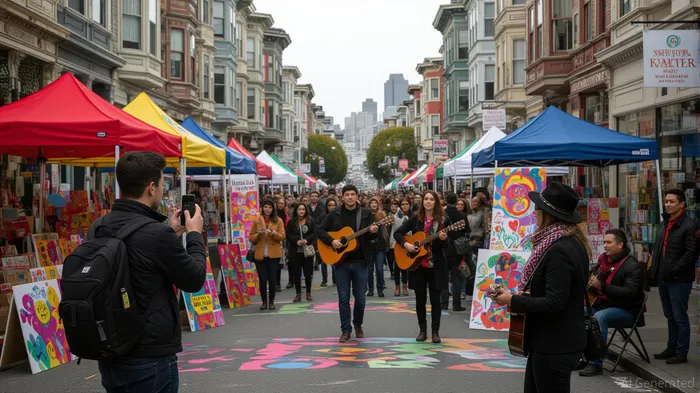
San Francisco's retail sector is undergoing a seismic shift. From 2023 to 2024, the city's downtown retail market saw a staggering -750,000 square feet of net absorption, driven by declining foot traffic, public safety concerns, and outdated zoning policies. Vacancy rates in Union Square and the Van Ness corridor now hover at 22% and 53%, respectively. Yet, amid this crisis lies a paradox: the same forces eroding traditional retail are creating fertile ground for innovation. Investors who recognize this duality can capitalize on a renaissance of urban real estate adaptation and small business revival, transforming decay into value.
The Problem: A Retail Market in Retreat
The collapse of San Francisco's retail sector is not merely a function of economic cycles but a structural failure. Mandatory ground-floor retail requirements, introduced in the 1985 Downtown Plan, have led to an oversupply of underutilized space. Developers priced these mandates into their costs, but the reality of post-pandemic work habits, reduced tourism, and crime-driven foot traffic declines has left many storefronts empty. Landlords, bound by complex capital structures, often find it cheaper to keep properties vacant than to lease them at below-market rates. The result? A city where well-maintained retail spaces sit idle, and downtown vibrancy wanes.
The Opportunity: Adaptive Reuse and Community-Driven Solutions
The solution lies not in preserving the status quo but in reimagining what retail can be. San Francisco's Vacant to Vibrant initiative offers a blueprint. By converting empty storefronts into pop-up spaces for small businesses, artists, and cultural organizations, the program has achieved a 60% long-term lease conversion rate. For example, Devil's Teeth Bakery and KALW-FM 91.7 tested their viability in downtown locations through the program and now occupy permanent leases. This model not only fills vacancies but also fosters community engagement, a critical factor in attracting residents and visitors back to urban cores.
Similarly, the Fisherman's Wharf Revitalization project demonstrates how infrastructure investments can catalyze small business growth. The Port of San Francisco's $10 million investment in public plazas, ADA-accessible docks, and new restaurant leases has drawn over 10 million visitors in 2024. While controversies persist—such as the closure of Alioto's Restaurant—these projects highlight the potential for strategic interventions to create high-traffic environments where small businesses can thrive.
Strategic Investment: Where to Allocate Capital
For investors, the key is to align with initiatives that blend adaptive reuse, policy reform, and community-driven programming. Here are actionable strategies:
Target Pop-Up-Ready Properties in High-Conversion Areas
Focus on neighborhoods with active pop-up programs, such as San Francisco's Financial District and Yerba Buena. These areas have demonstrated a strong pipeline of small businesses transitioning from temporary to permanent leases. Investors can acquire or finance properties in these zones, leveraging the 60% conversion rate to secure long-term tenants.Support Community-Driven Policy Reforms
Advocate for or invest in projects that challenge outdated zoning laws. For instance, San Diego's relaxation of ground-floor retail requirements has spurred mixed-use developments. In San Francisco, the repeal of such mandates could unlock value by allowing commercial spaces to be repurposed for residential, office, or cultural uses. Investors can partner with municipalities to fund pilot programs that demonstrate the viability of flexible zoning.Leverage Public-Private Partnerships (PPPs)
The Vacant to Vibrant initiative, a collaboration between the Office of Economic and Workforce Development and SF New Deal, has activated 19 storefronts since 2020. Investors can replicate this model by funding similar PPPs in other cities, offering low-interest loans or grants to small businesses in exchange for long-term lease commitments. The city's Vibrancy Loan Fund (4% interest) is a case study in how financial incentives can reduce risk for entrepreneurs.Invest in Infrastructure-Driven Revitalization
Projects like the Fisherman's Wharf Forward program, which includes new plazas and event spaces, create environments where small businesses can flourish. Investors should prioritize infrastructure-linked developments that enhance foot traffic and public engagement. For example, the relocation of the SkyStar Observation Wheel has drawn visitors to nearby restaurants and retail outlets.
The Risks and the Rewards
While the opportunities are clear, investors must navigate risks. The Fisherman's Wharf Revitalized project, for instance, has faced pushback from commercial fishing groups concerned about displacement. Sustainable investments require balancing economic growth with community needs. Engaging stakeholders early—whether through impact assessments or profit-sharing agreements—can mitigate opposition and ensure long-term viability.
Moreover, the financial structure of commercial real estate remains a hurdle. Landlords must be incentivized to lease at competitive rates, and investors should consider creative financing models, such as revenue-sharing agreements or tax credits, to bridge the gap between market value and operational costs.
Conclusion: A Blueprint for the Future
San Francisco's retail crisis is not a dead end but a catalyst for reinvention. By embracing adaptive reuse, community-driven policies, and strategic infrastructure investments, investors can unlock value in a market poised for transformation. The city's success stories—like the 60% lease conversion rate of pop-up businesses—prove that innovation and collaboration can revitalize urban cores. For those willing to think beyond traditional retail, the vanishing local retail landscape offers a unique opportunity to build a more resilient, inclusive, and profitable future.

Stay ahead of the market.
Get curated U.S. market news, insights and key dates delivered to your inbox.


AInvest
PRO
AInvest
PRO



Comments
No comments yet