
Reimagining Retail: Mall-Centric Brands in the Digital Age
 Aime Summary
The retail sector is undergoing a seismic shift, driven by the confluence of evolving consumer behaviors and the relentless rise of e-commerce. For mall-based consumer brands, the challenges are profound, but so are the opportunities for reinvention. As physical retail spaces grapple with declining foot traffic and rising vacancy rates, the question for investors is no longer whether e-commerce will disrupt traditional models, but how mall-centric businesses can adapt to thrive in a digitally dominated era.
The Erosion of Traditional Retail
By 2025, the U.S. national vacancy rate for retail spaces had climbed to 5.8%, a 50-basis-point increase from the same period in 2024. This trend reflects a broader pattern: store closures have consistently outpaced openings over the past 12 months, with 56 of 81 tracked markets experiencing absorption declines. The root cause lies in shifting consumer habits. Over 90% of Chinese and U.S. consumers now shop at online-only retailers monthly, while grocery delivery services account for 21% of global food service spending—a jump from 9% in 2019. These figures underscore a fundamental redefinition of convenience, where speed, reliability, and low cost are no longer differentiators but baseline expectations.
Mall-based brands face an existential challenge: how to compete with platforms like AmazonAMZN-- and Taobao, which have set a new standard for frictionless shopping. The dominance of these digital giants is not just about price; it's about experience. Consumers now demand hyper-personalization, seamless returns, and instant gratification—features that many mall retailers have yet to integrate into their physical and digital ecosystems.
The Rise of the Digital Consumer
The shift to e-commerce has been accelerated by the rise of Gen Z, a generation that prioritizes convenience, self-actualization, and digital-first interactions. By 2025, Gen Z is projected to become the wealthiest and largest consumer cohort in history, with 80% of U.S. Gen Z consumers reporting they shopped at a wholesaler in the previous month. This generation's willingness to splurge on categories like apparel and beauty, even while trading down in other areas, has created a fragmented spending landscape.
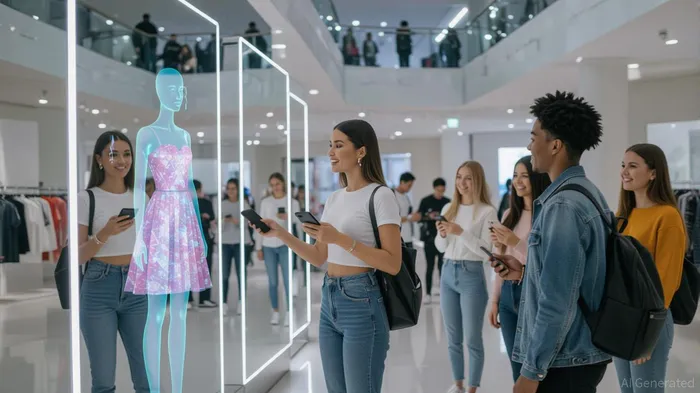
Moreover, Gen Z's preference for local brands—47% of global consumers now consider locally owned companies important to their purchasing decisions—presents both a risk and an opportunity. While mall-based brands may struggle to compete with global e-commerce giants, those that emphasize community connection and localized offerings could carve out a niche. For example, regional retailers that leverage social media for product research (up from 27% in 2023 to 32% in 2025) and integrate augmented reality (AR) for virtual try-ons are better positioned to capture this demographic.
Investment Risks and Strategic Imperatives
The financial metrics for mall-based retailers paint a mixed picture. Asking rents for shopping center space averaged $25 per square foot in Q2 2025, a 2.3% year-over-year increase but below the current inflation rate. This moderation in rent growth signals a market in transition, where tenants are demanding more flexibility and landlords are under pressure to innovate.
For investors, the risks are clear:
1. Structural Decline in Physical Retail: With 80% of shopping activity still occurring in physical stores, the sector is not obsolete—but its role is evolving. Retailers that fail to modernize their in-store experiences risk becoming relics.
2. Economic Uncertainty: A potential recession, driven by inflation or restrictive monetary policy, could further erode consumer spending. Tariff fluctuations also complicate supply chains, particularly for high-ticket items like furniture.
3. Technological Disruption: The rise of AI-driven personalization and AR is reshaping consumer expectations. Brands that lag in adopting these tools may lose relevance.
However, the opportunities are equally compelling:
- Omnichannel Integration: Retailers investing in real-time inventory visibility, in-house delivery, and micro-fulfillment centers are better positioned to meet demand. For instance, 70% of retail executives plan to expand in-house delivery capabilities in 2025.
- AI and Data-Driven Insights: Nearly 60% of retailers reported improved demand forecasting through AI in 2024, a trend expected to accelerate. This technology can optimize inventory, reduce theft, and enhance customer experiences.
- M&A and Strategic Partnerships: Acquiring digital capabilities or logistics infrastructure through mergers could help mall-based brands bridge the gapGAP-- with e-commerce rivals.
The Path Forward for Investors
For investors, the key lies in identifying mall-based brands that are not merely surviving but redefining their value propositions. Those that embrace the following imperatives are likely to outperform:
1. Hybrid Experiences: Brands that blend physical and digital elements—such as AR try-ons, social commerce integrations, or “click-and-collect” services—can drive foot traffic while meeting digital expectations.
2. Localized Relevance: Focusing on community-centric offerings and leveraging local brand loyalty can differentiate mall retailers from global e-commerce players.
3. Operational Agility: Companies that adopt AI for inventory management, flexible leasing models, and cost-efficient supply chains will be better equipped to navigate economic volatility.
The retail sector's transformation is far from complete. While mall-based brands face headwinds, the same forces that disrupted traditional models—digital innovation, shifting demographics, and redefined value—are creating new avenues for growth. For investors with a long-term horizon, the challenge is to distinguish between those brands that will adapt and those that will be left behind.
In this evolving landscape, patience and strategic foresight are paramountPARA--. The winners will not be those who resist change, but those who harness it.

Stay ahead of the market.
Get curated U.S. market news, insights and key dates delivered to your inbox.




Comments
No comments yet