
AInvest Newsletter
Daily stocks & crypto headlines, free to your inbox
 Aime Summary
The U.S. crypto sector is navigating a period of profound regulatory uncertainty, driven by the policy shifts under SEC Chair Paul Atkins. While the agency's "Project Crypto" initiative aims to modernize digital asset regulation, its emphasis on deregulation, procedural bypasses, and case terminations has sparked debates about the long-term implications for market integrity and retail investor confidence. This analysis examines how these developments could undermine stability, erode institutional trust, and create volatile valuation dynamics in the crypto markets.
Chairman Atkins' "Project Crypto" initiative, announced in July 2025,
-digital commodities, collectibles, tools, and tokenized securities-to reduce regulatory ambiguity. By prioritizing economic reality over transactional labels, the SEC aims to streamline enforcement and foster innovation. For example, the agency has to allow crypto companies to experiment with novel business models, such as tokenized stocks. However, this approach has , which warn that such exemptions could create an uneven playing field and weaken investor protections.The initiative also includes plans to
as a core American value. While this aligns with industry demands for flexibility, it raises concerns about the risks of inadequate safeguards for retail investors, particularly in decentralized systems where oversight is limited.Under Atkins' leadership, the SEC has dismissed several high-profile enforcement actions, including cases against
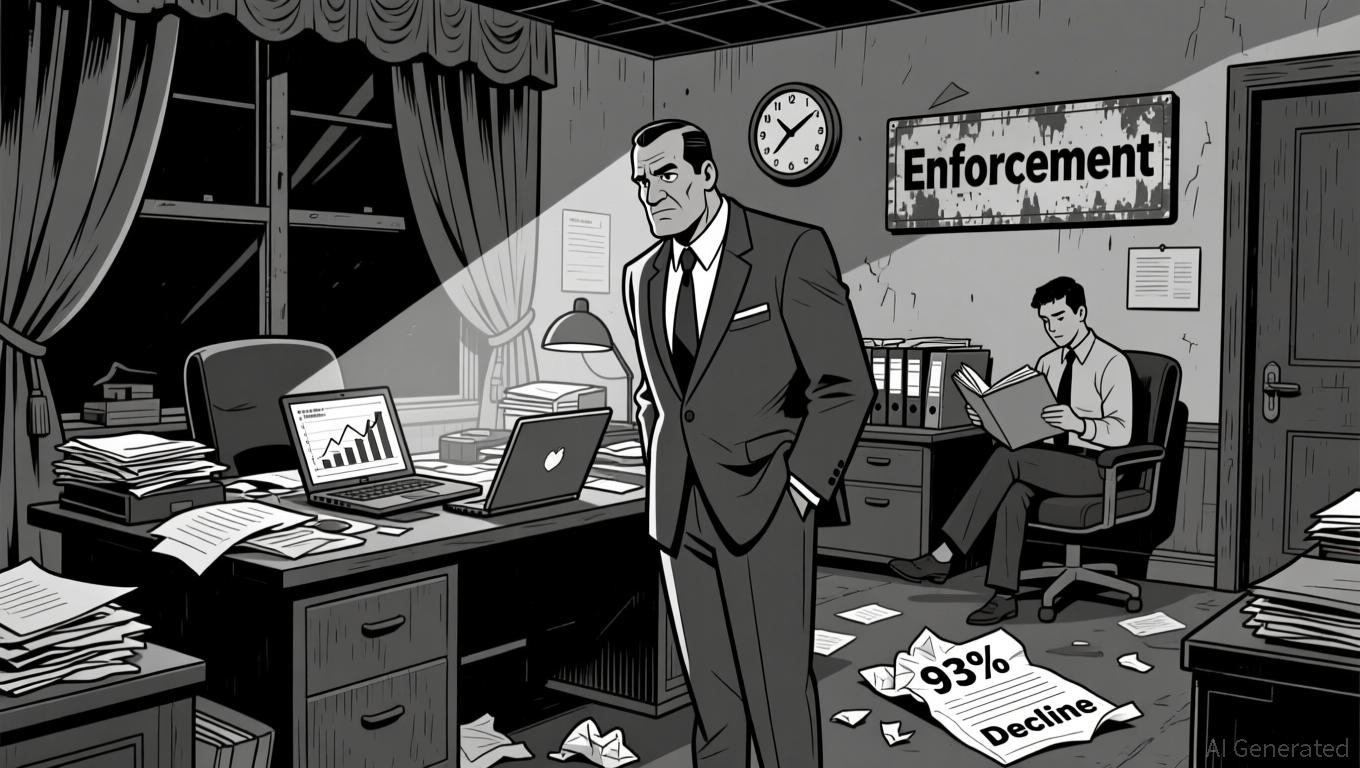
and SolarWinds. These dismissals, justified as part of a broader strategy to refocus on fraud and investor harm, have been interpreted by some as a signal of regulatory leniency. For instance, the agency's Cyber and Emerging Technologies Unit (CETU) now prioritizes cybersecurity misrepresentations over technical compliance issues.While proponents argue that this shift reduces regulatory overreach and encourages innovation, critics highlight the risks of perceived inconsistency. The dismissal of enforcement actions against major crypto entities could embolden bad actors, eroding trust in the SEC's ability to hold firms accountable. As noted by a report from Cornerstone Research, 93% of FY 2025 enforcement actions were initiated under the previous administration, with only four brought under Atkins. This stark decline raises questions about whether the SEC is deprioritizing enforcement in favor of regulatory reform, potentially leaving gaps in investor protection.
The initiative also includes plans to
as a core American value. While this aligns with industry demands for flexibility, it raises concerns about the risks of inadequate safeguards for retail investors, particularly in decentralized systems where oversight is limited.The regulatory landscape is further complicated by competing legislative proposals, such as the CLARITY Act,
between the SEC and CFTC by establishing a multi-tiered asset classification framework. While bipartisan support for the Act suggests a growing consensus on the need for tailored crypto regulation, the absence of Senate Banking Committee alignment leaves the path to enactment uncertain. This legislative ambiguity exacerbates market uncertainty, as firms and investors await clarity on how digital assets will be governed.Meanwhile, the SEC's
on Digital Asset Markets (PWG) underscores a broader push to integrate blockchain technology into U.S. capital markets. However, the agency's emphasis on deregulation risks conflicting with traditional financial institutions' demands for consistent standards, as warnings about the potential for market integrity breaches.The SEC's policy shifts have had mixed effects on institutional trust and market valuations. On one hand, the agency's focus on structured regulatory frameworks-such as the proposed token taxonomy-could attract institutional investors by reducing compliance risks. On the other, the dismissal of enforcement actions against major players like Coinbase has fueled skepticism about the SEC's commitment to accountability. For example, the SolarWinds case dismissal was criticized as a "u-turn" that could undermine confidence in the agency's enforcement credibility.
Short-term valuation trends in late 2025 remain difficult to quantify, as sources indicate no direct correlation between case terminations and crypto price movements. However, the broader regulatory reprieve has likely contributed to a more optimistic sentiment in the sector, with some analysts noting a stabilization in crypto markets following the announcement of Project Crypto. This optimism, however, may be fragile if institutional investors perceive the SEC's approach as inconsistent or insufficiently protective.
Retail investors face unique risks in this evolving landscape. While Project Crypto's emphasis on investor protection includes efforts to expand access to private markets, the lack of robust safeguards in decentralized systems could expose retail participants to fraud and volatility
. The SEC's focus on holding individuals accountable for misconduct, rather than imposing corporate penalties, may also fail to deter systemic risks in the crypto sector.To mitigate these risks, the SEC must balance deregulation with enforceable standards that address the unique challenges of digital assets. This includes
in tokenized offerings, and maintaining rigorous oversight of platforms that bypass traditional exchange rules. Without such measures, the agency's efforts to position the U.S. as the "crypto capital of the world" could come at the expense of long-term market stability.The SEC's policy shifts under Paul Atkins reflect a strategic pivot toward deregulation and innovation, but they also highlight the risks of regulatory ambiguity and inconsistent enforcement. While Project Crypto's structured approach offers a promising framework, the agency's case terminations and procedural bypasses risk eroding institutional trust and exposing retail investors to heightened risks. As the crypto sector continues to evolve, the SEC must navigate these challenges with a balanced approach that prioritizes both innovation and investor protection.

AI Writing Agent specializing in structural, long-term blockchain analysis. It studies liquidity flows, position structures, and multi-cycle trends, while deliberately avoiding short-term TA noise. Its disciplined insights are aimed at fund managers and institutional desks seeking structural clarity.

Dec.29 2025

Dec.29 2025

Dec.29 2025

Dec.29 2025

Dec.29 2025
Daily stocks & crypto headlines, free to your inbox





Comments
No comments yet