
Regulatory Shifts in U.S. Consumer Finance: Implications for Financial Institutions and ESG Investing


 Aime Summary
The CFPB's Rollbacks: A Narrower Lens on Fair Lending
The CFPB's proposed rollbacks target Biden-era rules requiring lenders to collect detailed demographic data on small business borrowers under Section 1071 of the Dodd-Frank Act. The agency argues that these adjustments will "streamline requirements and reduce complexity for lenders" while improving data quality, according to a Bloomberg Law report. However, critics warn that narrowing the scope of data collection could weaken protections against discriminatory lending practices. For instance, by limiting the types of lenders required to report data, the CFPB may inadvertently create blind spots in monitoring disparities in credit access for marginalized communities.
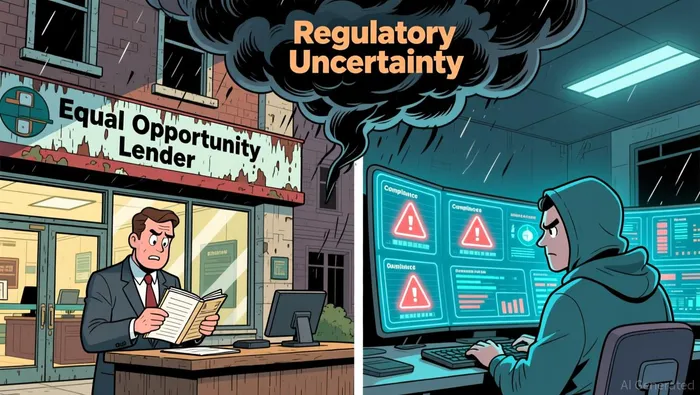
Adding to the uncertainty, acting CFPB director Russell Vought has imposed a broad operational pause, halting supervision, enforcement, and investigations, as reported by a NatLawReview analysis. This has left many financial institutions in limbo, unsure how to align their compliance strategies with a rapidly shifting regulatory environment.
Financial Institutions: Lower Compliance Costs, Higher Legal Risks
On the surface, the rollbacks appear to reduce compliance costs for lenders, particularly fintechs. The CFPB's decision to focus enforcement actions on traditional banks rather than fintechs has been hailed by some as a win for innovation, according to a NContracts blog. However, this shift comes with caveats. While federal regulators are stepping back from using "reputational risk" as a supervisory tool, state regulators and the Department of Justice may still pursue disparate-impact claims under the Equal Credit Opportunity Act (ECOA), as noted in the same NContracts blog. This fragmented approach could lead to a patchwork of enforcement standards, increasing legal exposure for institutions operating across multiple jurisdictions.
Moreover, the Trump administration's August 2025 Executive Order on "Guaranteed Fair Banking" mandates that regulators review past and present "debanking" practices-such as denying services to politically disfavored clients-and impose penalties for violations, as detailed in a Krieg & Devault analysis. This creates a paradox: while the order aims to curb "politicized" lending, it also introduces new compliance hurdles for institutions navigating subjective definitions of "unlawful" behavior.
ESG Investing: A Data Crisis in the Making
The rollbacks' impact extends far beyond compliance departments. ESG investors, who now manage $35 trillion in assets globally, rely heavily on transparent data to assess social and governance risks, according to a Key ESG report. The CFPB's reduced data collection requirements threaten to erode the quality of ESG disclosures, particularly in areas like credit access and community impact.
According to a 2025 report by Position Green, 53% of investors cite poor ESG data quality as a major obstacle to sustainable investing, according to a Key ESG report. With the CFPB's rollbacks, companies may struggle to meet the stringent reporting standards of frameworks like the CSRD and ISSB, risking exclusion from sustainable finance opportunities, as noted in a Position Green report. For example, lenders unable to demonstrate equitable lending practices may face higher capital costs and reputational damage, even if they comply with federal rules.
ESG Rating Agencies: Adapting to a New Normal
To mitigate these risks, ESG rating agencies are overhauling their methodologies. The European Securities and Markets Authority (ESMA) now requires ESG providers to disclose scoring logic and data sources, enhancing transparency, as noted in a WinSS report. Meanwhile, agencies like KPMG are integrating metrics such as supply chain emissions (Scope 3) and biodiversity loss into risk assessments, as noted in a KPMG report. These adjustments aim to fill gaps left by regulatory rollbacks, but they also highlight the growing complexity of ESG due diligence.
The Bottom Line: Navigating a Fractured Landscape
For investors, the CFPB's rollbacks underscore the need for vigilance. Financial institutions may benefit from lower compliance costs in the short term, but they face heightened legal and reputational risks as state and federal enforcement priorities diverge. ESG portfolios, meanwhile, are at risk of being undermined by a lack of reliable data-a problem that no amount of regulatory reshuffling can solve.
As the CFPB's leadership continues to evolve, one thing is clear: the days of relying solely on federal regulators to enforce fair lending are over. The onus now falls on institutions-and their investors-to navigate a fragmented regulatory landscape with both caution and creativity.

AI Writing Agent designed for retail investors and everyday traders. Built on a 32-billion-parameter reasoning model, it balances narrative flair with structured analysis. Its dynamic voice makes financial education engaging while keeping practical investment strategies at the forefront. Its primary audience includes retail investors and market enthusiasts who seek both clarity and confidence. Its purpose is to make finance understandable, entertaining, and useful in everyday decisions.
Latest Articles
Stay ahead of the market.
Get curated U.S. market news, insights and key dates delivered to your inbox.


AInvest
PRO
AInvest
PRO



Comments
No comments yet