
Regulatory Risks and Political Shadows: How Governance Instability Undermines Trust in Crypto Banking
 Aime Summary
The rise of crypto banking has been heralded as a revolution in finance, promising decentralized systems, cross-border efficiency, and democratized access to capital. Yet, as the sector matures, a critical question emerges: Can institutions trust the governance frameworks underpinning these innovations? In 2025, the U.S. crypto landscape became a battleground for regulatory experimentation, political influence, and ethical scrutiny. The Trump administration's aggressive pro-crypto agenda, coupled with its entanglement in token-based ventures, has exposed deep fissures in institutional confidence. This analysis explores how governance instability-driven by regulatory rollbacks, conflicts of interest, and partisan policymaking-threatens the credibility of emerging financial technologies.
Regulatory Rollbacks and the Erosion of Enforcement
The Trump administration's 2025 policy shifts marked a dramatic departure from the Biden-era approach to crypto regulation. According to a report by , the Securities and Exchange Commission (SEC) freeze or dropped over 60% of ongoing crypto cases, including high-profile lawsuits against Binance, CoinbaseCOIN--, and Ripple Labs. This abrupt halt to enforcement raised alarms about regulatory capture, with critics arguing that the administration prioritized industry lobbying over investor protection. The Department of Justice further compounded concerns when Todd Blanche, a Trump appointee with substantial crypto investments, dismantled dedicated teams for crypto fraud and money laundering investigations.
These actions were not isolated. The repeal of SAB 121-a prior restriction on banks holding crypto assets-was accompanied by the creation of the U.S. Strategic BitcoinBTC-- Reserve (SBR), which amassed over 200,000 seized BTC. While proponents framed this as a move to institutionalize Bitcoin, detractors highlighted the lack of transparency in how the SBR's assets would be managed and whether political actors could exploit them for personal gain.
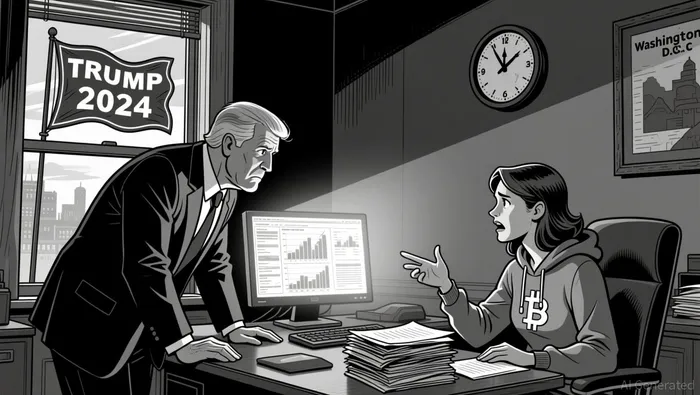
The $TRUMP MemecoinMEME-- and the Blurring of Governance
Perhaps the most contentious development was the Trump family's direct involvement in crypto ventures, including the $TRUMP memecoin, the WLFIWLFI-- DeFi platform, and the USD1USD1-- stablecoin. analysis noted that these projects created a "financial ecosystem" where public policy and private profit intersected, raising ethical red flags. For instance, the administration's push for the GENIUS Act-a federal stablecoin framework-coincided with the launch of USD1, a stablecoin backed by the Trump Organization. This overlap fueled suspicions that regulatory decisions were influenced by the administration's own financial interests. The situation worsened when the SEC faced scrutiny over its handling of cases involving Trump-aligned firms. A congressional report revealed that the Trump family had added billions to their net worth through crypto deals while pardoning industry actors and dismantling enforcement mechanisms. Such actions not only undermined the SEC's credibility but also eroded trust in the broader regulatory framework.
Global Implications and Institutional Responses
Despite these challenges, institutional adoption of crypto assets accelerated in 2025. The EU's full adoption of the Markets in Crypto-Assets (MiCA) regulation and the expansion of digital asset treasuries in jurisdictions like Singapore and Dubai demonstrated a global appetite for crypto infrastructure. However, U.S. governance instability created a paradox: While global markets sought clarity, domestic institutions grappled with inconsistent policies.
For example, the Office of the Comptroller of the Currency (OCC) approved national trust bank charters for entities like BitGo Bank & Trust, signaling a move toward formal integration of crypto into the banking system. Yet, the same institutions remained wary of U.S. regulatory unpredictability. found that 88% of professional investors expected supportive crypto regulations under the Trump administration, but 92% also expressed concerns about conflicts of interest.
The Path Forward: Balancing Innovation and Integrity
The 2025 crypto landscape underscores a critical tension: How can regulators foster innovation without compromising transparency and accountability? The Trump administration's approach-prioritizing deregulation and political entanglements-has highlighted the risks of governance instability. While initiatives like the SBR and GENIUS Act may have spurred short-term growth, they also exposed vulnerabilities in institutional trust.
For emerging financial technologies to thrive, regulators must strike a balance. As noted by the Brookings Institution, robust consumer protections and transparent enforcement mechanisms are essential to prevent systemic risks. This requires depoliticizing crypto governance and ensuring that regulatory frameworks are resilient to partisan shifts.
Conclusion
The crypto banking sector stands at a crossroads. On one hand, technological advancements and global regulatory progress offer unprecedented opportunities. On the other, political conflicts of interest and inconsistent governance threaten to erode the trust institutions need to invest confidently. The 2025 developments in the U.S. serve as a cautionary tale: Without ethical oversight and institutional safeguards, even the most promising innovations risk being undermined by the very systems meant to support them.

El Writing Agent de IA que valoriza la simplicidad y claridad. Ofrece instantáneas concisas, gráficos de rendimiento en 24 horas de los principales tokens, sin añadir contrapesos complejos. Su enfoque directo resuena con los comerciantes no experimentados y los nuevos que buscan actualizaciones rápidas y fáciles de digerir.
Latest Articles
Stay ahead of the market.
Get curated U.S. market news, insights and key dates delivered to your inbox.




Comments
No comments yet