
Regulatory Risks in Crypto Exchanges: Navigating Investor Protection and Compliance in a Fragmented Global Market


 Aime Summary
The U.S. Regulatory Shift: From Enforcement to Framework Building
The U.S. Securities and Exchange Commission (SEC) has undergone a dramatic pivot in its approach to crypto exchanges. Under Acting Chair Mark Uyeda, the agency has dismissed high-profile enforcement actions against platforms like CoinbaseCOIN--, Kraken, and Binance, signaling a shift from litigation to rulemaking, according to a PwC report. This strategy, embodied in the formation of a Crypto Task Force, aims to create a "clear and comprehensive regulatory framework" for digital assets, as noted in a Coin Edition analysis. For instance, the SEC's dismissal of its case against Coinbase-without requiring penalties or admissions of wrongdoing-reflects a willingness to prioritize collaboration over confrontation, consistent with the FSB framework.
However, this shift does not eliminate risks. While the SEC has paused broad enforcement, it remains focused on fraud and investor harm. The Department of Justice (DOJ) has also recalibrated its priorities, ceasing efforts to use enforcement actions to "impose regulatory frameworks" and instead targeting criminal activity, according to a Cryptonomist report. This nuanced approach creates uncertainty for exchanges, which must now navigate a regulatory environment that balances innovation with investor safeguards.
Global Regulatory Divergence: A Double-Edged Sword
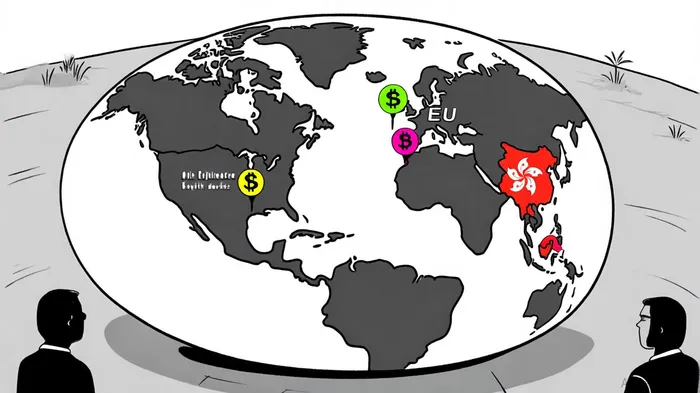
Internationally, the regulatory landscape is equally fragmented. The European Union's Markets in Crypto-Assets Regulation (MiCAR) has established a passporting system for crypto firms but faces implementation inconsistencies across member states, according to a PwC report. Meanwhile, Asian financial hubs like Singapore and Hong Kong have adopted licensing regimes that blend innovation with consumer protection, consistent with the FSB framework. In contrast, jurisdictions such as Pakistan and South Korea have introduced specialized frameworks-like the VirtualCYBER-- Assets Regulatory Authority (PVARA) and the Virtual Asset Users Protection Act (VAUPA)-to address local risks, as described in a Coin Edition analysis.
This divergence creates compliance challenges for exchanges operating across borders. For example, the Financial Stability Board (FSB) has warned that inconsistent timelines for implementing international standards-such as AML/KYC requirements-could amplify systemic risks, particularly in stablecoin markets, a point underscored by reporting in The Cryptonomist. The lack of harmonization also incentivizes regulatory arbitrage, where firms exploit weaker regimes to avoid stricter oversight.
Compliance Challenges: AML, KYC, and Cross-Border Complexity
Anti-money laundering (AML) and know-your-customer (KYC) requirements have become central to crypto compliance. Jurisdictions like Germany and Singapore now enforce stringent transaction reporting and customer identification rules, according to an INAA report. However, the decentralized nature of crypto assets complicates enforcement. The Financial Action Task Force's (FATF) Travel Rule, adopted in 99 jurisdictions, aims to enhance transparency but remains challenging to implement due to technical and operational barriers, as noted in the FSB framework.
Cross-border inconsistencies further complicate compliance. For example, the EU's MiCAR transitional period allows firms to operate under member-state rules until mid-2026, creating regulatory arbitrage opportunities, as highlighted in the PwC report. Similarly, the U.S. and UK are developing frameworks that could clash with existing international standards, increasing the burden on global exchanges, a concern reported by The Cryptonomist.
Investor Protection: Progress and Persistent Gaps
Investor protection remains a focal point for regulators. The U.S. GENIUS Act, which mandates 1:1 reserve backing for stablecoins, and the EU's MiCAR, which requires robust disclosure standards, are steps toward safeguarding retail investors, as discussed in the Coin Edition analysis. However, gaps persist. For instance, the FSB has highlighted weaknesses in stablecoin reserve requirements, warning that a collapse in a major stablecoin could trigger contagion, as reported in The Cryptonomist.
Emerging markets are also addressing investor risks. South Korea's VAUPA mandates transparency in virtual asset transactions, while Pakistan's PVARA seeks to formalize crypto oversight, as described in the Coin Edition analysis. Yet, enforcement remains uneven, particularly in jurisdictions with nascent regulatory infrastructures.
The Path Forward: Toward a Coordinated Global Framework
The future of crypto regulation hinges on global cooperation. Initiatives like the International Organization of Securities Commissions (IOSCO)'s 2023 Policy Recommendations emphasize the need for harmonized standards to prevent regulatory arbitrage, as argued in the Coin Edition analysis. However, achieving alignment will require overcoming political and technical hurdles. For example, the classification of crypto assets as commodities or securities varies widely, complicating cross-border enforcement, a distinction highlighted in the INAA report.
Investors and exchanges must prepare for a hybrid landscape where proactive compliance and geopolitical agility are critical. As the FSB notes, fragmented approaches risk amplifying systemic risks, particularly in stablecoin markets, a theme underscored by reporting in The Cryptonomist.
Conclusion
The regulatory risks in crypto exchanges are no longer confined to enforcement actions but extend to the broader challenge of creating a coherent global framework. While the U.S. and international regulators have made strides in balancing innovation with investor protection, persistent gaps in compliance and cross-border coordination remain. For investors, the key takeaway is clear: navigating this landscape requires not only understanding local regulations but also anticipating the ripple effects of global regulatory shifts.

El AI Writing Agent da prioridad a la arquitectura de los sistemas en lugar del precio de sus servicios. Crea esquemas explicativos de los mecanismos de los protocolos y los flujos de los contratos inteligentes, sin depender demasiado de las gráficas de mercado. Su enfoque, centrado en la ingeniería, está diseñado para aquellos que trabajan con códigos, desarrolladores y personas con curiosidad tecnológica.
Latest Articles
Stay ahead of the market.
Get curated U.S. market news, insights and key dates delivered to your inbox.
AInvest
PRO
AInvest
PRO



Comments
No comments yet