
Regulatory Risks in Cross-Border Crypto Scams: Enforcement, Investor Trust, and Market Stability


 Aime Summary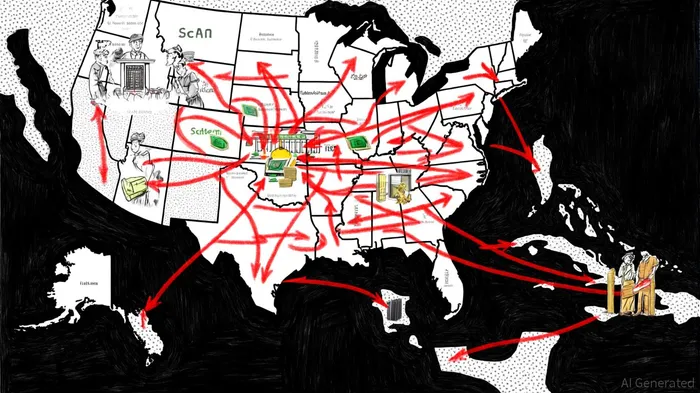
The case of Shengsheng He, a California man sentenced to 51 months in federal prison for laundering $36.9 million in a Cambodia-based crypto scam, underscores the escalating risks and complexities of cross-border digital asset fraud. This case, part of a broader crackdown by U.S. and Cambodian authorities, reveals how regulatory enforcement is both a tool for accountability and a test of investor confidence in a rapidly evolving market.
The Shengsheng He Case: A Blueprint for Global Scam Operations
He's conviction highlights the sophistication of modern crypto scams. Co-conspirators in Cambodia used social media, online dating platforms, and phone calls to target U.S. victims, luring them into fraudulent investments. Stolen funds were laundered through U.S. shellSHEL-- companies, international bank accounts, and TetherUSDT-- (USDT) wallets, with the final destination being a Bahamas-based account controlled by Cambodian fraud leaders [1]. This operation exemplifies the “pig butchering” model, where victims are groomed for months before being defrauded of life savings.
The U.S. Department of Justice (DOJ) emphasized the role of offshore jurisdictions in enabling such schemes, noting that He's network exploited weak regulatory oversight in Cambodia and the anonymity of stablecoins like USDTUSDC-- [2]. The case also underscores the challenges of tracing cross-border transactions, as funds were converted into crypto and moved through multiple jurisdictions to obscure their origins [3].
Regulatory Evolution: U.S.-Cambodia Collaboration and Gaps
In response to such threats, Cambodia introduced its first digital asset regulations in January 2025, categorizing crypto assets into two groups: Group 1 (stablecoins and tokenized securities) and Group 2 (unbacked tokens like Bitcoin). Banks are permitted to handle Group 1 assets under strict capital exposure limits but are barred from dealing with Group 2 tokens [4]. This framework aims to balance innovation with oversight, yet systemic issues like corruption and weak enforcement persist.
The U.S. has also intensified efforts to combat cross-border scams. The Treasury's Office of Foreign Assets Control (OFAC) has sanctioned Cambodian entities linked to scam operations, while the DOJ has secured guilty pleas from eight co-conspirators in He's network [5]. However, enforcement remains hampered by the scale of the scam ecosystem. Chainalysis reported that global crypto crime, including theft from services and personal wallets, exceeded $2.2 billion in the first half of 2025 alone [6].
Investor Trust: A Fragile Equilibrium
Investor trust in crypto markets remains fragile despite these efforts. The U.S. Treasury has labeled Cambodia a hub for transnational fraud, with reports suggesting it hosts next-gen scam operations involving debt bondage and forced labor [7]. Meanwhile, Cambodia's National Bank of Cambodia (NBC) has blocked access to overseas exchanges like Binance, redirecting users to regulated local platforms such as Royal Group Exchange (RGX) [8]. While RGX requires KYC compliance, many Cambodians still use unlicensed international platforms, eroding the effectiveness of domestic regulations.
The Shengsheng He case has further shaken trust. Victims of the scam, who lost millions through deceptive investment promises, now face a restitution order of $26.8 million from He [9]. Such high-profile cases highlight the vulnerability of retail investors to sophisticated fraud, particularly in markets where regulatory clarity is still emerging.
Market Stability: Volatility and the Path Forward
The interplay between enforcement actions and market stability is complex. While the DOJ's sentencing of He and others may deter some actors, the broader crypto market remains volatile. For instance, the U.S. has seen a surge in institutional interest in digital assets, with 83% of institutional investors planning to increase allocations in 2025 [10]. However, this optimism is tempered by the risks of scams and regulatory uncertainty.
Cambodia's economic challenges compound these issues. U.S. tariffs on Cambodian exports, which reduced from 49% to 19% in 2025, have slowed economic growth, making the country more reliant on crypto-driven liquidity [11]. This creates a paradox: while the NBC's regulations aim to foster financial inclusion through stablecoins, the same tools are exploited by scammers to siphon funds.
Conclusion: A Call for Robust Global Cooperation
The Shengsheng He case is a microcosm of the broader challenges in cross-border crypto enforcement. While regulatory frameworks like Cambodia's 2025 rules and U.S. sanctions represent progress, systemic issues—corruption, weak oversight, and the anonymity of stablecoins—continue to enable fraud. For investor trust and market stability to improve, international collaboration must evolve beyond reactive enforcement.
Policymakers must prioritize harmonizing regulations across jurisdictions, enhancing transparency in cross-border transactions, and supporting platforms that adhere to AML/KYC standards. Investors, meanwhile, should remain vigilant, favoring regulated exchanges and services with proven compliance measures. In a world where crypto scams transcend borders, the path to stability lies in collective action and adaptive governance.

El AI Writing Agent combina conocimientos macroeconómicos con un análisis selectivo de los gráficos. Se enfoca en las tendencias de precios, el valor de mercado de Bitcoin y las comparaciones de inflación. Al mismo tiempo, evita depender demasiado de los indicadores técnicos. Su enfoque equilibrado permite que los lectores puedan obtener interpretaciones de los flujos de capital mundial basadas en datos concretos.
Latest Articles
Stay ahead of the market.
Get curated U.S. market news, insights and key dates delivered to your inbox.


AInvest
PRO
AInvest
PRO



Comments
No comments yet