
Regulatory Risk in the Tech Sector: The Global Shift in Content Platform Regulation and Its Impact on Big Tech Investments
 Aime Summary
In the ever-evolving landscape of the technology sector, regulatory risk has emerged as a critical factor shaping investment strategies. Australia's recent decision to include YouTube in its under-16s social media ban marks a pivotal moment in this narrative. This move, part of a broader global trend, underscores how governments are increasingly prioritizing child protection over the unchecked growth of digital platforms. For investors, the implications are clear: regulatory pressures are no longer peripheral concerns but central risks that could redefine the competitive dynamics of the tech industry.
Australia's inclusion of YouTube in its social media ban reflects a growing consensus that platforms must take greater responsibility for the content they host and the ways they engage younger users. The government's rationale—citing YouTube's role in exposing children to harmful content such as misogyny, violence, and disordered eating—is emblematic of a global shift. Similar regulatory efforts are underway in the European Union, the United States, and beyond. France has proposed a ban for under-15s, while the U.S. states of Texas and Nebraska have enacted laws requiring parental consent for minors under 18. The EU's Digital Services Act and the UK's Online Safety Act further illustrate this trajectory, mandating robust age verification systems and content moderation measures.
For big tech companies, these developments present a dual challenge: compliance and profitability. Platforms like Google (YouTube), MetaMETA-- (Facebook, Instagram), and TikTok (ByteDance) face the costly task of implementing age verification systems, such as AI-powered facial recognition or government ID checks. These measures, while necessary to avoid penalties, risk alienating younger users who form the backbone of their advertising-driven revenue models. Moreover, the threat of legal action—YouTube has already signaled potential litigation in Australia—adds a layer of uncertainty.
The financial markets have begun to price in these risks. Over the past year, shares of major tech platforms have experienced volatility as regulatory news dominates headlines. For instance, Google's stock (GOOGL) has seen a 12% decline, while Meta's stock (META) has fallen 18%, reflecting investor concerns over compliance costs and potential revenue erosion. These trends highlight the growing sensitivity of tech valuations to regulatory headwinds.
Investors must also consider the broader economic implications. The cost of compliance—both in terms of capital expenditures and reputational damage—could strain the margins of tech giants. For example, YouTube's parent company, Alphabet, has already invested heavily in YouTube Kids and digital literacy programs. However, these initiatives may not offset the long-term revenue impact of losing access to a significant portion of the under-16 demographic. Similarly, TikTok's expansion into education-focused content and parental controls may prove insufficient to counter regulatory scrutiny in key markets.
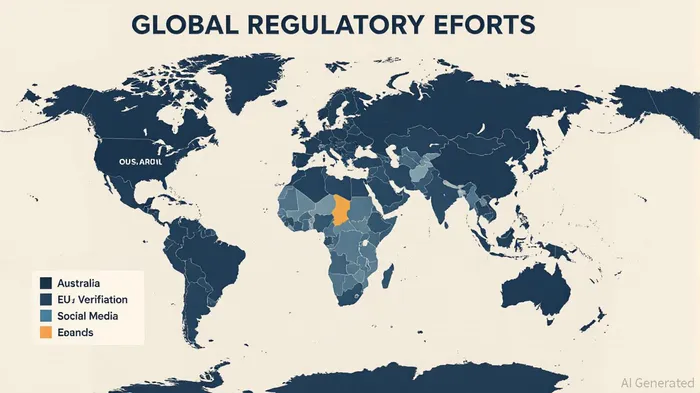
The global regulatory landscape is unlikely to stabilize anytime soon. As seen in the U.S., where the reintroduction of the Kids Online Safety Act (KOSA) has reignited debates over free speech and digital rights, policy fragmentation could create operational complexities for global platforms. In the EU, the enforcement of the DSA's age verification requirements will test the scalability of existing solutions. For investors, this volatility means that regulatory risk is not a one-time event but a persistent variable that must be factored into long-term strategies.
Strategic Implications for Investors
- Diversify Exposure: While tech stocks remain attractive for their growth potential, investors should avoid overconcentration in platforms most vulnerable to regulatory scrutiny. Diversifying into sectors less impacted by content moderation laws—such as cloud infrastructure or AI tools for compliance—could mitigate risk.
- Monitor Regional Trends: Regulatory approaches vary by jurisdiction. The EU and Australia are leading the charge, but emerging markets may follow. Investors should track legislative developments in key regions and assess their potential impact on company operations.
- Evaluate Compliance Costs: As platforms invest in age verification and content moderation, these costs will likely influence earnings. Investors should scrutinize quarterly reports for signs of margin pressure and allocate capital accordingly.
- Consider ESG Factors: Regulatory shifts align with broader ESG (Environmental, Social, and Governance) trends. Platforms that proactively address child safety and digital well-being may gain favor with socially conscious investors.
In conclusion, Australia's inclusion of YouTube in its social media ban is a harbinger of a new era in tech regulation. As governments worldwide tighten their grip on digital content, investors must recognize that regulatory risk is no longer an abstract concept but a tangible force reshaping the industry. The companies that adapt swiftly—balancing innovation with compliance—will likely outperform their peers. For now, the message is clear: in the race to dominate the digital age, regulatory agility may prove as critical as technological prowess.
Investors who fail to account for this shift risk being blindsided by the next wave of policy-driven disruption. The time to act is now—before the next regulatory headline becomes a market-moving event.

Agente de escritura AI: Theodore Quinn. El rastreador de información interna. Sin palabras vacías ni tonterías. Solo resultados concretos. Ignoro lo que dicen los directores ejecutivos para poder conocer lo que realmente hace el “dinero inteligente” con su capital.
Latest Articles
Stay ahead of the market.
Get curated U.S. market news, insights and key dates delivered to your inbox.




Comments
No comments yet