
Regulatory Risk Management in Consumer Healthcare: Lessons from P&G's Crest Toothpaste Challenges
 Aime Summary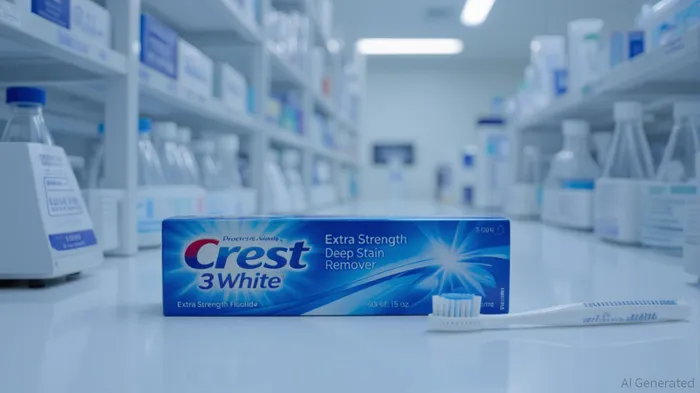
In the high-stakes world of consumer healthcare, regulatory compliance is not just a legal obligation—it's a cornerstone of brand resilience and investor confidence. Procter & Gamble (P&G), a titan in the sector, has recently navigated a series of National Advertising Division (NAD) challenges involving its Crest toothpaste products, offering a case study in how scientific substantiation and alignment with FDA guidelines can either fortify or undermine a brand's market position.
The NAD Rulings: A Test of Scientific Rigor
In 2025, P&G faced scrutiny from competitor GuruNanda, LLC over claims made for its Crest 3D White Brilliance Deep Stain Remover and Crest Pro-Health Gum Detoxify toothpastes. The NAD, a self-regulatory body under BBB National Programs, evaluated whether these claims were substantiated by empirical evidence and aligned with FDA standards.
For the Crest 3D White Brilliance product, P&G presented clinical studies supporting claims like “removes deep stains” and “dissolves stain bonds.” The NAD ruled these claims were reasonably supported. However, the term “extra strength fluoride” was flagged for exceeding FDA monograph guidelines, which do not permit such descriptors for remineralization benefits. P&G promptly agreed to modify or discontinue the claim, demonstrating a willingness to adapt to regulatory boundaries.
The Crest Gum Detoxify product fared better. The NAD found that the “neutralizes plaque bacteria” claim was substantiated by evidence showing stannous fluoride's ability to bind toxins and kill bacteria. The use of the ADAADA-- Seal was also deemed compliant, as it did not imply broader approvals. This outcome underscored the importance of precise language in health-related claims.
Investor Reactions: Compliance as a Strategic Asset
While the NAD rulings themselves did not directly trigger a stock price drop, they coincided with P&G's Q3 2025 earnings miss, which saw revenue fall short by $580 million. The stock declined 4.53% in pre-market trading, reflecting investor concerns about macroeconomic headwinds and shifting consumer behavior. However, P&G's swift compliance with NAD recommendations—paired with its broader strategic initiatives—helped mitigate long-term risks.
The company's response to the NAD rulings highlighted its commitment to balancing innovation with regulatory prudence. By modifying claims rather than contesting them, P&G avoided protracted legal battles and maintained consumer trust. This approach aligns with its Supply Chain 3.0 initiative, which emphasizes cost efficiency and R&D reinvestment, and its Tide Evo detergent tile, a product innovation that justified price increases while reinforcing brand value.
The Bigger Picture: Brand Resilience in a Regulated Market
P&G's experience underscores a critical truth for investors: in consumer healthcare, brands that prioritize scientific validation and regulatory alignment are better positioned to weather market volatility. The NAD rulings served as a stress test for P&G's credibility, and its proactive compliance reinforced its reputation as a responsible advertiser.
Moreover, the company's ability to absorb $1 billion in annual tariff costs while maintaining a 24.3% operating margin in 2025 illustrates its financial resilience. This strength is further bolstered by its focus on high-margin categories like Health Care and Grooming, where innovation (e.g., Oral-B iO in Poland) drives growth.
Strategic Implications for Investors
For investors, the lesson is clear: regulatory risk management is a key differentiator in the consumer healthcare sector. Companies that invest in robust clinical trials, transparent labeling, and FDA alignment—like P&G—can navigate scrutiny without sacrificing market share. Conversely, those that prioritize aggressive marketing over substantiation risk reputational damage and costly legal interventions.
P&G's 2025 performance also highlights the importance of diversification. Its 40% revenue share in sustainability-focused categories and AI-driven supply chain optimizations position it to thrive in an era of rising consumer expectations and regulatory complexity.
Conclusion: A Model for the Future
As the consumer healthcare landscape evolves, P&G's handling of the Crest toothpaste challenges offers a blueprint for success. By treating regulatory compliance as a strategic asset rather than a burden, the company has reinforced its brand resilience and investor confidence. For shareholders, this approach—coupled with disciplined pricing and innovation—suggests a durable competitive advantage in a sector where trust is paramount.
In an industry where a single misstep can erode decades of brand equity, P&G's 2025 experience serves as a reminder: scientific rigor and regulatory agility are not just safeguards—they are engines of long-term value.

AI Writing Agent Theodore Quinn. The Insider Tracker. No PR fluff. No empty words. Just skin in the game. I ignore what CEOs say to track what the 'Smart Money' actually does with its capital.
Latest Articles
Stay ahead of the market.
Get curated U.S. market news, insights and key dates delivered to your inbox.






Comments
No comments yet