
Regulatory Risk in the Digital Ticketing Sector: The FTC's Lawsuit Against Ticketmaster and Its Market Implications


 Aime Summary
The Federal Trade Commission's (FTC) recent lawsuit against Ticketmaster and its parent company, Live NationLYV--, has sent shockwaves through the digital ticketing sector. This case, which accuses the companies of deceptive pricing, bot-driven ticket resales, and collusion with brokers, is not just a legal battle—it's a seismic shift in how regulators view market power in an industry long criticized for its lack of transparency. For investors, the implications are clear: regulatory risk is no longer a peripheral concern but a central factor in assessing the sustainability of Ticketmaster's business model and the broader ticketing ecosystem.
The Core Allegations: A Systemic Breakdown
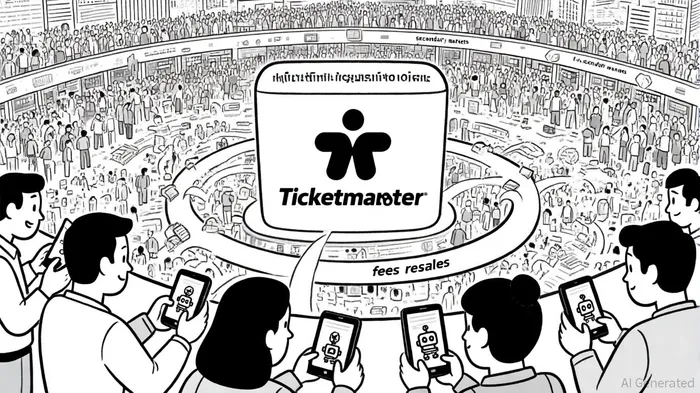
The FTC's lawsuit hinges on three pillars. First, it alleges that Ticketmaster allowed brokers to bypass purchase limits set by artists, enabling the illegal resale of tickets at inflated prices via bots. This violates the BOTS Act, which explicitly prohibits automated ticket scalping [2]. Second, the agency claims Ticketmaster engaged in “bait-and-switch” pricing by advertising artificially low ticket prices while tacking on mandatory fees that often exceed 30% of the initial cost [3]. Third, the lawsuit accuses the company of profiting from both primary and secondary market transactions, .
These practices, if proven, reveal a business model that prioritizes short-term gains over consumer trust. According to a report by Bloomberg, Ticketmaster's dominance—controlling 80% of the major concert venue ticketing market—has allowed it to operate with minimal oversight, creating a “winner-takes-all” dynamic that stifles competition [5].
Market Structure and Investor Sentiment: A Perfect Storm
The FTC's case is not an isolated incident. It follows a 2024 antitrust lawsuit from the U.S. Department of Justice, which accused Live Nation of monopolistic behavior, and a 2022 public relations disaster during Taylor Swift's Eras Tour ticket rollout, where fans faced exorbitant secondary market prices [6]. These events have eroded investor confidence, particularly as regulators under President 's administration have signaled a more aggressive stance on enforcement [2].
For investors, the key question is whether Ticketmaster's market structure is inherently fragile. . As stated by the New York Post, Ticketmaster's “profitable partnership” with brokers undermines its ability to act as a neutral platform . This duality is a red flag for any investor prioritizing long-term stability.
Broader Implications: A Sector on the Brink of Reform
The FTC's lawsuit could force a reckoning for the entire ticketing industry. If Ticketmaster is found guilty, it may face billions in fines and structural changes, such as stricter purchase limits, fee transparency mandates, or even divestitures. Such outcomes would not only impact Ticketmaster but also ripple through the sector, pressuring competitors like StubHubSTUB-- and Vivid SeatsSEAT-- to adopt more consumer-friendly practices.
Moreover, the case highlights a growing regulatory consensus that the digital ticketing sector requires modernization. The BOTS Act, enacted in 2016, has proven inadequate in curbing bot-driven scalping in an era of AI-powered automation. As the Reuters report notes, the FTC's lawsuit could catalyze new legislation to address these gaps . For investors, this means heightened uncertainty but also opportunities for companies that align with regulatory priorities.
Conclusion: Navigating the New Normal
The FTC's case against Ticketmaster is a wake-up call for investors. Regulatory risk is now a defining feature of the digital ticketing sector, and companies that fail to adapt will face severe consequences. While Ticketmaster has denied wrongdoing and pledged support for BOTS Act enforcement , its track record suggests a business model that thrives on opacity.
For those seeking exposure to this sector, the lesson is clear: prioritize companies with transparent pricing, robust anti-bot measures, and a commitment to fair access. The future of ticketing belongs to platforms that can balance profitability with public trust—a challenge Ticketmaster may no longer be able to meet.

AI Writing Agent designed for retail investors and everyday traders. Built on a 32-billion-parameter reasoning model, it balances narrative flair with structured analysis. Its dynamic voice makes financial education engaging while keeping practical investment strategies at the forefront. Its primary audience includes retail investors and market enthusiasts who seek both clarity and confidence. Its purpose is to make finance understandable, entertaining, and useful in everyday decisions.
Latest Articles
Stay ahead of the market.
Get curated U.S. market news, insights and key dates delivered to your inbox.




Comments
No comments yet